
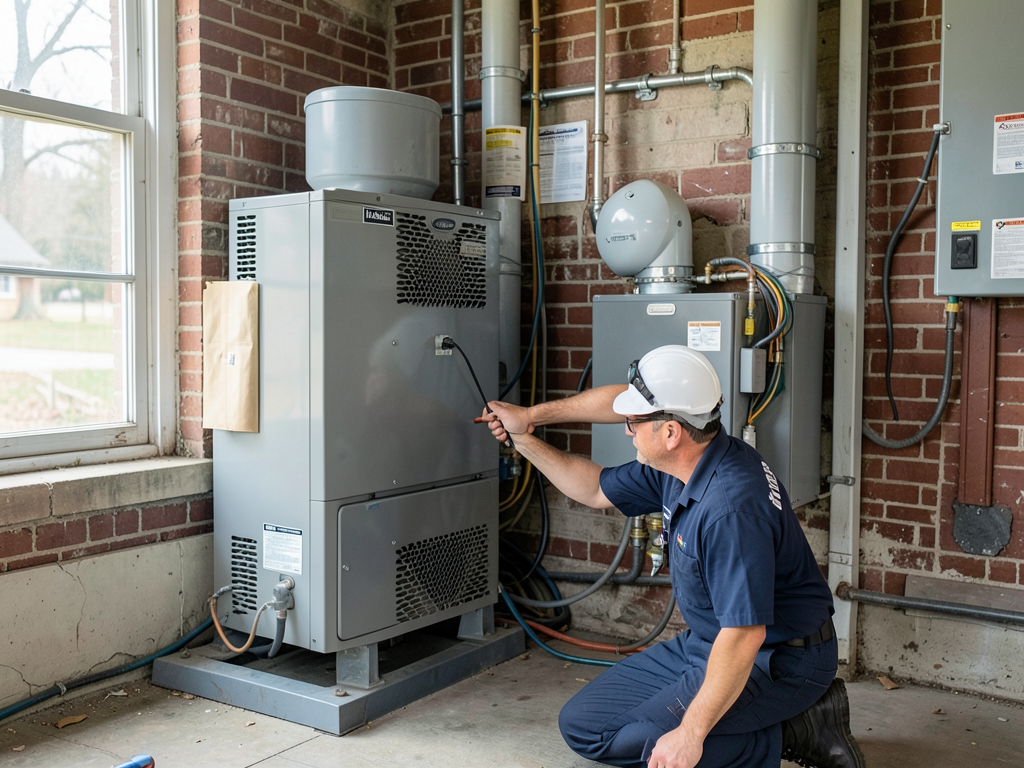
Why a Dual Fuel Hybrid System Makes Sense for Herron-Morton Homeowners
Indianapolis winters can swing from mild 40-degree days to brutal sub-zero polar vortex events within weeks. That volatility makes traditional single-source heating systems inefficient and expensive. A dual fuel hybrid system solves this by automatically switching between an electric heat pump and a natural gas furnace based on outdoor temperatures. For Herron-Morton homeowners, this means consistent comfort during every weather pattern while maximizing energy savings year-round. Energy Star heat pump specifications.
The system uses a high-efficiency heat pump for temperatures above 35-40 degrees Fahrenheit, where electricity costs less per BTU than natural gas. When temperatures drop below this balance point, the system seamlessly transitions to the gas furnace, which delivers more heat per dollar when it’s extremely cold. This intelligent handoff eliminates the weakness of pure heat pumps in Indiana’s deep freezes while capturing the efficiency gains during shoulder seasons. Furnace Blowing Cold Air.
How Indiana’s Climate Makes Dual Fuel the Strategic Choice
Central Indiana experiences approximately 5,000 heating degree days annually, with January averaging 22°F lows. The region faces about 3-5 days per winter where temperatures remain below zero, creating conditions where a heat pump alone struggles to maintain indoor comfort. Herron-Morton’s historic homes, many built between 1900-1940, often have moderate insulation that benefits from the rapid heat delivery of a gas furnace during extreme cold snaps. Reliable Heating and Cooling Experts Serving the Broad Ripple Area.
During spring and fall, when temperatures hover between 40-65°F, heat pumps operate at 200-300% efficiency compared to gas furnaces at 95-98% efficiency. This efficiency advantage translates to lower utility bills during Indiana’s mild shoulder seasons, which account for nearly 40% of the heating season. The system’s computer-controlled logic monitors outdoor temperature and humidity to determine the optimal switching point, ensuring you’re always using the most cost-effective fuel source.. Read more about Expert furnace installation and replacement for older farmhouses in Franklin.
Technical Breakdown of Hybrid Heat Pump and Gas Furnace Operation
A dual fuel system pairs a variable-speed air source heat pump with a modulating gas furnace. The heat pump uses refrigerant compression to extract heat from outdoor air, even when it’s cold. Modern cold-climate heat pumps maintain 70-80% of their rated capacity at 0°F, compared to 50% for standard units. When outdoor temperatures fall below the pre-set balance point, typically 35-40°F for Indianapolis, the system automatically activates the gas furnace. IRS information on 25C tax credits.
The transition happens seamlessly without any noticeable temperature drop. The system’s control board monitors supply air temperature, outdoor conditions, and indoor thermostat settings to optimize the switch-over. During a polar vortex event, the gas furnace can produce 80,000-120,000 BTU/hr of heat, while the heat pump might only deliver 15,000-25,000 BTU/hr in those conditions. This redundancy ensures your Herron-Morton home stays warm regardless of how cold it gets outside.. Read more about Protecting Your Outdoor Heat Pump from Deep Snow and Ice in Hamilton County.
Cost-Benefit Analysis for Indianapolis Homeowners
Based on current AES Indiana and Citizens Energy Group rates, a dual fuel system can reduce annual heating costs by 15-25% compared to a standard gas furnace alone. For a typical 2,000-square-foot Herron-Morton home, this translates to $300-500 in annual savings. The heat pump handles about 60-70% of the annual heating load, where electricity costs approximately $0.12-0.15 per kWh compared to natural gas at $0.90-1.10 per therm. How Much Does a New AC Unit Cost for a Standard Zionsville Home?.
Summer cooling costs also decrease because modern heat pumps have higher SEER2 ratings than standard air conditioners. A 18-20 SEER2 heat pump uses 30-40% less electricity than a 14 SEER air conditioner. Over a 15-year system lifespan, these efficiency gains compound to $4,500-7,500 in utility savings, often offsetting the higher initial installation cost within 5-7 years.. Read more about Converting an Old Boiler to Modern Forced Air in Your Garfield Park House.
Current Indiana Rebates and Federal Tax Credits (2026 Updates)
The 2022 Inflation Reduction Act provides a 30% federal tax credit up to $2,000 for qualifying heat pumps under Section 25C. Indiana’s AES Indiana utility offers additional rebates of $400-800 for high-efficiency heat pumps with SEER2 ratings above 18 and HSPF2 ratings above 9. Citizens Energy Group provides similar incentives for gas furnace upgrades to 95%+ AFUE models.
To qualify for these rebates, systems must be installed by NATE-certified technicians and meet Energy Star Version 6.1 specifications. The installation must include proper Manual J load calculations and comply with Indiana Residential Code requirements for combustion air and venting. Many Herron-Morton homes require electrical panel upgrades to support heat pump operation, which can add $1,500-3,000 to the project cost but is often necessary for code compliance.
Professional Installation and Sizing for Central Indiana Homes
Proper system sizing requires detailed Manual J calculations that account for Herron-Morton’s historic home characteristics. Many homes in the area have balloon framing, plaster walls, and original single-pane windows that create unique heat loss patterns. A correctly sized system prevents short cycling, which reduces efficiency and shortens equipment life. Oversized systems cycle on and off frequently, while undersized systems run continuously during extreme weather.. Read more about Navigating Historic Preservation Rules for Outdoor AC Units in Lockerbie Square.
Installation also involves evaluating the existing ductwork. Many historic homes have undersized or leaky ducts that reduce system efficiency by 20-30%. Sealing and insulating ductwork in unconditioned spaces like crawl spaces or attics is essential for optimal performance. The outdoor unit requires a stable concrete pad with proper drainage, critical in Indianapolis’s clay soil which can shift during freeze-thaw cycles.
Maintenance Requirements for Dual Fuel Systems
Dual fuel systems require twice-annual maintenance to ensure both the heat pump and gas furnace operate efficiently. Spring maintenance includes cleaning the outdoor coil, checking refrigerant levels, and testing the defrost cycle. Fall maintenance focuses on the gas furnace, including heat exchanger inspection, burner cleaning, and safety control testing. The system’s control board should be checked annually to verify proper switching logic.. Read more about What Near Northside Landlords Should Look for in a Low-Maintenance HVAC System.
Air filter replacement is critical for system efficiency. A dirty filter can reduce airflow by 15-20%, forcing the system to work harder and use more energy. For homes in Herron-Morton with mature trees, spring pollen can clog filters quickly, requiring more frequent changes during peak seasons. The condensate drain line for the heat pump must be checked to prevent algae growth that can cause water damage. Affordable HVAC Replacement Options for Families in Noblesville.
Comparing Dual Fuel to Other Heating Options
| System Type | Efficiency (Heating) | Best For | Indiana Suitability |
|---|---|---|---|
| Dual Fuel Hybrid | 200-300% (heat pump) / 95-98% (furnace) | Variable climates | Excellent |
| Standard Heat Pump | 200-300% | Mild climates | Poor in extreme cold |
| Gas Furnace Only | 95-98% | Consistent cold | Good but less efficient in shoulder seasons |
| Electric Resistance | 100% | Emergency/backup | Very expensive to operate |
The hybrid system’s ability to use the most cost-effective fuel source for current conditions provides the best overall value for Indianapolis homeowners. Unlike geothermal systems that require extensive ground loops, dual fuel systems install similarly to standard HVAC equipment, making them practical for existing homes in established neighborhoods like Herron-Morton.
Common Questions About Dual Fuel Systems
How long does installation take?
Most dual fuel installations require 2-3 days for complete system replacement, including electrical upgrades and ductwork modifications if needed.
Will I notice when the system switches between heat sources?
No. The transition is automatic and seamless, typically occurring without any noticeable change in air temperature or airflow.
What’s the typical payback period?
Most homeowners recoup the additional investment within 5-7 years through utility savings and available rebates.
Can I keep my existing air conditioner?
The heat pump replaces your air conditioner, providing both cooling and heating in one unit, which simplifies the system and reduces maintenance needs.
Is a Dual Fuel System Right for Your Herron-Morton Home?
Dual fuel systems make particular sense for Herron-Morton homes due to the neighborhood’s mix of historic character and modern energy consciousness. The system preserves your home’s architectural integrity while providing 21st-century efficiency. If your current HVAC system is over 10 years old, or if you’re planning renovations, a dual fuel system offers the best long-term value.
Consider a hybrid system if you want to reduce your carbon footprint without sacrificing comfort during Indiana’s coldest days. The technology has matured significantly, with cold-climate heat pumps now capable of handling most winter conditions efficiently. The automatic switching ensures you’re never paying premium rates for heating when natural gas prices spike during extreme weather events.
Call (317) 688-8818 today to schedule your inspection. Our NATE-certified technicians will evaluate your home’s specific needs and provide a detailed proposal with current rebate information. Don’t wait until your old system fails during the next polar vortex.
Frequently Asked Questions
How does a dual fuel system know when to switch between the heat pump and furnace?
The system uses an outdoor temperature sensor and pre-programmed logic to determine the most cost-effective fuel source. When temperatures drop below the balance point, typically 35-40°F, it automatically switches to the gas furnace.
Are dual fuel systems more expensive to install than traditional systems?
Yes, initial installation costs run 15-25% higher than standard systems. However, utility rebates and tax credits can offset much of this difference, and the long-term energy savings typically provide a strong return on investment.
Can a dual fuel system work with my existing ductwork?
In most cases, yes. However, many historic homes in Herron-Morton have undersized or leaky ducts that should be sealed and insulated for optimal system performance and efficiency.
What maintenance does a dual fuel system require?
The system needs twice-annual professional maintenance, similar to standard HVAC systems. This includes checking both the heat pump and gas furnace components, cleaning coils, testing controls, and verifying proper switching operation.
How long do dual fuel systems typically last?
With proper maintenance, heat pumps last 12-15 years and gas furnaces last 15-20 years. The system’s control components may need replacement during this period, but the major components often exceed their rated lifespans.
You may also find this helpful. How to Know if Your Clermont AC Unit is Just a Money Pit (The 50 Percent Rule).
You may also find this helpful. How to Fit High-Velocity Air Conditioning into an Old Northside Historic Home.
{
“@context”: “https://schema.org”,
“@type”: “BlogPosting”,
“headline”: “Why a Dual Fuel Hybrid System Makes Sense for Herron-Morton Homeowners”,
“description”: “Learn why a dual fuel hybrid system is the smart choice for Herron-Morton homes. Compare efficiency, costs, and Indiana rebates for heat pumps and gas furnaces.”,
“wordCount”: 1606,
“datePublished”: “2026-04-11T09:55:00.000Z”,
“dateModified”: “2026-04-11T09:55:00.000Z”,
“inLanguage”: “en-US”,
“mainEntityOfPage”: {
“@type”: “WebPage”,
“@id”: “https://reliancehvacindianapolis.com”
},
“publisher”: {
“@type”: “LocalBusiness”,
“name”: “Reliance HVAC Indianapolis”,
“url”: “https://reliancehvacindianapolis.com”
},
“author”: {
“@type”: “Organization”,
“name”: “Reliance HVAC Indianapolis”,
“url”: “https://reliancehvacindianapolis.com”
},
“image”: {
“@type”: “ImageObject”,
“url”: “https://reliancehvacindianapolis.com/wp-content/uploads/2026/03/why-a-dual-fuel-hybrid-system-makes-sense-for-herr-1.png”
}
}
{
“@context”: “https://schema.org”,
“@type”: “HVACBusiness”,
“name”: “Reliance HVAC Indianapolis”,
“url”: “https://reliancehvacindianapolis.com”,
“address”: {
“@type”: “PostalAddress”,
“addressLocality”: “Indianapolis”
},
“areaServed”: {
“@type”: “City”,
“name”: “Indianapolis”
}
}
{
“@context”: “https://schema.org”,
“@type”: “FAQPage”,
“mainEntity”: [
{
“@type”: “Question”,
“name”: “How long does installation take?”,
“acceptedAnswer”: {
“@type”: “Answer”,
“text”: “Most dual fuel installations require 2-3 days for complete system replacement, including electrical upgrades and ductwork modifications if needed.”
}
},
{
“@type”: “Question”,
“name”: “Will I notice when the system switches between heat sources?”,
“acceptedAnswer”: {
“@type”: “Answer”,
“text”: “No. The transition is automatic and seamless, typically occurring without any noticeable change in air temperature or airflow.”
}
},
{
“@type”: “Question”,
“name”: “What’s the typical payback period?”,
“acceptedAnswer”: {
“@type”: “Answer”,
“text”: “Most homeowners recoup the additional investment within 5-7 years through utility savings and available rebates.”
}
},
{
“@type”: “Question”,
“name”: “Can I keep my existing air conditioner?”,
“acceptedAnswer”: {
“@type”: “Answer”,
“text”: “The heat pump replaces your air conditioner, providing both cooling and heating in one unit, which simplifies the system and reduces maintenance needs.”
}
},
{
“@type”: “Question”,
“name”: “Is a Dual Fuel System Right for Your Herron-Morton Home?”,
“acceptedAnswer”: {
“@type”: “Answer”,
“text”: “Dual fuel systems make particular sense for Herron-Morton homes due to the neighborhood’s mix of historic character and modern energy consciousness. The system preserves your home’s architectural integrity while providing 21st-century efficiency. If your current HVAC system is over 10 years old, or if you’re planning renovations, a dual fuel system offers the best long-term value.”
}
},
{
“@type”: “Question”,
“name”: “How does a dual fuel system know when to switch between the heat pump and furnace?”,
“acceptedAnswer”: {
“@type”: “Answer”,
“text”: “The system uses an outdoor temperature sensor and pre-programmed logic to determine the most cost-effective fuel source. When temperatures drop below the balance point, typically 35-40°F, it automatically switches to the gas furnace.”
}
},
{
“@type”: “Question”,
“name”: “Are dual fuel systems more expensive to install than traditional systems?”,
“acceptedAnswer”: {
“@type”: “Answer”,
“text”: “Yes, initial installation costs run 15-25% higher than standard systems. However, utility rebates and tax credits can offset much of this difference, and the long-term energy savings typically provide a strong return on investment.”
}
},
{
“@type”: “Question”,
“name”: “Can a dual fuel system work with my existing ductwork?”,
“acceptedAnswer”: {
“@type”: “Answer”,
“text”: “In most cases, yes. However, many historic homes in Herron-Morton have undersized or leaky ducts that should be sealed and insulated for optimal system performance and efficiency.”
}
},
{
“@type”: “Question”,
“name”: “What maintenance does a dual fuel system require?”,
“acceptedAnswer”: {
“@type”: “Answer”,
“text”: “The system needs twice-annual professional maintenance, similar to standard HVAC systems. This includes checking both the heat pump and gas furnace components, cleaning coils, testing controls, and verifying proper switching operation.”
}
},
{
“@type”: “Question”,
“name”: “How long do dual fuel systems typically last?”,
“acceptedAnswer”: {
“@type”: “Answer”,
“text”: “With proper maintenance, heat pumps last 12-15 years and gas furnaces last 15-20 years. The system’s control components may need replacement during this period, but the major components often exceed their rated lifespans.”
}
}
]
}
{
“@context”: “https://schema.org”,
“@type”: “BreadcrumbList”,
“itemListElement”: [
{
“@type”: “ListItem”,
“position”: 1,
“name”: “Home”,
“item”: “https://reliancehvacindianapolis.com”
},
{
“@type”: “ListItem”,
“position”: 2,
“name”: “Blog”,
“item”: “https://reliancehvacindianapolis.com/blog”
},
{
“@type”: “ListItem”,
“position”: 3,
“name”: “Why a Dual Fuel Hybrid System Makes Sense for Herron-Morton Homeowners”
}
]
}
{
“@context”: “https://schema.org”,
“@type”: “Service”,
“serviceType”: “HVAC”,
“provider”: {
“@type”: “LocalBusiness”,
“name”: “Reliance HVAC Indianapolis”,
“url”: “https://reliancehvacindianapolis.com”
},
“areaServed”: {
“@type”: “City”,
“name”: “Indianapolis”
},
“description”: “Learn why a dual fuel hybrid system is the smart choice for Herron-Morton homes. Compare efficiency, costs, and Indiana rebates for heat pumps and gas furnaces.”
}