
Menu

Outdoor Unit Not Spinning in Indianapolis – Fast Diagnosis and Expert Repair When Your AC Stops Working

When your outdoor unit fan stopped and your home is heating up, you need answers now. Our certified technicians diagnose condenser fan failures, electrical issues, and capacitor problems to restore cooling fast for Indianapolis homeowners.

Slider Image 1
Slider Image 2
Slider Image 3
Slider Image 4
Slider Image 5
Slider Image 7
Slider Image 8
Slider Image 9
Slider Image 10
Slider Image 11

Why Your Outdoor Unit Stopped Spinning and What It Means for Your Indianapolis Home

You walk outside to check your air conditioner, and the outdoor unit is silent. No hum. No fan spinning. Just hot metal baking in the Indianapolis sun.

This is not normal.

When your outside AC fan not turning, your system cannot reject heat. The compressor runs but has nowhere to send thermal energy. Refrigerant pressure climbs. Internal components overheat. If you ignore this, you risk compressor failure, which costs thousands to replace.

Indianapolis summers push outdoor units hard. We see peak temperatures in the mid-90s with humidity that makes it feel like 105 degrees. Your condenser fan runs for hours each day, moving hundreds of cubic feet of air per minute to keep refrigerant cool. When that fan stops, the entire heat exchange process collapses.

The most common causes we find are capacitor failure, seized fan motor bearings, broken fan blades, and tripped breakers. Less common but critical issues include failed contactors, burnt wiring, and control board malfunctions.

Here is what matters right now. If your air conditioner outdoor fan not running, do not restart the system repeatedly. Each time the compressor cycles without airflow, you add stress to the system. Turn off the thermostat. Check your breaker panel. Then call a technician.

The longer your AC condenser fan not working, the more damage accumulates. What starts as a simple capacitor replacement can become a full motor swap or worse if the compressor overheats. We see this pattern every cooling season across Marion County, and it is completely preventable with fast response.

Why Your Outdoor Unit Stopped Spinning and What It Means for Your Indianapolis Home
How We Diagnose and Fix Your Condenser Fan Problem

How We Diagnose and Fix Your Condenser Fan Problem

When your condenser fan not spinning, we follow a diagnostic sequence designed to identify the root cause without replacing parts you do not need.

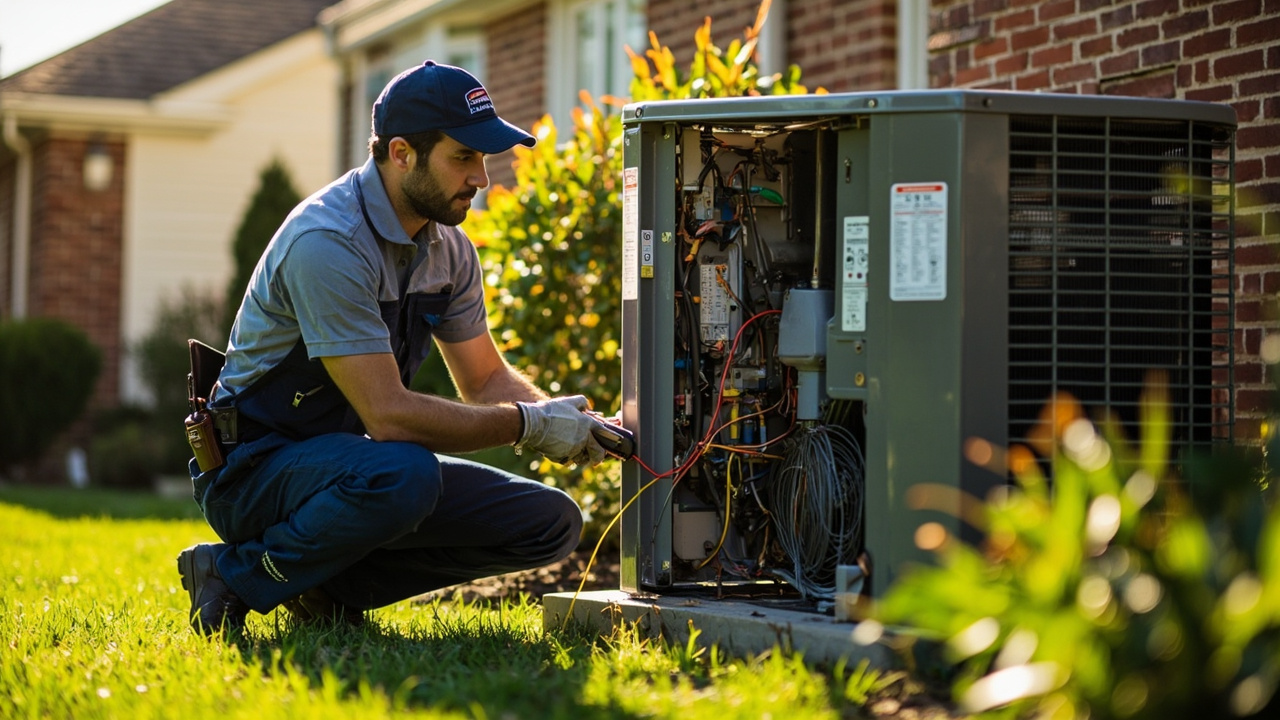
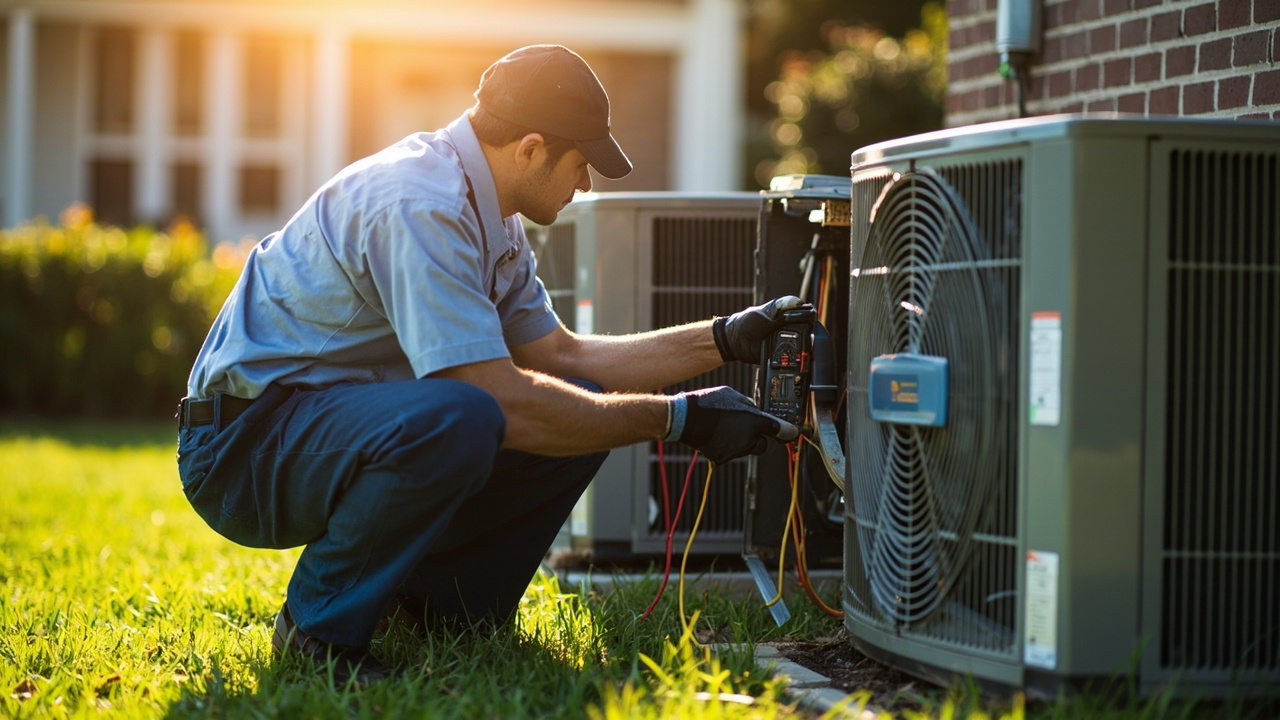
First, we verify power delivery. We test voltage at the disconnect box, measure amperage at the contactor, and confirm the control board is sending the correct signal to the fan motor. If the breaker tripped, we investigate why. A tripped breaker is a symptom, not the problem.

Next, we test the run capacitor. This cylindrical component stores electrical charge and delivers the jolt needed to start the fan motor. Capacitors fail frequently in Indianapolis because heat degrades the dielectric film inside. We use a multimeter to measure microfarads and compare the reading against the rated capacity printed on the casing. If the capacitor reads low or shows zero continuity, we replace it.

If the capacitor tests good, we move to the fan motor. We check for seized bearings by manually spinning the blade. If the blade resists or grinds, the motor bearings have failed. We also test motor windings for continuity and resistance. A burnt winding shows infinite resistance, which means the motor is dead.

We inspect the fan blade for cracks, missing pieces, or imbalance. A damaged blade creates vibration that accelerates bearing wear. We also verify the blade is secured tightly to the motor shaft.

Finally, we examine the contactor and control board. A pitted contactor cannot complete the electrical circuit, and a failed board cannot send the start signal. These components are less common failure points, but we check them every time.

Once we identify the problem, we explain what failed, why it failed, and what we recommend. No upselling. No parts-swapping guesswork.

What Happens During Your Outdoor Unit Fan Repair

Outdoor Unit Not Spinning in Indianapolis – Fast Diagnosis and Expert Repair When Your AC Stops Working
01

System Shutdown and Safety

We kill power at the breaker panel and the outdoor disconnect box. This protects you, the technician, and the equipment. We verify zero voltage with a multimeter before touching any components. Capacitors hold a charge even after power is cut, so we discharge them safely using an insulated screwdriver across the terminals.
02

Component Testing and Diagnosis

We test the run capacitor, fan motor, contactor, and control board in sequence. Each component gets measured against manufacturer specifications. We document voltage, amperage, resistance, and capacitance readings. This data tells us exactly what failed and whether other components are at risk. We show you the failed part and explain the readings.
03

Repair and System Verification

We install the replacement part, restore power, and monitor the system through a full cooling cycle. We measure airflow, check refrigerant pressures, and verify the fan motor draws proper amperage. Before we leave, we confirm the thermostat communicates correctly with the outdoor unit and the system reaches the setpoint temperature without issue.

Why Indianapolis Homeowners Choose Reliance HVAC for Condenser Fan Repairs

You need someone who understands how Indianapolis weather accelerates wear on outdoor units.

Our technicians have repaired thousands of condenser fan failures across Marion County, Carmel, Fishers, and Greenwood. We know the equipment brands common in this market. We stock Carrier, Trane, Lennox, and Goodman parts in our trucks because those are the systems we see most often in neighborhoods from Broad Ripple to Fountain Square.

We also understand local installation quirks. Older homes in Irvington and Butler-Tarkington often have outdoor units installed in tight side yards with limited airflow. This makes the condenser work harder and fail faster. Newer builds in Fishers and Noblesville sometimes have undersized units that run constantly during July and August. We diagnose with this context in mind.

When we say we know Indianapolis HVAC, we mean we have worked on systems in every type of foundation, from crawlspace installations in Meridian-Kessler to slab foundations in Greenwood. We have navigated local permit requirements and worked with inspectors who enforce the Indiana Mechanical Code.

You also get honesty. If your outdoor unit fan stopped because of a failed capacitor, we replace the capacitor. We do not tell you the motor is bad unless the motor is actually bad. We show you test results and let you decide.

We carry the parts you need. Most condenser fan repairs are completed the same day because we stock dual-run capacitors in every common microfarad rating, replacement fan motors in fractional horsepower sizes, and contactors rated for residential condensing units.

Our trucks are mobile repair stations. We do not leave to get parts unless the failure involves an uncommon component or a specialized control board.

What to Expect When You Call Reliance HVAC Indianapolis

Same-Day Availability for Fan Failures

When your outdoor unit is not spinning, we prioritize your call. Most condenser fan repairs are completed within hours of your first call, not days. We dispatch technicians across Indianapolis, and our route planning software ensures someone reaches you fast. If we cannot arrive the same day, we give you an exact appointment window and honor it. We do not make you wait at home all day guessing when we will show up.

Transparent Diagnosis Before Any Work Begins

We test your system and explain what we found before we touch a single component. You get a written estimate that includes the part cost, labor, and total price. No surprises. No hidden fees. If we find multiple issues, we explain which one caused the fan failure and which ones are secondary. You decide what gets fixed today and what can wait. We do not pressure you into repairs you do not need.

Verified Cooling Performance After Repair

We do not consider the job finished until your system cools properly. After we replace the failed component, we run the system through a complete cycle and measure airflow, refrigerant pressure, and temperature drop. We verify the fan motor draws the correct amperage and the contactor cycles cleanly. You get confirmation that your air conditioner works the way it should, not just confirmation that we installed a part.

Follow-Up Support and Maintenance Guidance

After we repair your condenser fan, we explain what caused the failure and how to prevent it from happening again. If your system is overdue for maintenance, we tell you. If your outdoor unit needs better airflow clearance, we explain why. We also offer scheduled maintenance plans that include capacitor testing, motor lubrication, and coil cleaning to catch problems before they shut down your cooling. You get our number, and you can call us if anything changes.

Frequently Asked Questions

You Have Questions,
We Have Answers

Why is my outside AC unit not spinning? +

Your outdoor unit fan may not spin due to a failed capacitor, burned-out motor, or tripped breaker. Indianapolis heat and humidity strain these components, especially during peak summer months. The capacitor stores energy to start the motor. When it fails, the fan cannot engage. You might hear a clicking or humming sound. Debris blocking the blades or a faulty contactor can also prevent spinning. Turn off your system and check your breaker panel first. If the breaker is fine, call a licensed technician to diagnose the motor or capacitor before the compressor overheats.

What is the problem if the fan is not spinning? +

A non-spinning fan indicates electrical failure, mechanical obstruction, or motor burnout. The fan motor circulates air across the condenser coils to release heat. Without this airflow, your system cannot cool effectively and risks compressor damage. Common causes include a bad run capacitor, seized bearings, or broken fan blades. In Indianapolis, storms and wind can lodge sticks or leaves into the unit, jamming the blades. Check for visible obstructions first. If clear, the issue is likely electrical. Do not ignore this. Continued operation without a working fan will lead to expensive compressor failure.

Why is my AC unit humming but not spinning? +

A humming noise without spinning points to a failed capacitor or locked motor. The hum means the compressor is trying to start but the fan motor lacks the electrical boost to engage. Capacitors weaken over time, especially in Indianapolis summers where units run continuously. A locked rotor caused by seized bearings also creates this symptom. Turn off your AC immediately. Running the system in this state overheats the compressor and burns excess electricity. A technician can test the capacitor with a multimeter and replace it quickly. Ignoring the hum leads to full motor replacement.

How to fix AC unit outside fan not working? +

Turn off power at the breaker and thermostat first. Inspect the fan blades for debris or damage. Clear any obstructions and try gently spinning the blades by hand. If they do not move freely, the motor bearings are seized. Check the disconnect box near the unit for a blown fuse. If everything looks intact, the capacitor or motor likely failed. Do not attempt electrical repairs yourself. Capacitors store high voltage even when power is off. Contact a licensed HVAC technician in Indianapolis to safely test and replace the faulty component. DIY repairs void warranties and risk injury.

Should I turn off my AC if the fan isn't spinning? +

Yes. Turn off your AC immediately if the outdoor fan is not spinning. The fan removes heat from the refrigerant. Without it, the compressor overheats and can seize, leading to a costly replacement. Your system may still hum or vibrate, but this creates internal damage. Switch off the unit at the thermostat and the breaker panel. Do not restart until a technician inspects the cause. Indianapolis heat accelerates compressor failure when airflow stops. Waiting a few hours for service is better than paying thousands for a new compressor or full system replacement.

What is the $5000 rule for AC? +

The 5000 dollar rule is a decision guideline for replacing an AC system. Multiply the repair cost by your system age in years. If the total exceeds 5000, replacement makes more financial sense than repair. For example, a 1200 dollar repair on a 10-year-old unit equals 12000, suggesting replacement. A 400 dollar fix on a 5-year-old unit equals 2000, making repair smarter. This rule accounts for diminishing efficiency and future breakdowns. Indianapolis summers demand reliable cooling. If your system is old and repairs are climbing, replacement offers better long-term value and energy savings.

How do I know if my fan motor is blown? +

A blown fan motor shows clear signs. You may hear no noise at all or a loud grinding sound. The fan blades will not spin even when power is applied. Check for a burning smell near the outdoor unit, which indicates fried windings. Use a multimeter to test for continuity across the motor terminals. No reading means the motor is dead. Indianapolis units work hard from May through September, wearing motors faster. Seized bearings or electrical shorts cause failure. A technician can confirm motor death and install a replacement, which typically costs less than compressor repair.

How to get a fan to spin again? +

If the fan blades do not spin, first cut power and clear debris. Try rotating the blades manually. If they turn freely, the motor or capacitor failed. If they resist, the bearings are seized or the motor shaft is damaged. Replace a bad capacitor to restore function. Seized bearings require motor replacement. Lubricating old motors rarely works and voids warranties. Do not force stuck blades. In Indianapolis, age and weather exposure degrade motors. A professional can determine if your motor is salvageable or needs replacement. Attempting a DIY fix on electrical components is dangerous and illegal without a license.

Can you spray WD-40 in a fan motor? +

No. Do not spray WD-40 into a fan motor. Modern sealed motors do not require lubrication and WD-40 is not a lubricant, it is a solvent. Spraying it inside attracts dust, gums up components, and voids your warranty. Older motors with oil ports may accept a few drops of electric motor oil, but most units in Indianapolis homes use sealed bearings. If your motor is noisy or seized, it needs replacement, not lubrication. WD-40 will not fix failed capacitors or burned windings. Call a technician to diagnose the real issue before attempting home remedies that cause more damage.

What is the 3 minute rule for AC? +

The 3 minute rule prevents short cycling and compressor damage. After your AC shuts off, wait at least 3 minutes before restarting. This allows refrigerant pressure to equalize between the high and low sides of the system. Restarting too soon forces the compressor to start against high pressure, which strains the motor and trips breakers. Indianapolis heat tempts homeowners to restart immediately when cooling stops, but this damages the system. Modern thermostats enforce this delay automatically. If you manually cycle power, always wait. Ignoring this rule shortens compressor life and increases repair frequency.

How Indianapolis Heat and Humidity Accelerate Condenser Fan Failures

Indianapolis summers combine high heat with oppressive humidity. July and August regularly hit the low-to-mid 90s, with dew points in the 70s. This forces your outdoor unit to run longer and work harder to reject heat. The condenser fan spins for hours each day, and the motor operates in ambient temperatures that exceed 100 degrees when direct sunlight hits the unit. Capacitors degrade faster in heat, and motor bearings wear out quicker under constant load. We see more condenser fan failures between June and September than the rest of the year combined because Indianapolis weather pushes equipment to its limit.

Choosing a local HVAC company means you work with technicians who understand how Indianapolis conditions affect your equipment. We know which capacitor brands hold up in heat and which fail early. We know that outdoor units installed on the south or west side of a home take more abuse from direct sun exposure. We also understand local building practices. Homes built in the 1980s and 1990s often have undersized outdoor units that struggle to keep up during peak cooling months. This insight matters when diagnosing why your fan stopped and whether the failure signals a bigger system problem.
HVAC Services in The Indianapolis Area

We are proud to serve the entire area, providing exceptional HVAC services to both residential and commercial clients. Our team is strategically located to ensure a fast response time, no matter where you are. View our service area on the map to see how we can bring our reliable, expert service right to your doorstep. Don't see your location? Give us a call anyway!

Address:
Reliance HVAC Indianapolis, 1225 N Meridian St, Indianapolis, IN, 46204

Additional Services We Offer

Our news updates

Latest Articles & News from The Blogs

The Pros and Cons of Inverter Driven AC Units for Temperature Stability in Meridian Hills Inverter-driven AC units offer a…

The Pros and Cons of Inverter Driven AC Units for Temperature Stability in Meridian Hills

The Pros and Cons of Inverter Driven AC Units for Temperature Stability in Meridian Hills Inverter-driven AC units offer a…

Cleaning Pine Needle and Sap Buildup from Your Outdoor AC Unit in The Old Northside

Cleaning Pine Needle and Sap Buildup from Your Outdoor AC Unit in The Old Northside Your outdoor AC unit works…

How an Upgraded HVAC System Boosts Your Resale Value in the Competitive Carmel Real Estate Market

How an Upgraded HVAC System Boosts Your Resale Value in the Competitive Carmel Real Estate Market Homeowners in Carmel face…

Contact Us

Your home is too hot to wait. Call Reliance HVAC Indianapolis at (317) 688-8818 right now. We will diagnose the problem, fix your condenser fan, and restore cooling fast. Same-day service available across Marion County.