



Menu

Weak Airflow from Vents in Indianapolis – Fast Diagnosis and Permanent Fixes

When your AC blows weakly or registers barely push air, you need more than guesswork. Our technicians diagnose the root cause of weak airflow from vents and restore proper circulation throughout your Indianapolis home.

Slider Image 1
Slider Image 2
Slider Image 3
Slider Image 4
Slider Image 5
Slider Image 7
Slider Image 8
Slider Image 9
Slider Image 10
Slider Image 11

Why Indianapolis Homes Struggle with Reduced Airflow Year-Round

You walk up to a vent expecting cool relief, but only a trickle of air comes out. Low air pressure from vents is not just annoying. It signals a deeper problem in your HVAC system that will cost you money every day you ignore it.

Indianapolis's four-season humidity cycle creates conditions where ductwork deteriorates faster than in drier climates. Condensation builds inside ducts during our muggy summers, promoting mold and corrosion. When winter hits and your furnace runs, those same ducts expand and contract, loosening joints and creating gaps. The result is poor airflow from AC units in summer and little air coming out of vents when you need heat most.

Homes in Broad Ripple, Fountain Square, and older neighborhoods near downtown face additional challenges. Many were built before modern duct-sealing standards existed. Original ductwork was often sized for smaller, less efficient systems. When you upgrade to a high-efficiency unit but keep outdated ducts, the mismatch creates pressure imbalances. You end up with reduced air flow from registers in some rooms while others get blasted.

Dirty evaporator coils compound the issue. Indianapolis's high pollen counts and seasonal allergens clog coils faster than you expect. A blocked coil restricts refrigerant flow, which reduces the blower motor's ability to push air through the system. The blower works harder, consumes more electricity, and still delivers an AC blowing weakly into your living space.

Ignoring weak airflow does not save money. Your system runs longer cycles to reach the thermostat setpoint, driving up utility bills and accelerating wear on the compressor. Rooms farthest from the air handler stay uncomfortable. Humidity control suffers because the evaporator cannot process enough air volume to remove moisture effectively.

Why Indianapolis Homes Struggle with Reduced Airflow Year-Round
How We Diagnose and Restore Full Airflow in Indianapolis Homes

How We Diagnose and Restore Full Airflow in Indianapolis Homes

Weak airflow stems from multiple potential failures. Reliance HVAC Indianapolis uses a systematic diagnostic protocol to identify the exact cause, not just the most obvious symptom.

We start with static pressure testing. Using a manometer, we measure air pressure at the supply and return plenums. High static pressure indicates a restriction somewhere in the system. It could be a clogged filter, collapsed duct section, or undersized return grille. We compare readings against manufacturer specifications for your specific unit. If pressure exceeds the recommended range, we know the blower is fighting against resistance.

Next, we inspect the blower assembly and evaporator coil. Indianapolis's high humidity allows dust to stick to coil fins, forming an insulating layer that blocks airflow. We pull the coil if necessary and clean it with a commercial-grade detergent and soft brush. Fins bent from previous maintenance get straightened with a fin comb. The blower wheel itself often accumulates a thick layer of dirt that reduces its efficiency. We remove and clean the wheel, checking the motor capacitor and bearings for wear.

Ductwork inspection follows. We access the attic, crawlspace, or basement and visually inspect every run we can reach. Flex duct that has been crushed by storage boxes or insulation is a common finding. Joints that have separated create massive air leaks. We use a duct blaster test to quantify total leakage. If leakage exceeds 10 percent of total airflow, we recommend targeted sealing with mastic and metal-backed tape, not duct tape.

Register placement and sizing matter more than most homeowners realize. We verify that supply registers are not blocked by furniture and that return grilles provide adequate air intake. Undersized returns strangle the system, creating negative pressure that pulls unconditioned air through envelope leaks.

What Happens During an Airflow Restoration Service

Weak Airflow from Vents in Indianapolis – Fast Diagnosis and Permanent Fixes
01

System Performance Baseline

We measure airflow at every register using an anemometer and document static pressure readings at the air handler. This creates a performance baseline that reveals which zones are starved for air. We also record the temperature split across the evaporator coil to identify refrigerant issues that mimic airflow problems. These measurements guide every repair decision and provide proof of improvement after service.
02

Component Cleaning and Repair

The evaporator coil gets pulled and chemically cleaned to remove buildup that restricts airflow. We clean the blower wheel, replace the filter, and straighten any bent coil fins. If ductwork has leaks or separated joints, we seal them with mastic and mechanical fasteners. Flex duct that has been crushed or torn gets replaced with proper support straps. Undersized return grilles are flagged for replacement if they restrict intake.
03

Verification and Balancing

After repairs, we re-measure static pressure and airflow at each register. The goal is balanced distribution across all zones with static pressure within manufacturer specs. We adjust dampers if your system has them, ensuring every room gets its share of conditioned air. You receive a before-and-after report showing the improvement in cubic feet per minute at each vent and the reduction in static pressure.

Why Indianapolis Homeowners Trust Reliance HVAC for Airflow Problems

Most HVAC companies in Indianapolis will sell you a new system before they investigate the real cause of weak airflow. We do not operate that way. A thorough diagnostic saves you thousands when the fix is a $200 coil cleaning or a $400 duct repair.

Indianapolis homes present unique challenges that require local knowledge. We understand how Hoosier humidity accelerates coil fouling. We know that homes near the Indianapolis Motor Speedway and along the Fall Creek corridor often have ductwork routed through unconditioned attics where summer heat exceeds 140 degrees. That heat cooks the mastic on duct joints, causing them to fail. We account for these factors when diagnosing airflow issues.

Our technicians carry manometers, anemometers, and duct blasters on every service call. These tools cost thousands of dollars, but they are the only way to diagnose airflow problems accurately. A competitor who just swaps parts and hopes for the best will leave you with the same weak airflow and a big invoice.

We also understand Indianapolis building codes and how they impact ductwork modifications. If your system needs return air added or supply ducts rerouted, we pull permits and ensure the work meets code. That protects you during a home sale and ensures your insurance remains valid.

Reliance HVAC Indianapolis has diagnosed airflow problems in every Indianapolis neighborhood, from historic homes in Irvington with galvanized ductwork to new builds in Fishers with flex duct installations. We have seen every failure mode and know how to fix it correctly the first time.

You should not have to choose between comfort and your budget. We provide transparent diagnostics, clear explanations of what is failing, and repair options at different price points. You decide how to proceed after understanding the facts.

What You Can Expect During Your Airflow Service Appointment

Same-Day Availability

Weak airflow makes your home uncomfortable and drives up energy bills every day. We offer same-day diagnostic appointments throughout Indianapolis and surrounding communities. Call before noon and we can typically arrive the same afternoon. During peak summer months, we extend hours to handle increased demand. Emergency appointments are available seven days a week when you cannot wait for standard scheduling. Our goal is to identify the problem within 24 hours of your call.

Comprehensive Diagnostic Process

Our airflow diagnostic takes 90 minutes to two hours depending on system complexity and accessibility. We measure static pressure, test airflow at every register, inspect the blower assembly and coil, and check accessible ductwork. You receive a written report with photos of any problems we find. We explain what each issue means for your comfort and energy bills, then provide repair options. No upselling, no pressure. Just clear information so you can make an informed decision about repairs.

Guaranteed Airflow Improvement

After we complete repairs, you will feel the difference immediately. Registers that barely pushed air will deliver strong, consistent flow. Rooms that stayed too warm in summer or too cold in winter will reach comfortable temperatures faster. We verify improvement with follow-up airflow measurements and provide documentation showing the increase in cubic feet per minute at each vent. If airflow does not improve as expected, we return and investigate further at no additional diagnostic charge.

Maintenance Plans to Prevent Future Problems

Once we restore proper airflow, maintenance keeps it that way. Indianapolis's humidity and seasonal pollen require more frequent coil cleaning than drier climates. Our maintenance plans include semi-annual cleanings, filter changes, and airflow verification. We catch developing problems before they reduce comfort or efficiency. Plan members receive priority scheduling and discounted rates on repairs. Regular maintenance extends equipment life and prevents the gradual airflow decline that happens when coils and blowers accumulate dirt over months of operation.

Frequently Asked Questions

You Have Questions,
We Have Answers

Why do I barely feel air coming out of my vents? +

Weak airflow from vents usually stems from a clogged air filter, blocked return grills, or closed dampers in your ductwork. In Indianapolis homes, especially those with high humidity during summer months, dirty filters restrict airflow significantly. Check your filter first and replace it if it looks gray or caked with dust. Next, inspect all return vents for furniture or curtains blocking them. If those check out, your blower motor may be failing or your ductwork could have leaks. A professional inspection can pinpoint whether you need duct sealing or blower motor service to restore proper airflow throughout your home.

How to fix low air flow from vents? +

Start by replacing your air filter and ensuring all supply vents are fully open. Remove any furniture, rugs, or debris blocking vents and returns. Check your outdoor unit for leaves, grass clippings, or dirt clogging the condenser fins. If airflow remains weak, your ductwork may have disconnected joints or crushed sections, common in older Indianapolis homes with crawlspace installations. The blower motor speed setting might need adjustment, or the evaporator coil could be frozen due to refrigerant issues. A technician can assess whether you need duct repairs, coil cleaning, or blower motor replacement to fix the underlying problem.

Why is the air barely blowing out of my vents in my car? +

This question relates to automotive HVAC systems, not residential heating and cooling. For home airflow issues in Indianapolis, the causes differ entirely. Residential weak airflow typically involves dirty air filters, blocked ductwork, or failing blower motors. If you are experiencing weak airflow from vents in your house, check your furnace or air handler filter first, then inspect ductwork for disconnections or damage. For car AC problems, consult an automotive specialist. For home comfort issues affecting your Indianapolis property, contact a residential HVAC technician who can properly diagnose and repair your system.

How to increase flow on a vent? +

First, confirm the damper inside the vent is fully open by adjusting the lever or dial. Remove the vent cover and vacuum out accumulated dust and debris. Ensure your air filter is clean and no furniture blocks the airflow path. In Indianapolis homes with multiple zones, balancing dampers in your ductwork may need adjustment to redirect more air to specific rooms. Increasing blower motor speed can help, but this requires professional adjustment to avoid stressing your system. If one room consistently gets weak airflow, you may have undersized ductwork, crushed flex ducts, or disconnected joints requiring professional duct modifications.

What is the most common cause of poor air flow in a duct system? +

Dirty air filters cause the majority of duct system airflow problems. When filters become clogged with dust, pet hair, and debris, your system cannot pull enough air through the returns, starving the supply vents. Indianapolis homes with high pollen counts during spring and fall need more frequent filter changes. Beyond filters, ductwork leaks rank as the second most common cause. Gaps at joints, disconnected sections, or damaged flex duct allow conditioned air to escape into attics or crawlspaces before reaching your rooms. Crushed or kinked flex duct and blocked return grills also restrict airflow significantly.

What is the $5000 rule for AC? +

The $5000 rule helps homeowners decide between repairing or replacing an aging air conditioner. Multiply the repair cost by your system age in years. If the result exceeds $5000, replacement makes more financial sense. For example, a $500 repair on an 8-year-old unit equals $4000, suggesting repair is worthwhile. A $600 repair on a 12-year-old system equals $7200, indicating replacement offers better long-term value. This guideline considers that older systems require more frequent repairs and operate less efficiently. In Indianapolis, where summer heat stresses aging equipment, this rule helps you avoid throwing money at a failing system.

How to boost air coming out of vents? +

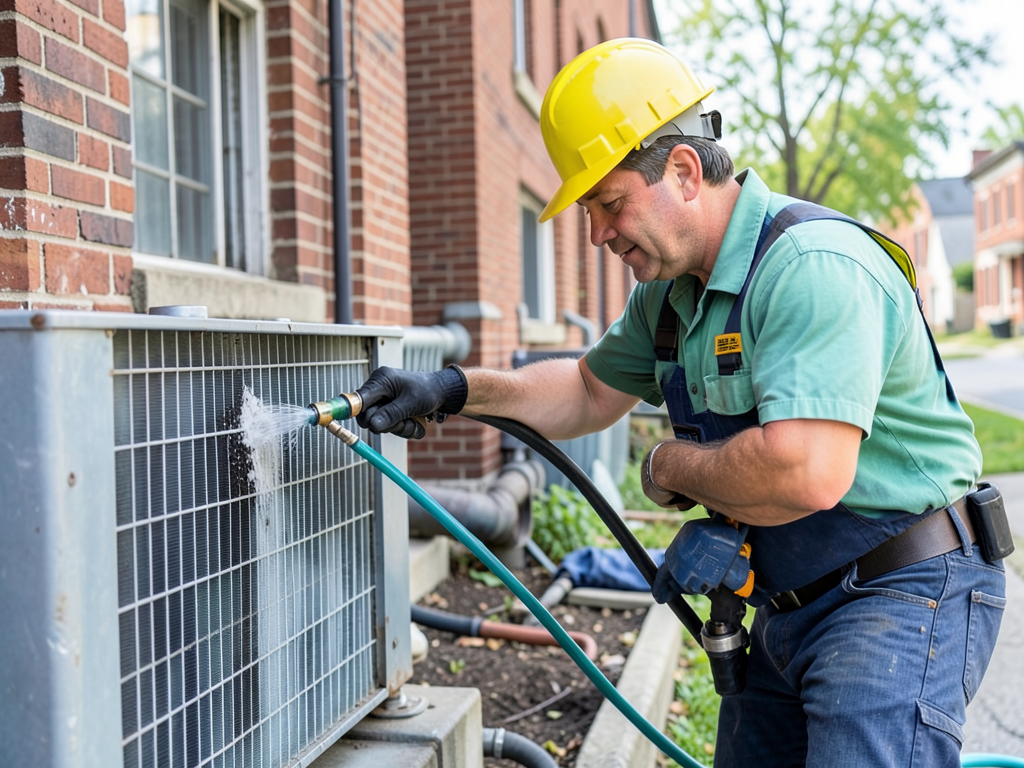
Replace your air filter immediately if it appears dirty. Vacuum all supply and return vents to remove dust buildup. Open all dampers in your ductwork fully and ensure no closed vents restrict airflow. Clean your outdoor condenser unit by hosing off debris and straightening bent fins. Check that your blower motor runs at the correct speed setting. In Indianapolis homes, attic ductwork often develops leaks at joints or gets crushed by storage items, requiring professional sealing or replacement. If these steps do not improve airflow, your evaporator coil may need cleaning or your blower motor may require replacement to restore proper air circulation.

Why is my AC set at 74 but reads 78? +

Your thermostat reads the actual room temperature, not your desired setting. When your AC is set to 74 but reads 78, your system cannot keep up with the cooling demand. Common causes include a refrigerant leak, dirty evaporator coil, failing compressor, or undersized equipment. In Indianapolis summer heat and humidity, a struggling AC works constantly without reaching setpoint. Dirty filters and blocked vents also reduce cooling capacity. Your thermostat placement matters too. If it sits near windows, doors, or heat sources, it reads inaccurately. A professional load calculation determines whether your system size matches your home's needs.

What is the 2 foot rule for HVAC? +

The 2-foot rule states you should maintain at least 2 feet of clearance around your outdoor condenser unit. This space allows proper airflow across the condenser coils, letting your system reject heat efficiently. Shrubs, fences, storage items, and debris within this zone restrict airflow and force your compressor to work harder, increasing energy bills and shortening equipment life. In Indianapolis yards, fast-growing vegetation and seasonal leaf accumulation often encroach on outdoor units. Trim plants back regularly and keep grass clippings away during mowing. Adequate clearance also provides service access for technicians performing maintenance or repairs.

What is the 3 minute rule for AC? +

The 3-minute rule prevents short cycling damage to your compressor. After your air conditioner shuts off, wait at least 3 minutes before restarting it. This delay allows refrigerant pressures to equalize throughout the system. Restarting immediately forces the compressor to start against high pressure, causing excessive electrical draw and mechanical stress that damages internal components. Modern thermostats have built-in delay timers, but if you manually control your system or experience power outages common during Indianapolis summer storms, observe this rule. Frequent short cycling also indicates problems like refrigerant leaks, oversized equipment, or thermostat issues requiring professional diagnosis.

How Indianapolis Humidity and Seasonal Swings Accelerate Airflow Problems

Indianapolis sits in a humid continental climate zone where summer dew points regularly hit 70 degrees. That moisture-laden air passes through your evaporator coil, leaving behind condensation that mixes with airborne dust and pollen. Over a single cooling season, a visible layer of grime builds on coil fins. This buildup acts like insulation, blocking airflow and forcing your blower motor to work harder. Winter compounds the problem. When outdoor temperatures drop below freezing and your furnace runs, ductwork in unconditioned attics contracts. Joints that were already marginal separate completely, creating leaks that rob airflow from registers throughout your home. Spring and fall bring massive pollen loads from Indianapolis's tree canopy, clogging filters in days instead of weeks.

Reliance HVAC Indianapolis has serviced HVAC systems in every corner of Marion County and surrounding areas. We know that homes in Broad Ripple and Butler-Tarkington often have undersized return air grilles because original systems were smaller. We understand that newer homes in Carmel and Fishers sometimes have flex duct that was improperly installed, creating kinks that strangle airflow. Our technicians are trained on Indianapolis code requirements for ductwork modifications and permit processes. That local expertise means faster, more accurate diagnostics and repairs that meet code the first time. Choosing a local company matters when your comfort depends on understanding how Indianapolis conditions impact HVAC performance.
HVAC Services in The Indianapolis Area

We are proud to serve the entire area, providing exceptional HVAC services to both residential and commercial clients. Our team is strategically located to ensure a fast response time, no matter where you are. View our service area on the map to see how we can bring our reliable, expert service right to your doorstep. Don't see your location? Give us a call anyway!

Address:
Reliance HVAC Indianapolis, 1225 N Meridian St, Indianapolis, IN, 46204

Additional Services We Offer

Our news updates

Latest Articles & News from The Blogs

Making an Attic Bedroom Actually Comfortable in Your Older Irvington Home Attic bedrooms in Irvington’s historic homes are notorious for…

Making an Attic Bedroom Actually Comfortable in Your Older Irvington Home

Making an Attic Bedroom Actually Comfortable in Your Older Irvington Home Attic bedrooms in Irvington’s historic homes are notorious for…

How Cottonwood Trees in Eagle Creek Can Secretly Destroy Your AC Efficiency

How Cottonwood Trees in Eagle Creek Can Secretly Destroy Your AC Efficiency \n\n Every June, Eagle Creek neighborhoods transform into…

Hidden HVAC Red Flags to Watch for When House Hunting in Broad Ripple

Hidden HVAC Red Flags to Watch for When House Hunting in Broad Ripple Buying a home in Broad Ripple means…

Contact Us

Weak airflow costs you money every day in higher energy bills and lost comfort. Call Reliance HVAC Indianapolis at (317) 688-8818 now for same-day diagnostic service. We will identify the problem and restore full airflow throughout your home.