
Deciding Between an Attic Fan and a Whole House Fan for Your Butler-Tarkington Property
Choosing the right cooling system for your Butler-Tarkington home means understanding how each fan type works with Indianapolis’s humid continental climate. An attic fan protects your roof structure by exhausting superheated air from your attic space while a whole house fan cools your living areas by drawing in fresh outdoor air. Both systems can reduce your central air conditioning runtime but serve different purposes based on your home’s construction and your comfort goals.. Read more about Why Even the Best HVAC System Can’t Compete with Poor Attic Insulation in Your Brownsburg Ranch.
Before deciding which system fits your needs consider that Butler-Tarkington’s historic homes built between 1900 and 1940 often have limited attic ventilation and varying roof pitches that affect fan performance. The neighborhood’s mature tree canopy and dense housing also impact airflow patterns making professional assessment critical for optimal results.. Read more about The Connection Between Your HVAC System and Radon Levels in a Northside Indianapolis Basement.
What is a Whole House Fan and How Does It Work
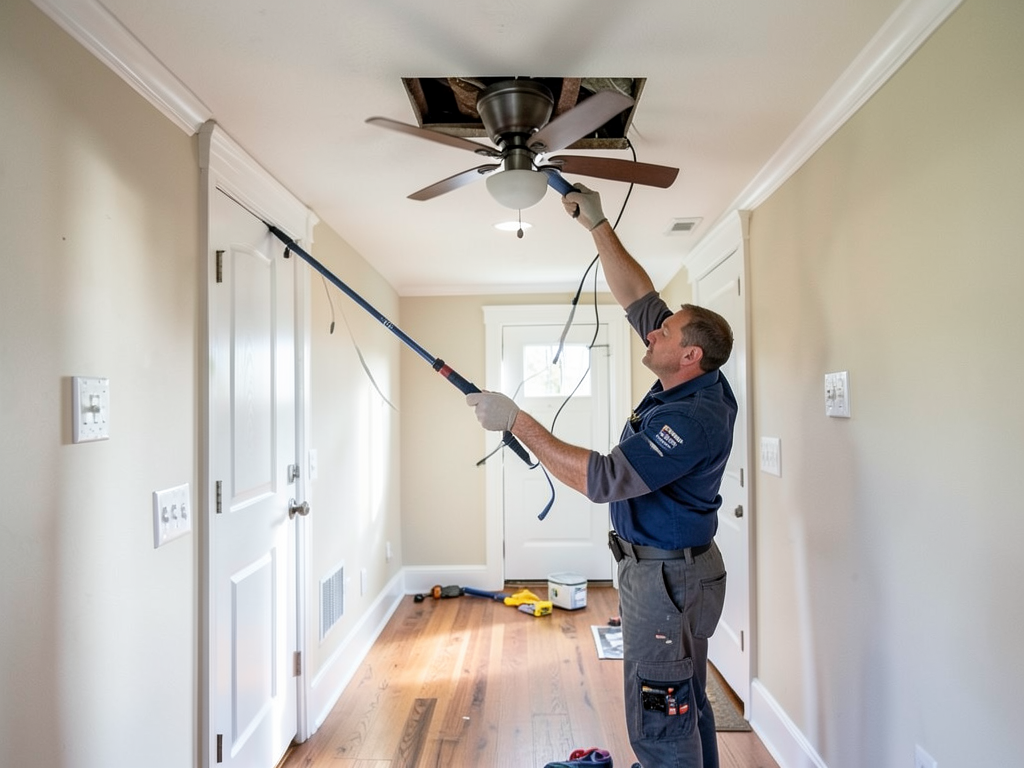
A whole house fan mounts in your ceiling typically in a central hallway and pulls cool evening air through open windows throughout your home. The fan exhausts this air into your attic where it escapes through existing roof vents creating negative pressure that draws fresh air inward. This process can exchange the entire air volume in your home every 3 to 5 minutes depending on the fan’s CFM rating.
Whole house fans work best when outdoor temperatures drop below indoor temperatures usually during evening hours in Indianapolis from May through September. The system requires open windows for proper operation and works most effectively in homes with good cross-ventilation. Modern units include insulated doors that seal the opening when not in use preventing heat loss during winter months.
What is an Attic Fan and Its Primary Function
An attic fan mounts on your roof or gable end and exclusively ventilates the attic space by exhausting hot air and drawing in cooler outside air through soffit vents. The system does not affect your living space temperature directly but prevents your attic from reaching temperatures above 150°F on sunny summer days. This protection extends the life of your roof shingles and reduces the heat load on your living space below.
Attic fans operate automatically using a thermostat that activates when attic temperatures exceed your preset level typically around 95°F to 100°F. The system requires proper intake ventilation through soffit vents to function correctly. Without adequate soffit venting an attic fan can create negative pressure that pulls conditioned air from your living space through ceiling penetrations wasting energy.
Side by Side Comparison of Attic and Whole House Fans
| Feature | Whole House Fan | Attic Fan |
|---|---|---|
| Primary Purpose | Cool living space | Protect attic structure |
| Installation Location | Hallway ceiling | Roof or gable |
| Operation Requirements | Open windows | Sealed attic |
| Energy Use | 200-700 watts | 10-50 watts |
| Noise Level | 45-65 decibels | 35-45 decibels |
| Best Climate Use | Dry cool evenings | Hot sunny days |
| Humidity Impact | Adds moisture if outdoor air is humid | No direct impact |
Key Performance Differences in Indianapolis Weather
Indianapolis humidity levels averaging 70% to 80% during summer months create distinct performance differences between fan types. Whole house fans can introduce moist air into your home when outdoor dew points exceed 65°F potentially increasing indoor humidity beyond comfortable levels. This moisture can condense on cool surfaces creating mildew risks in historic Butler-Tarkington homes with plaster walls.
Attic fans avoid humidity issues since they only exchange attic air. However they cannot reduce your indoor temperature during heat waves when outdoor temperatures remain above 85°F at night. The choice depends on whether you prioritize moisture control or maximum cooling potential.
Operating Requirements and Safety Considerations
Whole house fans require careful operation to prevent backdrafting of combustion appliances. When the fan creates negative pressure it can pull carbon monoxide from gas water heaters or furnaces back into living spaces. Modern installations include automatic pressure sensors that shut down the fan if dangerous conditions develop. Furnace Blowing Cold Air.
Attic fans need proper intake ventilation to prevent pulling conditioned air from your home. The International Residential Code requires one square foot of net free vent area for every 300 cubic feet per minute of fan capacity. Many Butler-Tarkington homes built before 1980 lack adequate soffit venting requiring professional assessment before installation.
Impact on HVAC System Longevity
Both fan types reduce central air conditioning runtime extending equipment life. Whole house fans can eliminate AC use during mild evenings saving 3 to 5 hours of compressor operation daily. Attic fans reduce the temperature differential your AC must overcome potentially improving efficiency by 10% to 15%.
The energy savings depend on your home’s insulation quality and local electricity rates. AES Indiana’s current residential rates average $0.14 per kilowatt hour making the 200 to 700 watt whole house fan cost $0.03 to $0.10 per hour to operate compared to $0.30 to $0.50 per hour for a central AC system.
Cost Breakdown for Indianapolis Homeowners
Installation costs vary significantly based on your home’s construction and existing ventilation. Whole house fans require cutting an opening in your ceiling and often upgrading attic ventilation. Professional installation ranges from $1,200 to $3,500 including electrical work and permits. Attic fans cost less at $800 to $2,000 since they mount directly to existing roof structures.
Energy savings calculations for a typical 2,000 square foot Butler-Tarkington home show whole house fans reducing cooling costs by $30 to $60 monthly during peak season while attic fans save $15 to $25 monthly by reducing AC runtime. The higher upfront cost of whole house fans can be offset within 3 to 5 years through energy savings alone.
ROI and Home Value Considerations
Both systems can increase your home’s resale value by improving energy efficiency and comfort. Whole house fans appeal to buyers seeking sustainable cooling options while attic fans attract those wanting to protect their roof investment. The return on investment depends on your neighborhood’s housing market and buyer preferences.
Historic Butler-Tarkington properties often benefit more from whole house fans since they complement the architectural character better than window units. Modern HVAC systems in newer homes may see greater benefit from attic fans that protect expensive equipment from heat damage.
Making the Right Choice for Your Butler-Tarkington Home
Your decision should start with a professional assessment of your home’s construction year roof type and existing ventilation. Homes built before 1940 typically need significant attic ventilation upgrades before either fan type works effectively. The assessment should include measuring attic air volume calculating required CFM and checking for combustion appliance backdrafting risks.
Consider your cooling priorities. If you want to eliminate AC use during mild evenings and improve nighttime air quality choose a whole house fan. If you want to protect your roof reduce attic heat gain and maintain consistent indoor temperatures choose an attic fan. Some homeowners install both systems for maximum flexibility.
Installation Best Practices for Local Conditions
Indianapolis’s freeze-thaw cycles require fans rated for extreme temperature variations. Look for units with thermally protected motors and rust-resistant components. Whole house fans need insulated doors to prevent heat loss during winter while attic fans require freeze protection to prevent damage from ice dams.
Local building codes require permits for both installations and electrical work must comply with Indiana Residential Code Article 33. Professional installers should verify your home’s structural capacity can support the fan weight and that your electrical panel has adequate capacity for the new load.
Frequently Asked Questions
Can I install both an attic fan and whole house fan in the same home?
Yes many homeowners install both systems to maximize cooling flexibility. The attic fan runs during hot sunny days while the whole house fan operates during cool evenings. However the systems must be properly coordinated to prevent conflicts and ensure adequate ventilation at all times.
How do I calculate the right size fan for my home?
For whole house fans divide your home’s square footage by 2 to get the minimum CFM rating. A 2,000 square foot home needs at least 1,000 CFM. For attic fans calculate your attic’s cubic volume and divide by 15 to determine required CFM. These are minimum guidelines and actual requirements vary based on local conditions.
Will either fan type affect my home insurance rates?
Properly installed fans typically do not affect insurance rates. However DIY installations or units that create moisture problems could potentially cause issues. Always use licensed contractors and obtain required permits to ensure your installation meets local building codes and insurance requirements.
What maintenance do these fans require?
Both fan types need annual maintenance including motor lubrication belt inspection and cleaning of fan blades. Whole house fans require checking the seal around the insulated door while attic fans need inspection of roof penetrations for leaks. Professional maintenance costs $100 to $200 annually and can prevent costly repairs. EPA ventilation standards.
Ready to Improve Your Home’s Comfort
Understanding the differences between attic fans and whole house fans helps you make an informed decision for your Butler-Tarkington property. The right choice depends on your home’s specific characteristics your cooling priorities and your budget constraints. Professional assessment ensures you get the system that delivers maximum comfort and energy savings.
Call (317) 688-8818 today to schedule your free assessment and get expert recommendations for your specific home. Our licensed technicians understand Butler-Tarkington’s unique housing stock and can design the perfect cooling solution for your needs.
Don’t wait until summer heat makes your decision for you. Pick up the phone and call (317) 688-8818 before the next heat wave hits. We’ll help you stay cool while saving money on your energy bills. For more information, visit Department of Energy whole house fan guide.
{
“@context”: “https://schema.org”,
“@type”: “BlogPosting”,
“headline”: “Deciding Between an Attic Fan and a Whole House Fan for Your Butler-Tarkington Property”,
“description”: “Butler-Tarkington homeowners: Compare attic vs whole house fans for Indianapolis humidity, energy savings, and proper attic ventilation. Get expert advice.”,
“wordCount”: 1593,
“datePublished”: “2026-04-18T11:26:00.000Z”,
“dateModified”: “2026-04-18T11:26:00.000Z”,
“inLanguage”: “en-US”,
“mainEntityOfPage”: {
“@type”: “WebPage”,
“@id”: “https://reliancehvacindianapolis.com”
},
“publisher”: {
“@type”: “LocalBusiness”,
“name”: “Reliance HVAC Indianapolis”,
“url”: “https://reliancehvacindianapolis.com”
},
“author”: {
“@type”: “Organization”,
“name”: “Reliance HVAC Indianapolis”,
“url”: “https://reliancehvacindianapolis.com”
},
“image”: {
“@type”: “ImageObject”,
“url”: “https://reliancehvacindianapolis.com/wp-content/uploads/2026/03/deciding-between-an-attic-fan-and-a-whole-house-fa-1.png”
}
}
{
“@context”: “https://schema.org”,
“@type”: “HVACBusiness”,
“name”: “Reliance HVAC Indianapolis”,
“url”: “https://reliancehvacindianapolis.com”,
“address”: {
“@type”: “PostalAddress”,
“addressLocality”: “Indianapolis”
},
“areaServed”: {
“@type”: “City”,
“name”: “Indianapolis”
}
}
{
“@context”: “https://schema.org”,
“@type”: “FAQPage”,
“mainEntity”: [
{
“@type”: “Question”,
“name”: “Can I install both an attic fan and whole house fan in the same home?”,
“acceptedAnswer”: {
“@type”: “Answer”,
“text”: “Yes many homeowners install both systems to maximize cooling flexibility. The attic fan runs during hot sunny days while the whole house fan operates during cool evenings. However the systems must be properly coordinated to prevent conflicts and ensure adequate ventilation at all times.”
}
},
{
“@type”: “Question”,
“name”: “How do I calculate the right size fan for my home?”,
“acceptedAnswer”: {
“@type”: “Answer”,
“text”: “For whole house fans divide your home’s square footage by 2 to get the minimum CFM rating. A 2,000 square foot home needs at least 1,000 CFM. For attic fans calculate your attic’s cubic volume and divide by 15 to determine required CFM. These are minimum guidelines and actual requirements vary based on local conditions.”
}
},
{
“@type”: “Question”,
“name”: “Will either fan type affect my home insurance rates?”,
“acceptedAnswer”: {
“@type”: “Answer”,
“text”: “Properly installed fans typically do not affect insurance rates. However DIY installations or units that create moisture problems could potentially cause issues. Always use licensed contractors and obtain required permits to ensure your installation meets local building codes and insurance requirements.”
}
},
{
“@type”: “Question”,
“name”: “What maintenance do these fans require?”,
“acceptedAnswer”: {
“@type”: “Answer”,
“text”: “Both fan types need annual maintenance including motor lubrication belt inspection and cleaning of fan blades. Whole house fans require checking the seal around the insulated door while attic fans need inspection of roof penetrations for leaks. Professional maintenance costs $100 to $200 annually and can prevent costly repairs. EPA ventilation standards.”
}
}
]
}
{
“@context”: “https://schema.org”,
“@type”: “BreadcrumbList”,
“itemListElement”: [
{
“@type”: “ListItem”,
“position”: 1,
“name”: “Home”,
“item”: “https://reliancehvacindianapolis.com”
},
{
“@type”: “ListItem”,
“position”: 2,
“name”: “Blog”,
“item”: “https://reliancehvacindianapolis.com/blog”
},
{
“@type”: “ListItem”,
“position”: 3,
“name”: “Deciding Between an Attic Fan and a Whole House Fan for Your Butler-Tarkington Property”
}
]
}
{
“@context”: “https://schema.org”,
“@type”: “Service”,
“serviceType”: “HVAC”,
“provider”: {
“@type”: “LocalBusiness”,
“name”: “Reliance HVAC Indianapolis”,
“url”: “https://reliancehvacindianapolis.com”
},
“areaServed”: {
“@type”: “City”,
“name”: “Indianapolis”
},
“description”: “Butler-Tarkington homeowners: Compare attic vs whole house fans for Indianapolis humidity, energy savings, and proper attic ventilation. Get expert advice.”
}