
Can You Run a High Efficiency Heat Pump on Solar Power in Central Indiana?
Running a high-efficiency heat pump on solar power in Central Indiana is absolutely possible and increasingly popular. With the right solar array and heat pump pairing, homeowners can cut their utility bills by 60-80% while reducing their carbon footprint. The key is matching your home’s energy needs with Indiana’s seasonal sunlight patterns and taking advantage of federal and state incentives. Indiana Office of Energy Development.
Indiana’s humid continental climate means your heat pump will work hard in both summer and winter. A properly sized solar system can handle these demands, especially when paired with net metering from AES Indiana or Duke Energy. Modern solar HVAC systems use hybrid technology that switches between solar power and grid electricity seamlessly, so you stay comfortable even during cloudy spells or high-demand periods.
The investment pays off through lower monthly bills, increased home value, and protection against rising energy costs. Most Indianapolis homeowners see full payback within 7-10 years, with systems lasting 15-20 years or more. Federal tax credits currently cover 30% of installation costs, and Indiana offers additional property tax exemptions for solar equipment.
Let’s break down exactly how this works in our local climate, what incentives are available, and what to expect from installation and operation.
How Solar HVAC Works in the Indiana Climate
Indiana gets about 4.2 peak sunlight hours per day on average, which is enough to power a heat pump when the system is properly designed. Solar panels produce DC electricity that flows to an inverter, which converts it to AC power for your home. When your heat pump needs more power than your panels produce, the system automatically draws from the grid or a battery backup.. Read more about The Pros and Cons of Inverter Driven AC Units for Temperature Stability in Meridian Hills.
During summer months when cooling demands peak, your solar production is also at its highest. This natural alignment means you’re generating power when you need it most. Winter presents a different challenge since heating demands increase while daylight hours decrease. That’s why hybrid systems are essential in Indiana – they use solar when available but maintain grid connection for backup. Reliable Heating and Cooling Experts Serving the Broad Ripple Area.
The technology has evolved significantly. Modern solar HVAC systems use variable-speed compressors that adjust their power draw based on demand. This means they can run efficiently on partial solar power rather than needing full capacity all the time. Some systems even store excess solar energy in thermal mass or batteries for use during nighttime hours.
Indiana’s weather patterns actually work in your favor. While we do get cloudy days, our summers provide long daylight hours perfect for cooling your home. The key is having enough panel capacity to handle your home’s peak loads, plus a smart inverter that manages power flow efficiently.
Benefits of Solar-Assisted Heating & Cooling for Indy Homeowners
The primary benefit is immediate cost savings on your utility bills. A typical Indianapolis home with a 5-ton heat pump can see monthly cooling costs drop from $200-300 to $50-100 when solar-powered. Heating savings are even more dramatic since gas furnaces become unnecessary. Furnace Blowing Cold Air.
Beyond the numbers, there’s the reliability factor. When power outages occur during summer storms or winter freezes, homes with solar battery backup continue running normally. This is especially valuable in older Indianapolis neighborhoods where overhead power lines are vulnerable to weather damage.
Property values increase with solar installations. Recent studies show homes with solar HVAC systems sell for 4-6% more than comparable homes without them. Buyers recognize the long-term savings and environmental benefits, making your home more attractive in competitive markets like Carmel or Fishers.
There’s also the environmental impact. A typical solar HVAC system in Indiana prevents about 8-10 tons of CO2 emissions annually – equivalent to planting 150 trees or taking two cars off the road. For homeowners concerned about climate change, this provides tangible results you can measure through your reduced carbon footprint.
Maintenance is actually simpler than traditional systems. Solar panels have no moving parts and require only occasional cleaning. Modern heat pumps are more reliable than older AC units since they don’t have separate heating and cooling systems to maintain. Many homeowners report fewer service calls after switching to solar HVAC.
Federal and Indiana Solar Tax Credits & Incentives (2026 Update)
The federal Investment Tax Credit (ITC) remains at 30% through 2032 for residential solar installations. This means if your complete solar HVAC system costs $25,000, you can deduct $7,500 from your federal taxes. The credit applies to both equipment and installation labor, making it a significant financial boost.
Indiana offers a property tax exemption for solar equipment. While your home’s value may increase due to the solar installation, you won’t pay additional property taxes on that added value. This exemption lasts for the life of the system, providing ongoing savings beyond the initial installation.
AES Indiana and Duke Energy both offer net metering programs. When your solar panels produce more electricity than you use, the excess flows back to the grid and you receive credits on your account. During cloudy days or high-demand periods, you can use these credits instead of paying for grid power.
Local utilities also offer specific solar incentives. AES Indiana provides rebates for solar installations that meet certain efficiency standards. Duke Energy offers similar programs, particularly for new construction where solar can be integrated during the building process. How Much Does a New AC Unit Cost for a Standard Zionsville Home?.
The Indiana Office of Energy Development provides additional resources and occasionally offers grants for solar projects in certain areas. While these are less common for residential installations, they’re worth checking if you live in a designated energy opportunity zone.
Our Solar HVAC Installation Process in Indianapolis
The process starts with a comprehensive home energy audit. We evaluate your current HVAC system, insulation levels, and energy usage patterns to determine the optimal solar array size. This audit includes thermal imaging to identify heat loss areas and airflow testing to ensure your ductwork can handle the new system.
Next comes system design. We use satellite imagery and on-site measurements to determine the best panel placement for your roof’s orientation and shading patterns. Indianapolis homes often have good south-facing roof exposure, but we also consider east and west orientations which can work well for extended production throughout the day.
Permit acquisition is handled by our team. Marion County requires specific electrical permits for solar installations, and we ensure all work meets local building codes. This includes structural engineering certification for your roof’s ability to support the panel weight – typically 3-4 pounds per square foot when fully loaded.
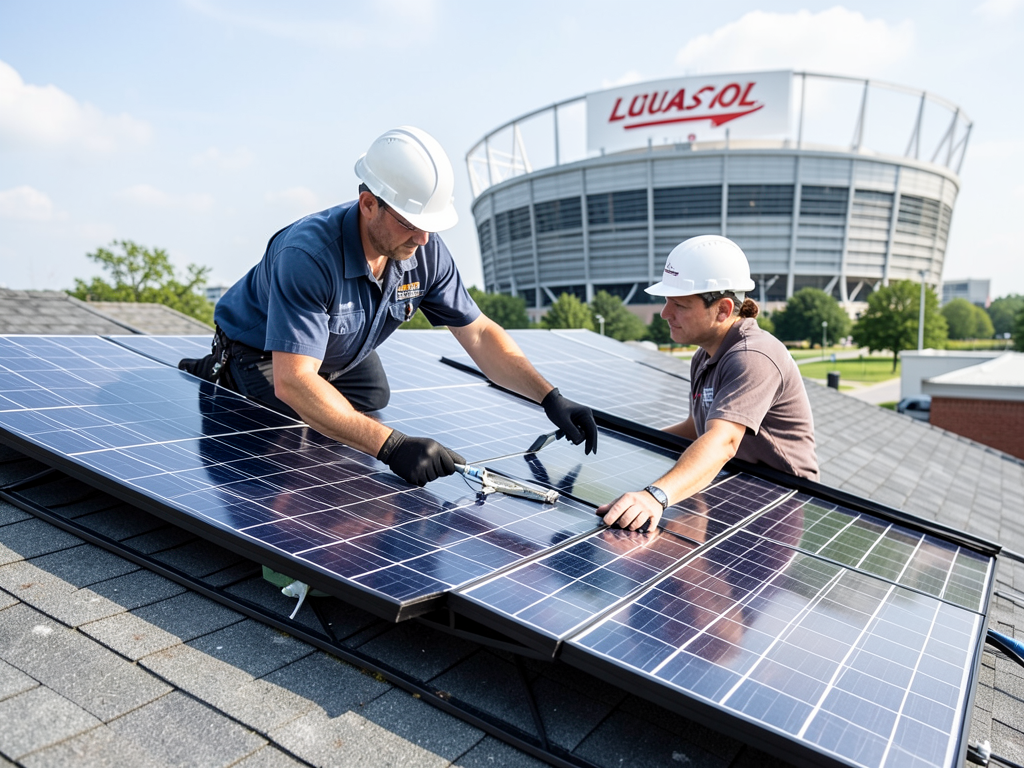
Installation usually takes 2-3 days for a complete system. The first day involves mounting the racking system and installing panels. The second day covers electrical connections, inverter installation, and integration with your existing electrical panel. The third day includes system testing, net metering setup, and homeowner training.
We provide a mobile app that lets you monitor your system’s performance in real-time. You can see exactly how much power your panels are producing, how much your heat pump is using, and your net energy flow to and from the grid. This transparency helps you understand your savings and system performance.
Post-installation support includes a 25-year warranty on panels, 10-year warranty on inverters, and 5-year warranty on installation workmanship. We also offer maintenance packages to keep your system operating at peak efficiency throughout its lifetime.
Estimated ROI and Monthly Savings with Solar Air Conditioning
Let’s look at a typical Indianapolis home scenario. A 5-ton heat pump with a 7kW solar array costs approximately $22,000 before incentives. After the 30% federal tax credit ($6,600) and local incentives ($1,000), your net cost is around $14,400.
Annual electricity savings average $1,500-2,000 depending on your usage patterns. With Indiana’s current electricity rates around $0.13 per kWh, and a heat pump using about 15,000 kWh annually for heating and cooling, the savings add up quickly.
Monthly utility bills typically drop from $250-350 to $50-100 year-round. During peak summer months, you might see zero charges on your bill if your solar production matches your cooling demand. Winter months may show small charges since heating demands exceed solar production, but these are offset by summer credits.
The payback period works out to 7-9 years on average. After that, you’re essentially getting free heating and cooling for the remaining 10-15 years of system life. Many homeowners also qualify for solar renewable energy credits (SRECs), which provide additional income based on your system’s production. Getting Your Greenwood AC Fixed Fast Before the Next Humidity Spike.
Consider the non-financial benefits too. As electricity rates continue rising (historically about 3% annually), your savings grow over time. You’re also protected from rate spikes during peak demand periods when utilities often charge premium rates.
For comparison, traditional HVAC replacement costs $8,000-12,000 and provides no energy savings. The additional $6,000-8,000 for solar integration pays for itself through utility savings within the system’s warranty period. Affordable HVAC Replacement Options for Families in Noblesville.
Frequently Asked Questions
Will solar panels work during Indiana’s cloudy winters?
Yes, but with reduced efficiency. Solar panels still produce power on cloudy days, just at 10-25% of their rated capacity. Modern systems account for this by being oversized for your needs and using net metering to bank excess summer production for winter use.
Do I need battery storage for a solar HVAC system?
Not necessarily. Net metering provides similar benefits by letting you use the grid as virtual storage. However, batteries provide backup power during outages and can increase your solar self-consumption from about 70% to 90%, maximizing your savings.
How long do solar HVAC systems last?
Solar panels typically last 25-30 years with minimal degradation. Heat pumps last 15-20 years, similar to conventional units. Inverters need replacement every 10-15 years. The system’s long lifespan means you’ll get 2-3 times more use than a traditional HVAC system.
What happens if I move before the system pays for itself?
Studies show solar homes sell faster and for more money – typically $15,000-20,000 more than comparable homes. Buyers value the energy savings and environmental benefits, so you’ll likely recoup your investment even if you move early.
Can my roof support solar panels?
Most modern roofs can support solar panels. We conduct structural analysis as part of our assessment. Asphalt shingle roofs in good condition are ideal. If your roof needs replacement soon, we recommend doing that first to avoid reinstalling panels later.
What maintenance is required?
Very little. Panels need occasional cleaning (once or twice yearly) to remove dust and debris. We recommend annual system checks to ensure all components are operating correctly. The heat pump requires standard HVAC maintenance like filter changes and coil cleaning.
Will I still have power during outages?
With battery backup, yes. Without batteries, most grid-tied solar systems shut down during outages for safety reasons. However, you can add batteries later if you want outage protection. Some homeowners start without batteries and add them when prices decrease or their needs change.
How do I know what size system I need?
We perform a detailed energy analysis based on your home’s square footage, insulation levels, window efficiency, and your actual energy usage patterns. This ensures you get a system sized perfectly for your needs – not too big (wasting money) or too small (not meeting your demands).
Are there any hidden costs?
The main potential additional costs are roof reinforcement if needed ($500-2,000) and electrical panel upgrades for older homes ($1,000-3,000). We identify these during our initial assessment so there are no surprises. Permit fees and interconnection charges are typically included in our quotes.
Can I add more panels later if I need more power?
Yes, solar systems are modular. You can expand your array later if you add electric vehicles, a pool, or simply want more energy independence. We design systems with expansion in mind, leaving space on your roof and in your electrical panel for future additions.
Ready to Go Solar in Indianapolis?
Solar-powered HVAC systems represent the future of home comfort in Central Indiana. With federal and state incentives making the technology more affordable than ever, there’s never been a better time to make the switch. The combination of lower utility bills, increased home value, and environmental benefits creates a compelling case for any homeowner looking to upgrade their system.
Every home is different, and the best way to know if solar HVAC is right for you is through a professional assessment. We’ll evaluate your specific situation, explain your options clearly, and provide a detailed proposal with accurate cost estimates and projected savings.
Don’t wait for energy prices to rise further or for your current HVAC system to fail at the worst possible moment. Take control of your home’s comfort and energy costs today. Our team has installed hundreds of solar HVAC systems throughout Indianapolis and understands the unique challenges and opportunities our local climate presents.
Call (317) 688-8818 today to schedule your free solar HVAC consultation. We’ll show you exactly how much you can save and help you take the first step toward energy independence. Your future self – and your wallet – will thank you.
Pick up the phone and call (317) 688-8818 before the next heat wave hits. Let’s make your home more comfortable, more efficient, and more valuable with solar-powered HVAC technology that’s proven to work in Indiana’s climate. For more information, visit U.S. Department of Energy Solar Information.
{
“@context”: “https://schema.org”,
“@type”: “BlogPosting”,
“headline”: “Can You Run a High Efficiency Heat Pump on Solar Power in Central Indiana?”,
“description”: “Discover if solar-powered HVAC systems work in Indianapolis. Learn about local incentives, installation, and real ROI for Central Indiana homeowners.”,
“wordCount”: 2248,
“datePublished”: “2026-06-02T14:39:00.000Z”,
“dateModified”: “2026-06-02T14:39:00.000Z”,
“inLanguage”: “en-US”,
“mainEntityOfPage”: {
“@type”: “WebPage”,
“@id”: “https://reliancehvacindianapolis.com”
},
“publisher”: {
“@type”: “LocalBusiness”,
“name”: “Reliance HVAC Indianapolis”,
“url”: “https://reliancehvacindianapolis.com”
},
“author”: {
“@type”: “Organization”,
“name”: “Reliance HVAC Indianapolis”,
“url”: “https://reliancehvacindianapolis.com”
},
“image”: {
“@type”: “ImageObject”,
“url”: “https://reliancehvacindianapolis.com/wp-content/uploads/2026/03/can-you-run-a-high-efficiency-heat-pump-on-solar-p-1.png”
}
}
{
“@context”: “https://schema.org”,
“@type”: “HVACBusiness”,
“name”: “Reliance HVAC Indianapolis”,
“url”: “https://reliancehvacindianapolis.com”,
“address”: {
“@type”: “PostalAddress”,
“addressLocality”: “Indianapolis”
},
“areaServed”: {
“@type”: “City”,
“name”: “Indianapolis”
}
}
{
“@context”: “https://schema.org”,
“@type”: “FAQPage”,
“mainEntity”: [
{
“@type”: “Question”,
“name”: “Will solar panels work during Indiana’s cloudy winters?”,
“acceptedAnswer”: {
“@type”: “Answer”,
“text”: “Yes, but with reduced efficiency. Solar panels still produce power on cloudy days, just at 10-25% of their rated capacity. Modern systems account for this by being oversized for your needs and using net metering to bank excess summer production for winter use.”
}
},
{
“@type”: “Question”,
“name”: “Do I need battery storage for a solar HVAC system?”,
“acceptedAnswer”: {
“@type”: “Answer”,
“text”: “Not necessarily. Net metering provides similar benefits by letting you use the grid as virtual storage. However, batteries provide backup power during outages and can increase your solar self-consumption from about 70% to 90%, maximizing your savings.”
}
},
{
“@type”: “Question”,
“name”: “How long do solar HVAC systems last?”,
“acceptedAnswer”: {
“@type”: “Answer”,
“text”: “Solar panels typically last 25-30 years with minimal degradation. Heat pumps last 15-20 years, similar to conventional units. Inverters need replacement every 10-15 years. The system’s long lifespan means you’ll get 2-3 times more use than a traditional HVAC system.”
}
},
{
“@type”: “Question”,
“name”: “What happens if I move before the system pays for itself?”,
“acceptedAnswer”: {
“@type”: “Answer”,
“text”: “Studies show solar homes sell faster and for more money – typically $15,000-20,000 more than comparable homes. Buyers value the energy savings and environmental benefits, so you’ll likely recoup your investment even if you move early.”
}
},
{
“@type”: “Question”,
“name”: “Can my roof support solar panels?”,
“acceptedAnswer”: {
“@type”: “Answer”,
“text”: “Most modern roofs can support solar panels. We conduct structural analysis as part of our assessment. Asphalt shingle roofs in good condition are ideal. If your roof needs replacement soon, we recommend doing that first to avoid reinstalling panels later.”
}
},
{
“@type”: “Question”,
“name”: “What maintenance is required?”,
“acceptedAnswer”: {
“@type”: “Answer”,
“text”: “Very little. Panels need occasional cleaning (once or twice yearly) to remove dust and debris. We recommend annual system checks to ensure all components are operating correctly. The heat pump requires standard HVAC maintenance like filter changes and coil cleaning.”
}
},
{
“@type”: “Question”,
“name”: “Will I still have power during outages?”,
“acceptedAnswer”: {
“@type”: “Answer”,
“text”: “With battery backup, yes. Without batteries, most grid-tied solar systems shut down during outages for safety reasons. However, you can add batteries later if you want outage protection. Some homeowners start without batteries and add them when prices decrease or their needs change.”
}
},
{
“@type”: “Question”,
“name”: “How do I know what size system I need?”,
“acceptedAnswer”: {
“@type”: “Answer”,
“text”: “We perform a detailed energy analysis based on your home’s square footage, insulation levels, window efficiency, and your actual energy usage patterns. This ensures you get a system sized perfectly for your needs – not too big (wasting money) or too small (not meeting your demands).”
}
},
{
“@type”: “Question”,
“name”: “Are there any hidden costs?”,
“acceptedAnswer”: {
“@type”: “Answer”,
“text”: “The main potential additional costs are roof reinforcement if needed ($500-2,000) and electrical panel upgrades for older homes ($1,000-3,000). We identify these during our initial assessment so there are no surprises. Permit fees and interconnection charges are typically included in our quotes.”
}
},
{
“@type”: “Question”,
“name”: “Can I add more panels later if I need more power?”,
“acceptedAnswer”: {
“@type”: “Answer”,
“text”: “Yes, solar systems are modular. You can expand your array later if you add electric vehicles, a pool, or simply want more energy independence. We design systems with expansion in mind, leaving space on your roof and in your electrical panel for future additions.”
}
},
{
“@type”: “Question”,
“name”: “Ready to Go Solar in Indianapolis?”,
“acceptedAnswer”: {
“@type”: “Answer”,
“text”: “Solar-powered HVAC systems represent the future of home comfort in Central Indiana. With federal and state incentives making the technology more affordable than ever, there’s never been a better time to make the switch. The combination of lower utility bills, increased home value, and environmental benefits creates a compelling case for any homeowner looking to upgrade their system.”
}
}
]
}
{
“@context”: “https://schema.org”,
“@type”: “BreadcrumbList”,
“itemListElement”: [
{
“@type”: “ListItem”,
“position”: 1,
“name”: “Home”,
“item”: “https://reliancehvacindianapolis.com”
},
{
“@type”: “ListItem”,
“position”: 2,
“name”: “Blog”,
“item”: “https://reliancehvacindianapolis.com/blog”
},
{
“@type”: “ListItem”,
“position”: 3,
“name”: “Can You Run a High Efficiency Heat Pump on Solar Power in Central Indiana?”
}
]
}
{
“@context”: “https://schema.org”,
“@type”: “Service”,
“serviceType”: “HVAC”,
“provider”: {
“@type”: “LocalBusiness”,
“name”: “Reliance HVAC Indianapolis”,
“url”: “https://reliancehvacindianapolis.com”
},
“areaServed”: {
“@type”: “City”,
“name”: “Indianapolis”
},
“description”: “Discover if solar-powered HVAC systems work in Indianapolis. Learn about local incentives, installation, and real ROI for Central Indiana homeowners.”
}