
Converting an Old Boiler to Modern Forced Air in Your Garfield Park House
If your Garfield Park home still relies on radiator heat from a decades-old boiler, you’re likely facing high energy bills, uneven heating, and no central air conditioning. Converting from radiant heat to a modern forced air system can transform your home’s comfort, efficiency, and resale value. But the process involves complex ductwork installation, potential asbestos abatement, and navigating Indianapolis building codes. Reliable Heating and Cooling Experts Serving the Broad Ripple Area.
Most Garfield Park homes built before 1950 were designed for gravity-fed steam or hot water radiators. These systems heat slowly and can’t provide cooling. A forced air conversion installs a high-efficiency furnace and central air conditioning, delivering rapid heating and cooling through a network of ducts. The transformation typically costs between $15,000 and $30,000 depending on your home’s size and existing infrastructure. Furnace Blowing Cold Air.
The conversion process usually takes 3-5 days and includes removing old radiators, installing new ductwork (often in closets or soffits to preserve historic character), and connecting to a modern HVAC system. Many Garfield Park homeowners also upgrade to a high-efficiency heat pump, which provides both heating and cooling while qualifying for AES Indiana rebates. AES Indiana rebates.
Before starting, you’ll need a Manual J load calculation to properly size your new system for your home’s specific heat loss and gain characteristics. This is especially important in Garfield Park where many homes have original plaster walls and single-pane windows that affect insulation values.. Read more about The Connection Between Your HVAC System and Radon Levels in a Northside Indianapolis Basement.
Ready to modernize your home’s heating and cooling? Call (317) 688-8818 today to schedule your inspection and get a detailed conversion estimate.. Read more about Why Your Indianapolis Home Inspection Might Flag an Aging Furnace (And How to Negotiate).
Why Convert from Radiant Heat to Forced Air?
Radiant heating systems have served Garfield Park homes for generations, but they come with significant limitations. Understanding these drawbacks helps explain why so many homeowners are making the switch to forced air.
Response time is the most noticeable difference. Radiators can take 30-60 minutes to heat a room, while forced air systems deliver warm air within minutes of turning on. This rapid response is especially valuable during Indianapolis’s sudden cold snaps when temperatures can drop 20 degrees in a single day.
Energy efficiency represents another major factor. Modern furnaces achieve 95-98% AFUE (Annual Fuel Utilization Efficiency) ratings, compared to 50-70% for older boilers. This means you’re wasting less fuel and money with each heating cycle. High-efficiency systems also include variable-speed blowers that maintain consistent temperatures without the temperature swings common with radiator systems.. Read more about Finding the Quietest Furnace Options for Small Lots in Ransom Place.
Indoor air quality improvements are often overlooked but significant. Forced air systems include high-quality air filters that remove dust, pollen, and other allergens. Many Garfield Park homeowners report reduced dust accumulation and fewer allergy symptoms after conversion. The ability to add humidifiers and air purifiers is another advantage that radiator systems simply cannot provide.
Central air conditioning is perhaps the most compelling reason for conversion. Indianapolis summers are increasingly hot and humid, making window units or portable AC units inadequate. A central system cools your entire home evenly and quietly, eliminating the noise and inefficiency of multiple window units.
Resale value impact should also factor into your decision. Indianapolis real estate agents report that homes with modern HVAC systems sell faster and command higher prices. Buyers in Garfield Park specifically look for homes that offer both historic charm and modern comfort systems.
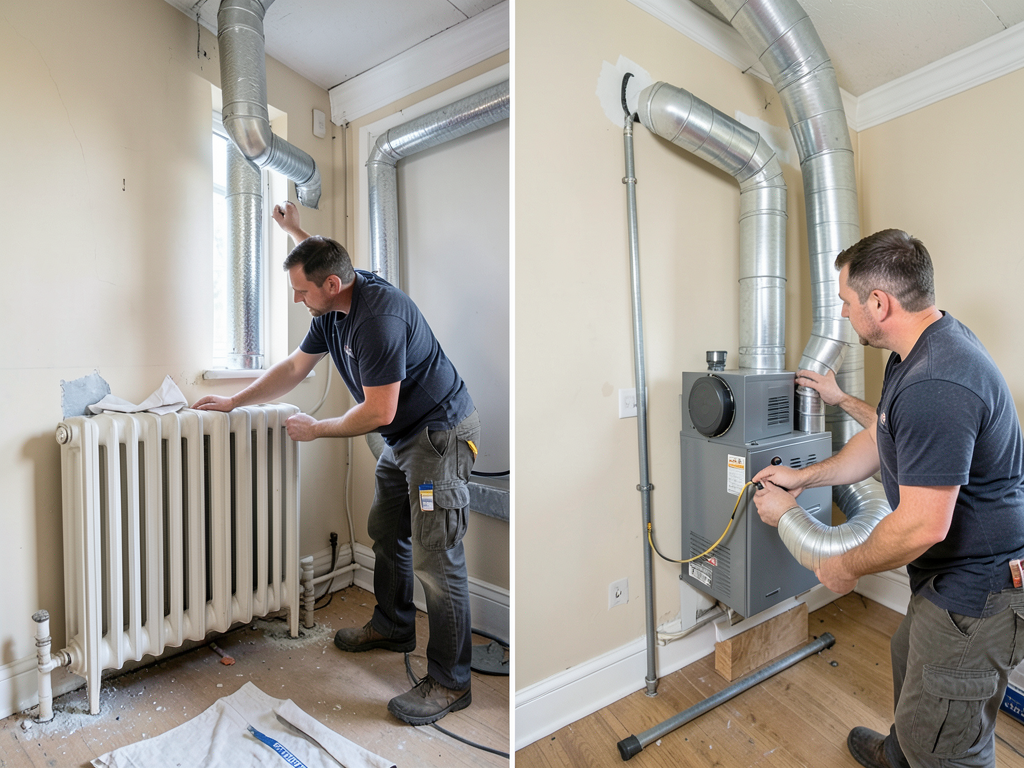
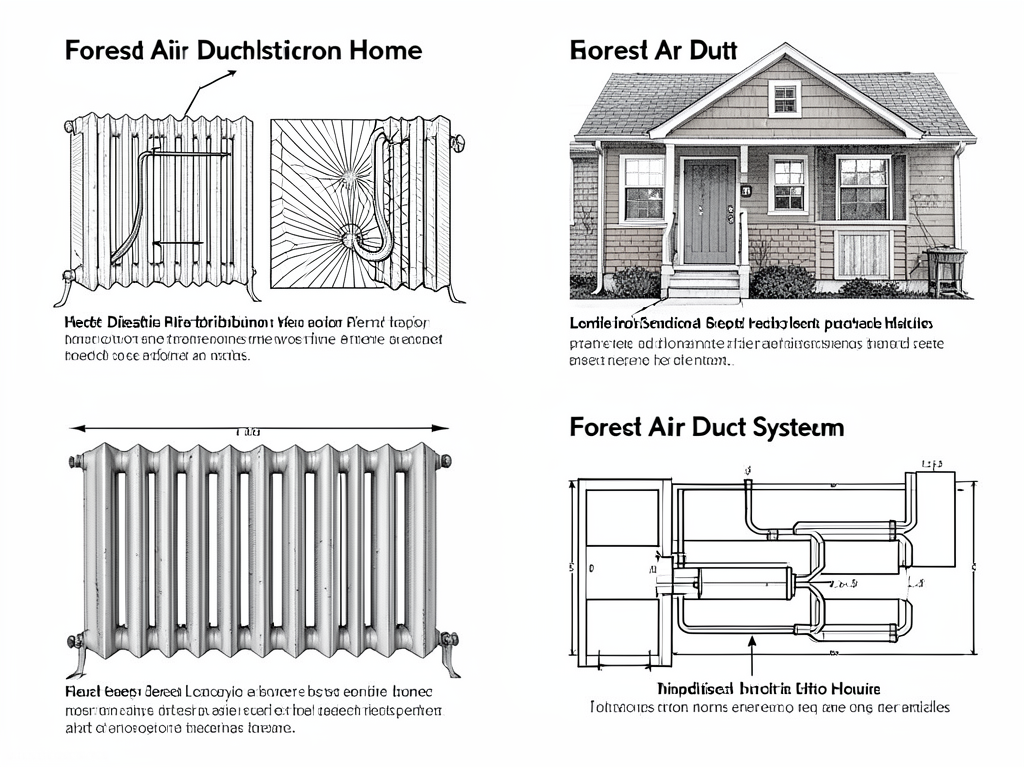
Diagram showing the difference between radiator heat distribution and forced air duct systems in a typical Garfield Park home layout.
The Conversion Process: What to Expect in Older Indy Homes
Converting from boiler to forced air in a Garfield Park home requires careful planning and execution. The process involves several distinct phases, each with its own challenges and considerations.
Initial assessment begins with a thorough evaluation of your existing system. Technicians inspect the boiler, radiators, and piping to determine what can be salvaged and what must be removed. They also perform a Manual J load calculation to determine the exact heating and cooling capacity needed for your home.
Radiator removal is often the most disruptive phase. Cast iron radiators can weigh hundreds of pounds each and require careful removal to avoid damaging original hardwood floors or plaster walls. The process typically takes 1-2 days and generates significant debris that must be properly disposed of.
Ductwork installation presents unique challenges in historic homes. Garfield Park houses often have limited attic space and no room for traditional duct chases. Technicians must get creative, often running ducts through existing closets, creating new soffits, or using high-velocity mini-duct systems that require smaller openings.
Asbestos abatement may be necessary in homes built before 1980. Many older boilers and pipe insulation contain asbestos, which must be removed by licensed professionals following EPA regulations. This adds time and cost to the project but is essential for safety. EPA asbestos guidelines.
Furnace and air handler installation typically occurs in the basement or utility area where the old boiler was located. Modern equipment is much more compact than older boilers, often freeing up valuable space. The new system connects to the ductwork network and includes both heating and cooling components.
Final testing and balancing ensures your new system distributes air evenly throughout the home. Technicians check airflow at each register, adjust dampers, and verify that the system meets the calculated load requirements. This phase can take several hours but is crucial for optimal performance.
The entire conversion process typically spans 3-5 days, though asbestos abatement can extend this timeline. Most homeowners can remain in their homes during the work, though temporary heating may be necessary during certain phases.
Call (317) 688-8818 to schedule your conversion consultation and learn exactly what to expect for your specific Garfield Park home.
Estimated Cost Factors for Indianapolis Residents
Understanding the cost breakdown helps you budget appropriately for your boiler to forced air conversion. Several factors influence the final price, and knowing what drives costs can help you make informed decisions.
System size directly impacts cost. A 2,000 square foot home typically requires a 3-4 ton system, while larger homes need 5+ tons. The larger the system, the more expensive the equipment and installation. However, oversizing wastes money and reduces efficiency, which is why the Manual J calculation is so important.
Ductwork complexity significantly affects labor costs. Simple ranch-style homes might need minimal duct modifications, while multi-story Victorians with plaster walls require extensive custom work. Garfield Park’s historic homes often need creative solutions like running ducts through existing closets or building new soffits, which adds labor hours.
Equipment efficiency ratings influence both upfront and operating costs. High-efficiency furnaces (95%+ AFUE) and air conditioners (SEER2 16+) cost more initially but save money on utility bills. Many homeowners find that higher efficiency equipment pays for itself within 5-7 years through energy savings.
Asbestos abatement adds $2,000-$5,000 to most conversions in older homes. This cost is unavoidable if asbestos is present, as Indiana law requires licensed professionals for removal. The good news is that many homeowners can roll this cost into their overall project financing.
Permit and inspection fees vary by Marion County. Basic HVAC permits cost $100-$300, but historic district homes may require additional approvals. The City of Indianapolis requires inspections at multiple stages to ensure code compliance, particularly for gas line modifications and electrical connections.
Financing options make conversions more accessible. Many HVAC companies offer 12-60 month financing with competitive rates. Additionally, AES Indiana provides rebates up to $850 for high-efficiency equipment, and federal tax credits may apply to qualifying systems.
Hidden costs often surprise homeowners. These might include upgrading electrical service, repairing damaged plaster during duct installation, or replacing old supply lines. Budgeting an additional 10-15% for unexpected issues is wise when planning your conversion. The Best AC Repair Services in Carmel for Modern Subdivisions.
Cost comparison table for different home sizes in the Indianapolis area:
| Home Size | Basic System | High-Efficiency System | Premium System |
|---|---|---|---|
| 1,500 sq ft | $12,000-$15,000 | $15,000-$18,000 | $18,000-$22,000 |
| 2,000 sq ft | $15,000-$20,000 | $20,000-$25,000 | $25,000-$30,000 |
| 2,500 sq ft | $18,000-$24,000 | $24,000-$30,000 | $30,000-$38,000 |
Need a precise estimate for your Garfield Park home? Call (317) 688-8818 and speak with our conversion specialists.
Pros and Cons: Boilers vs. Central Air Systems
Deciding whether to convert requires weighing the advantages and disadvantages of both systems. Here’s a comprehensive comparison to help you make an informed decision for your Garfield Park home.
Heating performance differs significantly between the two systems. Boilers provide radiant heat that feels warmer at lower air temperatures, typically around 68-70°F. Forced air systems blow hotter air (around 95-105°F) but can create temperature stratification, with warmer air near ceilings and cooler air at floor level.
Energy efficiency has shifted dramatically in favor of modern forced air. While old boilers operated at 50-70% efficiency, modern furnaces achieve 95-98% efficiency. However, boilers can be slightly more efficient for heating specific zones since they don’t lose energy through ductwork in unconditioned spaces.
Installation complexity varies greatly. Boilers require extensive piping networks and can be installed room-by-room over time. Forced air conversion requires a complete system installation, making it more invasive but also more comprehensive. The single installation also means a single warranty covering all components.
Maintenance requirements differ between systems. Boilers need annual servicing to check for leaks, pressure issues, and burner efficiency. Forced air systems require filter changes every 1-3 months and annual maintenance, but modern systems include diagnostic features that alert you to problems before they become serious.
Noise levels are often misunderstood. While radiators operate silently, forced air systems make some noise from air movement and the furnace itself. However, modern variable-speed blowers operate much more quietly than older models, and the sound is typically less noticeable than window air conditioners.
Space utilization presents interesting trade-offs. Boilers and radiators take up floor space but can be decorative features in historic homes. Forced air systems use wall and ceiling space for ducts but free up floor space by eliminating radiators. Many homeowners appreciate the cleaner look without radiators.
Climate adaptability strongly favors forced air. Indianapolis experiences both extreme cold and hot, humid summers. Forced air systems handle both conditions efficiently, while boilers require separate cooling solutions. The ability to use the same ductwork for heating and cooling is a major advantage.
Property value impact typically favors forced air conversion. Real estate appraisers note that modern HVAC systems increase marketability and often justify higher asking prices. Buyers specifically seek homes with central air in Indianapolis’s competitive market.
Comparison table of key performance factors:
| Factor | Traditional Boiler | Modern Forced Air |
|---|---|---|
| Heating Speed | Slow (30-60 min) | Fast (5-10 min) |
| Energy Efficiency | 50-70% AFUE | 95-98% AFUE |
| Cooling Capability | No | Yes |
| Air Quality | Basic | Enhanced (filtration) |
| Installation Time | 1-2 days | 3-5 days |
| Annual Maintenance | Once yearly | Twice yearly |
Still deciding which system is right for your home? Call (317) 688-8818 for a personalized consultation.
Alternatives: Is a Ductless Mini-Split Better for Your Home?
While forced air conversion is popular, it’s not the only option for modernizing your Garfield Park home’s heating and cooling. Ductless mini-split systems offer an alternative that might better suit certain situations.
Installation simplicity is the primary advantage of mini-splits. These systems require only a small hole for refrigerant lines, eliminating the need for extensive ductwork. This makes them ideal for homes where preserving original plaster walls or historic character is a priority.
Energy efficiency often exceeds that of forced air systems. Mini-splits achieve SEER2 ratings up to 30+, compared to 16-20 for most central air systems. They also avoid the 20-30% energy loss that occurs in ductwork, particularly in unconditioned attic spaces common in older homes.
Zone control is superior with mini-splits. Each indoor unit operates independently, allowing different temperatures in different rooms. This is perfect for Garfield Park homes where some rooms may be used more frequently than others or where family members prefer different temperatures.
Cost considerations vary by situation. Mini-splits typically cost $3,000-$5,000 per zone installed, while forced air conversion costs $15,000-$30,000 total. However, multiple mini-splits might be needed to heat and cool an entire home, potentially equaling or exceeding forced air costs.
Aesthetic impact is subjective. Mini-splits require wall-mounted indoor units that some homeowners find unattractive. However, modern units are much sleeker than older models, and some prefer them to the bulk of radiators or the visual impact of new ductwork.
Climate performance is excellent for mini-splits. Modern heat pump technology allows these systems to operate efficiently even in Indianapolis’s cold winters, with many models providing 100% heating capacity down to 0°F. Some include supplemental electric heat for the coldest nights.
Resale value considerations favor forced air in most cases. While mini-splits are gaining acceptance, many buyers still prefer traditional central systems. However, in historic districts or for homes where preserving original character is important, mini-splits might actually enhance value.
Maintenance requirements are similar for both systems, with annual professional service recommended. Mini-splits require cleaning filters more frequently and may need condensate drain cleaning, while forced air systems need regular filter changes and duct cleaning every 3-5 years.
Noise levels are comparable, with both systems operating around 40-50 decibels at normal settings. Mini-splits may be slightly quieter since they don’t have air moving through extensive ductwork, but modern forced air systems are also very quiet.
Comparison table of system characteristics:
| Characteristic | Forced Air Conversion | Ductless Mini-Split |
|---|---|---|
| Installation Impact | High (extensive work) | Low (minimal intrusion) |
| Energy Efficiency | Good (16-20 SEER2) | Excellent (20-30+ SEER2) |
| Zone Control | Basic (multiple thermostats) | Advanced (per-unit control) |
| Upfront Cost | $15,000-$30,000 | $3,000-$20,000 |
| Historic Preservation | Moderate impact | Minimal impact |
| Whole-Home Solution | Yes | Multiple units needed |
Unsure which system fits your needs? Call (317) 688-8818 and let our experts guide you through the options.
Frequently Asked Questions About HVAC Conversions
How long does a boiler to forced air conversion take?
Most conversions in Garfield Park homes take 3-5 days for the actual installation work. However, the entire process from initial consultation to final inspection typically spans 2-4 weeks when accounting for equipment ordering, permit acquisition, and scheduling. Homes requiring asbestos abatement may need additional time.
Will I need to move out during the conversion?
Most homeowners can remain in their homes during the conversion. However, you’ll experience periods without heat or hot water, typically lasting a few hours to a day. We provide temporary heating solutions when necessary and work to minimize disruption to your daily routine.
Do I need to replace my water heater too?
Not necessarily. Many homeowners keep their existing water heater if it’s in good condition. However, if your boiler also provides domestic hot water, you’ll need a separate water heater after conversion. Tankless water heaters are popular options that provide endless hot water while saving space.
Are there any rebates available for this conversion?
Yes, several rebate programs can help offset costs. AES Indiana offers rebates up to $850 for high-efficiency furnaces and air conditioners. Federal tax credits may apply to qualifying high-efficiency equipment. Additionally, some manufacturers offer seasonal rebates that can save you $500-$1,000 on new equipment.
What happens to my old radiators?
We handle complete removal and disposal of old radiators, pipes, and boilers. Cast iron radiators can often be recycled for scrap metal value. Some homeowners choose to keep certain decorative radiators as historical features, which we can discuss during your consultation.
Will my energy bills decrease after conversion?
Most homeowners see 20-40% reductions in heating costs after converting to high-efficiency forced air. The exact savings depend on your home’s insulation, the efficiency of your old boiler, and your new system’s efficiency rating. Many homeowners recoup their investment through energy savings within 5-7 years.
Can I keep some radiators and add forced air to other areas?
Hybrid systems are possible but less common. Some homeowners choose to keep radiators in certain rooms while adding forced air to others, particularly in additions or areas where running ducts is difficult. However, this approach typically costs more than a complete conversion and can create temperature control challenges.
Have more questions about converting your Garfield Park home? Call (317) 688-8818 and speak with our knowledgeable team.
Making the Right Choice for Your Garfield Park Home
Converting from a boiler to forced air represents a significant investment in your home’s comfort, efficiency, and value. For many Garfield Park homeowners, the benefits of modern heating and cooling far outweigh the costs and temporary disruption of installation.
The decision ultimately depends on your specific circumstances. Consider your home’s age, your budget, your comfort preferences, and your long-term plans. If you’re planning to stay in your home for many years, the energy savings and improved comfort often justify the investment. If you’re considering selling soon, the increased marketability and potential value increase make conversion attractive.
Working with experienced professionals who understand Garfield Park’s unique housing stock is crucial. The neighborhood’s historic homes present specific challenges that require creative solutions and careful execution. Look for contractors with specific experience in historic home conversions and proper licensing for asbestos abatement if needed.
Don’t forget to factor in the hidden benefits. Many homeowners report improved indoor air quality, reduced dust, and better humidity control after conversion. These quality-of-life improvements, while harder to quantify, often become the most appreciated aspects of the new system.
Finally, consider the environmental impact. High-efficiency systems use less fuel and produce fewer emissions than older boilers. Many homeowners find satisfaction in reducing their carbon footprint while also saving money on utility bills.
Ready to take the next step? Call (317) 688-8818 today to schedule your free consultation. Our experts will evaluate your home, discuss your options, and provide a detailed proposal with transparent pricing. Don’t wait until the next cold snap or heat wave to upgrade your home’s comfort system.
Pick up the phone and call (317) 688-8818 before the next storm hits. Your home deserves modern comfort, and you deserve peace of mind knowing your heating and cooling system won’t let you down when you need it most.
Before and after photos showing a Garfield Park home’s transformation from radiator heat to modern forced air system.
Close-up of high-efficiency furnace and air handler installation in a historic Indianapolis basement.
{
“@context”: “https://schema.org”,
“@type”: “BlogPosting”,
“headline”: “Converting an Old Boiler to Modern Forced Air in Your Garfield Park House”,
“description”: “Thinking of upgrading your Garfield Park home from radiator heat to central air? Learn the costs, process, and local factors for converting old boilers to modern forced air.”,
“wordCount”: 2999,
“datePublished”: “2026-04-24T11:00:00.000Z”,
“dateModified”: “2026-04-24T11:00:00.000Z”,
“inLanguage”: “en-US”,
“mainEntityOfPage”: {
“@type”: “WebPage”,
“@id”: “https://reliancehvacindianapolis.com”
},
“publisher”: {
“@type”: “LocalBusiness”,
“name”: “Reliance HVAC Indianapolis”,
“url”: “https://reliancehvacindianapolis.com”
},
“author”: {
“@type”: “Organization”,
“name”: “Reliance HVAC Indianapolis”,
“url”: “https://reliancehvacindianapolis.com”
},
“image”: {
“@type”: “ImageObject”,
“url”: “https://reliancehvacindianapolis.com/wp-content/uploads/2026/03/converting-an-old-boiler-to-modern-forced-air-in-y-1.png”
}
}
{
“@context”: “https://schema.org”,
“@type”: “HVACBusiness”,
“name”: “Reliance HVAC Indianapolis”,
“url”: “https://reliancehvacindianapolis.com”,
“address”: {
“@type”: “PostalAddress”,
“addressLocality”: “Indianapolis”
},
“areaServed”: {
“@type”: “City”,
“name”: “Indianapolis”
}
}
{
“@context”: “https://schema.org”,
“@type”: “FAQPage”,
“mainEntity”: [
{
“@type”: “Question”,
“name”: “Why Convert from Radiant Heat to Forced Air?”,
“acceptedAnswer”: {
“@type”: “Answer”,
“text”: “Radiant heating systems have served Garfield Park homes for generations, but they come with significant limitations. Understanding these drawbacks helps explain why so many homeowners are making the switch to forced air.”
}
},
{
“@type”: “Question”,
“name”: “Alternatives: Is a Ductless Mini-Split Better for Your Home?”,
“acceptedAnswer”: {
“@type”: “Answer”,
“text”: “While forced air conversion is popular, it’s not the only option for modernizing your Garfield Park home’s heating and cooling. Ductless mini-split systems offer an alternative that might better suit certain situations.”
}
},
{
“@type”: “Question”,
“name”: “How long does a boiler to forced air conversion take?”,
“acceptedAnswer”: {
“@type”: “Answer”,
“text”: “Most conversions in Garfield Park homes take 3-5 days for the actual installation work. However, the entire process from initial consultation to final inspection typically spans 2-4 weeks when accounting for equipment ordering, permit acquisition, and scheduling. Homes requiring asbestos abatement may need additional time.”
}
},
{
“@type”: “Question”,
“name”: “Will I need to move out during the conversion?”,
“acceptedAnswer”: {
“@type”: “Answer”,
“text”: “Most homeowners can remain in their homes during the conversion. However, you’ll experience periods without heat or hot water, typically lasting a few hours to a day. We provide temporary heating solutions when necessary and work to minimize disruption to your daily routine.”
}
},
{
“@type”: “Question”,
“name”: “Do I need to replace my water heater too?”,
“acceptedAnswer”: {
“@type”: “Answer”,
“text”: “Not necessarily. Many homeowners keep their existing water heater if it’s in good condition. However, if your boiler also provides domestic hot water, you’ll need a separate water heater after conversion. Tankless water heaters are popular options that provide endless hot water while saving space.”
}
},
{
“@type”: “Question”,
“name”: “Are there any rebates available for this conversion?”,
“acceptedAnswer”: {
“@type”: “Answer”,
“text”: “Yes, several rebate programs can help offset costs. AES Indiana offers rebates up to $850 for high-efficiency furnaces and air conditioners. Federal tax credits may apply to qualifying high-efficiency equipment. Additionally, some manufacturers offer seasonal rebates that can save you $500-$1,000 on new equipment.”
}
},
{
“@type”: “Question”,
“name”: “What happens to my old radiators?”,
“acceptedAnswer”: {
“@type”: “Answer”,
“text”: “We handle complete removal and disposal of old radiators, pipes, and boilers. Cast iron radiators can often be recycled for scrap metal value. Some homeowners choose to keep certain decorative radiators as historical features, which we can discuss during your consultation.”
}
},
{
“@type”: “Question”,
“name”: “Will my energy bills decrease after conversion?”,
“acceptedAnswer”: {
“@type”: “Answer”,
“text”: “Most homeowners see 20-40% reductions in heating costs after converting to high-efficiency forced air. The exact savings depend on your home’s insulation, the efficiency of your old boiler, and your new system’s efficiency rating. Many homeowners recoup their investment through energy savings within 5-7 years.”
}
},
{
“@type”: “Question”,
“name”: “Can I keep some radiators and add forced air to other areas?”,
“acceptedAnswer”: {
“@type”: “Answer”,
“text”: “Hybrid systems are possible but less common. Some homeowners choose to keep radiators in certain rooms while adding forced air to others, particularly in additions or areas where running ducts is difficult. However, this approach typically costs more than a complete conversion and can create temperature control challenges.”
}
}
]
}
{
“@context”: “https://schema.org”,
“@type”: “BreadcrumbList”,
“itemListElement”: [
{
“@type”: “ListItem”,
“position”: 1,
“name”: “Home”,
“item”: “https://reliancehvacindianapolis.com”
},
{
“@type”: “ListItem”,
“position”: 2,
“name”: “Blog”,
“item”: “https://reliancehvacindianapolis.com/blog”
},
{
“@type”: “ListItem”,
“position”: 3,
“name”: “Converting an Old Boiler to Modern Forced Air in Your Garfield Park House”
}
]
}
{
“@context”: “https://schema.org”,
“@type”: “Service”,
“serviceType”: “HVAC”,
“provider”: {
“@type”: “LocalBusiness”,
“name”: “Reliance HVAC Indianapolis”,
“url”: “https://reliancehvacindianapolis.com”
},
“areaServed”: {
“@type”: “City”,
“name”: “Indianapolis”
},
“description”: “Thinking of upgrading your Garfield Park home from radiator heat to central air? Learn the costs, process, and local factors for converting old boilers to modern forced air.”
}