
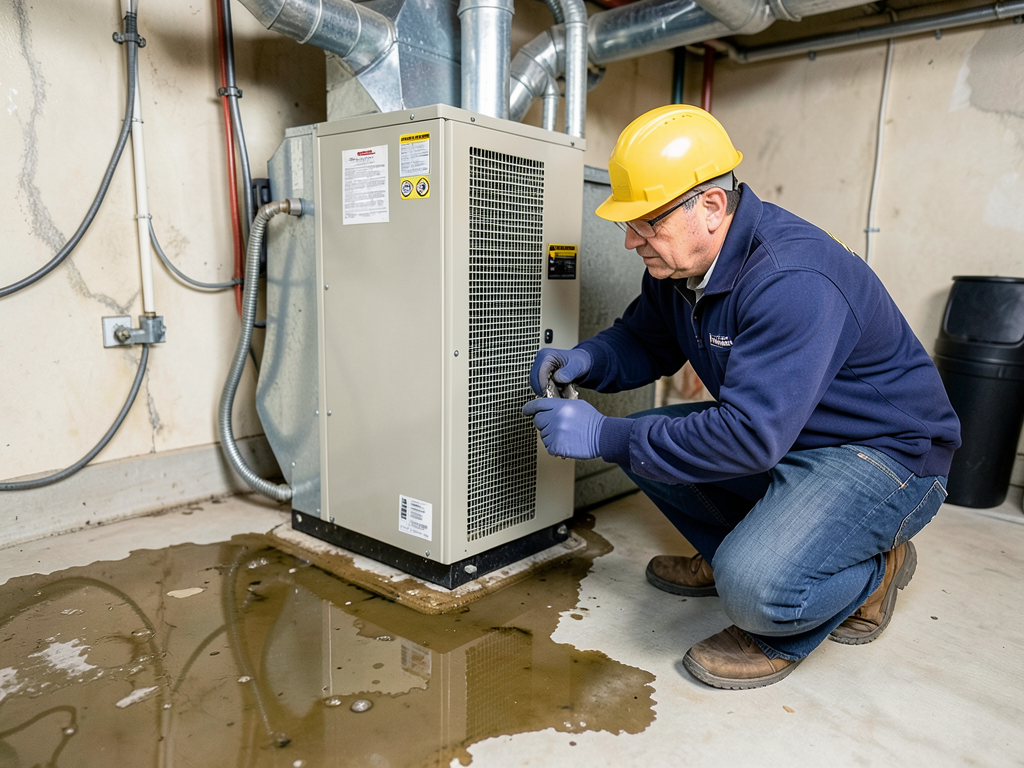
Preventing Costly Water Damage from a Leaking AC in Your Finished Basement in Woodmont
Water pooling around your basement AC unit signals trouble. Many homeowners in Woodmont face this problem during Indiana’s humid summer months. The good news is that most AC leaks are fixable and acting quickly can prevent thousands of dollars in water damage to your finished basement. This guide walks you through the common causes of basement AC leaks and what you can do right now to stop the problem.
Immediate Action: How to Stop the Leak Now
The first step is to prevent more water from entering your basement. Turn off the AC thermostat immediately. If your unit has a condensate pump look for a float switch and turn it off. Use towels or a wet-dry vacuum to soak up standing water. Move any furniture or valuables away from the wet area. Do not wait to see if it stops on its own. A small leak can quickly turn into a major flood especially in a finished basement where drywall and carpet can absorb water fast.
- Turn Off the Thermostat
Set the AC to “off” to stop the cooling cycle and prevent more condensation.
- Shut Off the Condensate Pump
If your unit has a pump flip the float switch or unplug the pump.
- Remove Standing Water
Use towels or a wet-dry vacuum to soak up visible water.
- Protect Your Belongings
Move furniture and valuables away from the wet area.
5 Common Reasons Your AC is Leaking in the Basement
Understanding why your AC is leaking helps you decide if you can fix it yourself or need a professional. Here are the five most common causes in Indianapolis basements. Indianapolis Plumbing Code Section 312.9.
1. Clogged Condensate Drain Line
The condensate drain line carries water from your AC to a floor drain or sump pit. Over time algae dirt and mineral buildup can block the line. When that happens water backs up and overflows from the drain pan. In Indiana’s hard water areas mineral deposits form faster making this a frequent issue.
2. Cracked or Rusted Drain Pan
The drain pan sits under the evaporator coil and catches condensation. In basements where humidity stays high year-round the pan can rust or crack. A small crack may leak a few drops but a large one can flood your floor. Older metal pans are especially prone to rust in Indiana’s damp climate.
3. Faulty Condensate Pump
Most basement AC units use a condensate pump because gravity cannot carry water up to the drain. If the pump motor fails or the float switch sticks the water has nowhere to go and overflows. This is one of the most common failures in Woodmont homes where many basements are finished and below grade.
4. Dirty Air Filter
A clogged air filter restricts airflow over the evaporator coil. When airflow drops the coil gets too cold and freezes. When it thaws ice melts into a large amount of water that can overwhelm the drain pan. Replacing your filter every one to three months prevents this.
5. Frozen Evaporator Coils
Besides dirty filters low refrigerant levels or blocked ducts can also cause the coil to freeze. Once the ice melts the sudden rush of water can spill over the drain pan. If you notice ice on the coil turn off the system and call a technician because refrigerant issues need professional repair. The Best AC Repair Services in Carmel for Modern Subdivisions.
The Woodmont Factor: Why Your Neighborhood is Vulnerable
Woodmont sits in a low-lying area near the White River where the water table runs high. The soil here contains heavy clay that drains poorly and holds moisture against foundation walls. Many homes in the 46220 and 46240 zip codes were built with finished basements before modern waterproofing standards took hold. This combination creates perfect conditions for AC leaks to cause major damage. How Much Does a New AC Unit Cost for a Standard Zionsville Home?.
The Clark Street corridor in Woodmont features older homes with original HVAC systems. These units often lack the upgraded condensate pumps and secondary drain pans that newer installations include. When your AC runs constantly during humid Indiana summers the extra condensation overwhelms these older systems.
McCabe Park area homes face another challenge. The mature trees in this neighborhood drop leaves and debris that can enter outdoor AC units and get carried into drain lines. This organic material breaks down into sludge that blocks condensate lines faster than mineral deposits alone.
According to the 2021 Indianapolis Plumbing Code Section 312.9 all condensate drain lines must terminate at an approved location and include a trap to prevent sewer gases. Many Woodmont homes built before 2021 may not meet these current standards.
DIY vs. Professional Repair
Some AC leaks you can handle yourself. Others need a licensed HVAC technician. Use this guide to decide.
| Problem | DIY Fix | Call a Pro |
|---|---|---|
| Clogged drain line | Flush with vinegar or use a wet-dry vacuum | If line is inaccessible or keeps clogging |
| Full drain pan | Empty and clean the pan | If pan is cracked or rusted |
| Dirty air filter | Replace filter | If freezing continues after filter change |
| Faulty condensate pump | Check power and float switch | If pump does not run or needs replacement |
| Refrigerant leak | None | Always call a licensed technician |
| Water damage to furnace | Turn off system | Inspect and test all electrical components |
Preventative Maintenance Tips
Regular maintenance can stop most AC leaks before they start. Here is what to do each season.
- Monthly Check and replace the air filter if dirty.
- Seasonally Flush the condensate drain line with a cup of vinegar to kill algae.
- Annually Schedule a professional tune-up to check refrigerant levels pump operation and drain pan condition.
If your basement feels damp even when the AC runs consider adding a standalone dehumidifier. Lowering humidity reduces condensation and takes stress off your AC system.
Warning Signs from Your AC
Your AC often gives warning signs before a major leak occurs. Listen for gurgling sounds from the drain line which indicates a partial clog forming. Smell for musty odors near the unit which can signal algae growth in the drain pan. Feel for warm air coming from supply vents which might mean restricted airflow causing coil freeze.
Check the area around your AC for rust stains on the floor or walls. These stains show where water has been pooling and evaporating over time. Look for water marks on the ceiling below your basement if you have a multi-level home.
Dangers of Water Leaking into a Basement Furnace
Many Woodmont homes have vertical HVAC setups where the furnace sits below the AC coil. If the AC leaks water can drip onto the furnace heat exchanger and controls. That creates a risk of short circuits mold growth and even carbon monoxide leaks if water damages the burner. Always check both the AC and furnace when you see a leak. If water reached your furnace turn off the system and call a technician before running it again. Furnace Blowing Cold Air.
Professional AC Repair vs. DIY Clearing of Drain Lines
Flushing a clogged drain line with vinegar or a wet-dry vacuum works for minor blockages. If the line runs through walls or under concrete you can damage it trying to clear it yourself. A professional uses specialized tools to clean the line without harming it and can spot other issues like a failing pump or cracked pan. For Indianapolis homeowners the cost of a service call is often less than repairing water damage to a finished basement.
Call Reliance HVAC Before More Damage Happens
Water damage spreads fast in a finished basement. Mold can start growing within 24 to 48 hours. The longer you wait the more expensive the repairs become. Reliance HVAC has served Indianapolis homeowners for years and understands the unique challenges of local humidity and hard water. Our technicians carry the tools to diagnose and fix leaks on the spot so you can get your AC back online safely.
If you see water around your basement AC do not gamble with your home. Call (317) 688-8818 today to schedule your inspection. We offer fast response times in Woodmont and the greater Indianapolis area so you can stop the leak before it stops you.
Frequently Asked Questions
Why is my AC leaking water in the basement?
Most leaks come from a clogged drain line cracked pan or faulty condensate pump. High humidity in Indianapolis makes these issues more common in basement units.
Can I use my AC if it is leaking water?
Turn it off immediately. Running a leaking AC can cause more water damage and may harm the furnace if they share a cabinet.
How much does it cost to fix a leaking AC in Indianapolis?
Costs vary by cause. A simple drain line flush may cost under $100 while replacing a pump or pan can run $200 to $500. A technician can give you an exact quote after diagnosis.
How can I prevent future AC leaks?
Replace filters monthly flush the drain line seasonally and schedule annual maintenance. In Indiana’s humid climate these steps greatly reduce leak risk.
Is a leaking AC dangerous?
Yes. Water can damage electrical parts create mold growth and if it reaches the furnace may cause carbon monoxide hazards. Always treat leaks as urgent. For more information, visit Energy.gov air conditioner maintenance guide. For more information, visit ASHRAE HVAC standards.
{
“@context”: “https://schema.org”,
“@type”: “BlogPosting”,
“headline”: “Preventing Costly Water Damage from a Leaking AC in Your Finished Basement in Woodmont”,
“description”: “Stop AC leaks before they ruin your finished basement. Learn why Woodmont homes are vulnerable and how to prevent costly water damage.”,
“wordCount”: 1579,
“datePublished”: “2026-06-04T06:20:00.000Z”,
“dateModified”: “2026-06-04T06:20:00.000Z”,
“inLanguage”: “en-US”,
“mainEntityOfPage”: {
“@type”: “WebPage”,
“@id”: “https://reliancehvacindianapolis.com”
},
“publisher”: {
“@type”: “LocalBusiness”,
“name”: “Reliance HVAC Indianapolis”,
“url”: “https://reliancehvacindianapolis.com”
},
“author”: {
“@type”: “Organization”,
“name”: “Reliance HVAC Indianapolis”,
“url”: “https://reliancehvacindianapolis.com”
},
“image”: {
“@type”: “ImageObject”,
“url”: “https://reliancehvacindianapolis.com/wp-content/uploads/2026/03/preventing-costly-water-damage-from-a-leaking-ac-i-1.png”
}
}
{
“@context”: “https://schema.org”,
“@type”: “HVACBusiness”,
“name”: “Reliance HVAC Indianapolis”,
“url”: “https://reliancehvacindianapolis.com”,
“address”: {
“@type”: “PostalAddress”,
“addressLocality”: “Indianapolis”
},
“areaServed”: {
“@type”: “City”,
“name”: “Indianapolis”
}
}
{
“@context”: “https://schema.org”,
“@type”: “FAQPage”,
“mainEntity”: [
{
“@type”: “Question”,
“name”: “Why is my AC leaking water in the basement?”,
“acceptedAnswer”: {
“@type”: “Answer”,
“text”: “Most leaks come from a clogged drain line cracked pan or faulty condensate pump. High humidity in Indianapolis makes these issues more common in basement units.”
}
},
{
“@type”: “Question”,
“name”: “Can I use my AC if it is leaking water?”,
“acceptedAnswer”: {
“@type”: “Answer”,
“text”: “Turn it off immediately. Running a leaking AC can cause more water damage and may harm the furnace if they share a cabinet.”
}
},
{
“@type”: “Question”,
“name”: “How much does it cost to fix a leaking AC in Indianapolis?”,
“acceptedAnswer”: {
“@type”: “Answer”,
“text”: “Costs vary by cause. A simple drain line flush may cost under $100 while replacing a pump or pan can run $200 to $500. A technician can give you an exact quote after diagnosis.”
}
},
{
“@type”: “Question”,
“name”: “How can I prevent future AC leaks?”,
“acceptedAnswer”: {
“@type”: “Answer”,
“text”: “Replace filters monthly flush the drain line seasonally and schedule annual maintenance. In Indiana’s humid climate these steps greatly reduce leak risk.”
}
}
]
}
{
“@context”: “https://schema.org”,
“@type”: “HowTo”,
“name”: “How to Stop a Basement AC Leak”,
“step”: [
{
“@type”: “HowToStep”,
“position”: 1,
“name”: “Turn Off the Thermostat”,
“text”: “Set the AC to \”off\” to stop the cooling cycle and prevent more condensation.”
},
{
“@type”: “HowToStep”,
“position”: 2,
“name”: “Shut Off the Condensate Pump”,
“text”: “If your unit has a pump flip the float switch or unplug the pump.”
},
{
“@type”: “HowToStep”,
“position”: 3,
“name”: “Remove Standing Water”,
“text”: “Use towels or a wet-dry vacuum to soak up visible water.”
},
{
“@type”: “HowToStep”,
“position”: 4,
“name”: “Protect Your Belongings”,
“text”: “Move furniture and valuables away from the wet area.”
}
],
“image”: “https://reliancehvacindianapolis.com/wp-content/uploads/2026/03/preventing-costly-water-damage-from-a-leaking-ac-i-1.png”
}
{
“@context”: “https://schema.org”,
“@type”: “BreadcrumbList”,
“itemListElement”: [
{
“@type”: “ListItem”,
“position”: 1,
“name”: “Home”,
“item”: “https://reliancehvacindianapolis.com”
},
{
“@type”: “ListItem”,
“position”: 2,
“name”: “Blog”,
“item”: “https://reliancehvacindianapolis.com/blog”
},
{
“@type”: “ListItem”,
“position”: 3,
“name”: “Preventing Costly Water Damage from a Leaking AC in Your Finished Basement in Woodmont”
}
]
}
{
“@context”: “https://schema.org”,
“@type”: “Service”,
“serviceType”: “HVAC”,
“provider”: {
“@type”: “LocalBusiness”,
“name”: “Reliance HVAC Indianapolis”,
“url”: “https://reliancehvacindianapolis.com”
},
“areaServed”: {
“@type”: “City”,
“name”: “Indianapolis”
},
“description”: “Stop AC leaks before they ruin your finished basement. Learn why Woodmont homes are vulnerable and how to prevent costly water damage.”
}