
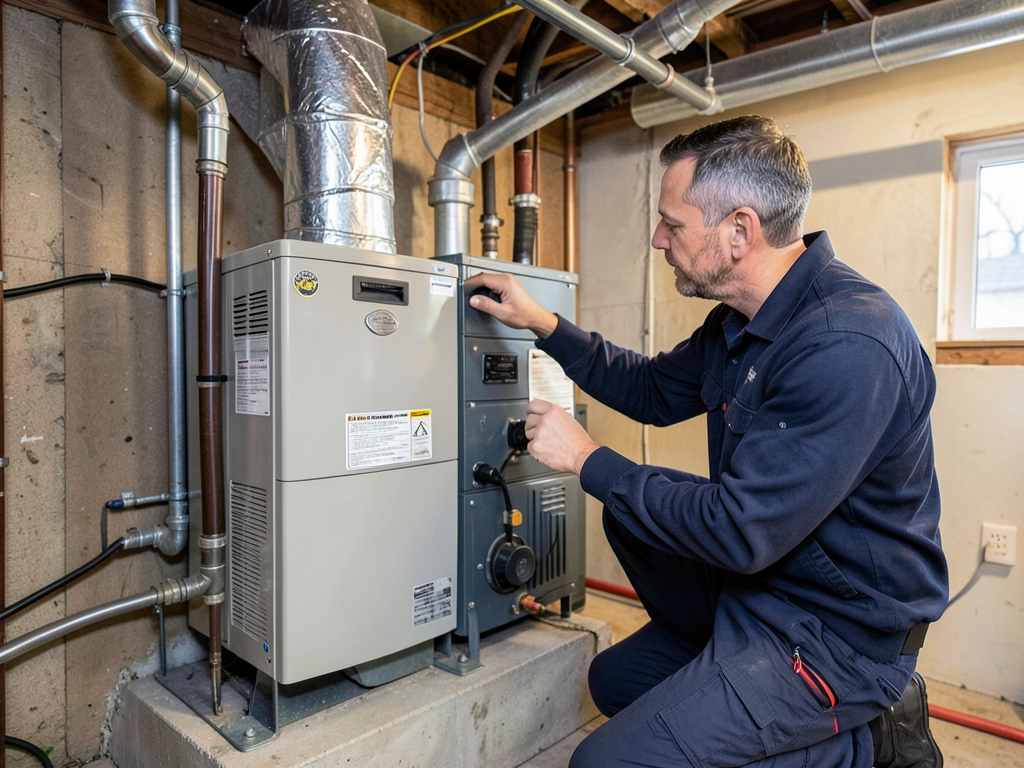
Professional whole-home dehumidifier installation to stop Southport basement dampness
Indiana’s humid continental climate creates the perfect storm for Southport basements. With summer humidity regularly exceeding 80% and clay soil retaining moisture like a sponge, many Southport homes experience persistent dampness that leads to mold growth, musty odors, and structural concerns. Professional whole-home dehumidifier installation provides a comprehensive solution by integrating with your existing HVAC system to control moisture throughout your entire home, not just in one room.
Whole-home dehumidifiers work continuously to maintain optimal indoor relative humidity between 40-60%, protecting your home’s structure, improving air quality, and reducing the workload on your air conditioner. Unlike portable units that can only handle small spaces, these systems process air from your entire home, making them the most effective solution for Southport’s moisture challenges.
Why Southport basements need professional moisture control
Southport’s location in Marion County places it in a unique microclimate where several factors converge to create basement moisture problems. The area’s heavy clay soil, common to central Indiana, expands when wet and contracts when dry, creating pressure on foundation walls that can lead to hairline cracks. These microscopic openings allow moisture to seep into basements even when there’s no visible water intrusion.
According to the Indiana Department of Natural Resources, Marion County experiences an average annual precipitation of 42 inches, with peak humidity occurring during July and August when temperatures regularly climb above 85°F. This combination of heat and moisture creates ideal conditions for condensation on cool basement walls and floors. The problem is particularly acute in Southport’s older neighborhoods where homes built before 1980 often lack proper vapor barriers and modern drainage systems. EPA indoor air quality guidelines.
Whole-home dehumidifiers address these issues by maintaining consistent humidity levels throughout your home’s conditioned space. The system works in tandem with your air conditioner to remove excess moisture from the air before it can condense on surfaces. This integrated approach is particularly important in Southport where many homes have finished basements that are used as living spaces, home offices, or entertainment areas. Excess Dust in Home.
Portable vs. whole-home dehumidifiers: Understanding the difference
Portable dehumidifiers have their place in small, targeted applications, but they fall short when it comes to comprehensive moisture control in Southport homes. A typical portable unit can remove 30-70 pints of water per day and is limited to spaces of 1,500 square feet or less. In contrast, whole-home systems can extract 90-135 pints daily and treat up to 5,000 square feet of living space.
The key differences extend beyond capacity. Portable units require manual emptying of collection buckets or regular draining, while whole-home systems connect directly to your home’s plumbing for continuous operation. Portable units also generate heat as a byproduct of the dehumidification process, which can actually make your air conditioner work harder. Whole-home systems are designed to integrate seamlessly with your HVAC equipment, providing cooling benefits while removing moisture.
Energy efficiency represents another significant advantage. Portable units typically consume 300-700 watts of power, while whole-home systems operate at 200-400 watts while treating much larger areas. Over a typical Indiana summer, this efficiency difference can translate to $100-200 in energy savings while providing superior moisture control.
Whole-home dehumidifiers also offer better air filtration. Most portable units include basic filters that capture larger particles, but whole-home systems typically incorporate MERV 8-11 filtration that removes dust, pollen, and other airborne contaminants while dehumidifying. This dual function is particularly valuable in Southport where seasonal allergens from Indiana’s agricultural areas can exacerbate indoor air quality issues.
The installation process: What to expect
Professional whole-home dehumidifier installation follows a systematic process that begins with a comprehensive home assessment. Our technicians use specialized equipment to measure current humidity levels, identify moisture sources, and evaluate your existing HVAC system’s capacity. This diagnostic phase is crucial because it determines the appropriate unit size and optimal installation location.
The assessment includes checking your home’s air infiltration rates, measuring basement wall temperatures, and evaluating existing drainage systems. We also inspect your current HVAC equipment to ensure compatibility and identify any pre-existing issues that could affect dehumidifier performance. This thorough evaluation typically takes 60-90 minutes and provides the data needed to recommend the right solution.
Installation usually requires 4-6 hours and involves several key steps. First, we mount the dehumidifier unit near your furnace or air handler, typically in the basement or utility area. The unit connects to your home’s existing ductwork through a dedicated return or supply duct, allowing it to process air throughout your entire home. We also install a condensate drain line that connects to your home’s plumbing system or a dedicated condensate pump if gravity drainage isn’t available. Furnace Blowing Cold Air.
Electrical connections are made to a dedicated circuit, and the system is integrated with your thermostat or a separate humidity control module. The final step involves calibrating the system to your target humidity levels and testing all components for proper operation. We also provide a detailed walkthrough of the system’s operation and maintenance requirements.
Most installations can be completed in a single day, though complex configurations or homes with unique architectural features may require additional time. Our technicians always clean up thoroughly after installation and provide documentation of all work performed.
Common Southport moisture problems we solve
Southport homeowners frequently encounter several specific moisture-related issues that whole-home dehumidifiers address effectively. Musty odors are often the first sign of excessive humidity, caused by mold and mildew growth on organic materials like wood, paper, and fabric. These odors can permeate clothing, furniture, and even the air you breathe, creating an unpleasant living environment.
Condensation on windows and basement walls represents another common problem. When warm, humid air contacts cool surfaces, moisture condenses into liquid water that can damage window frames, promote mold growth, and create slip hazards on basement floors. Whole-home dehumidifiers prevent this condensation by maintaining optimal humidity levels that prevent moisture from reaching its dew point on surfaces.
Many Southport homes experience seasonal allergy symptoms that worsen in humid conditions. Dust mites, which thrive in humid environments, are a common trigger for respiratory issues. By maintaining humidity below 50%, whole-home dehumidifiers create conditions that are inhospitable to dust mites while also reducing mold spore concentrations in the air.
Wood warping and structural damage can occur when humidity levels fluctuate dramatically. Hardwood floors can cup or buckle, door frames can swell, and even structural lumber can experience dimensional changes that affect your home’s integrity. Consistent humidity control prevents these issues and protects your investment in quality materials.
Energy bills often spike in humid conditions because air conditioners must work harder to cool moist air. Each degree of humidity can make your home feel 2-3 degrees warmer, causing you to lower your thermostat setting and increase cooling costs. Whole-home dehumidifiers allow you to maintain comfort at higher temperatures, reducing energy consumption while improving comfort.
Integration with existing HVAC systems
Whole-home dehumidifiers are designed to work seamlessly with your existing heating and cooling equipment. The integration process varies depending on your home’s configuration, but most systems use one of three approaches: dedicated return duct, bypass configuration, or integrated supply. Reliable Heating and Cooling Experts Serving the Broad Ripple Area.
The dedicated return configuration is most common in homes with separate HVAC zones or those with significant humidity problems. In this setup, the dehumidifier has its own return duct that pulls air directly from the problem area, processes it, and returns it to the main HVAC system. This configuration provides maximum moisture removal capability and is ideal for homes with finished basements or areas with persistent humidity issues.
Bypass configurations work well in homes with open floor plans where air circulation is already good. The dehumidifier processes a portion of the air that passes through your main HVAC system, providing supplemental dehumidification without requiring additional ductwork. This approach is cost-effective and works well in moderately humid conditions.
Integrated supply configurations are used when maximum moisture removal is needed in specific areas. The dehumidifier processes air and delivers it directly to supply ducts, allowing targeted humidity control in problem areas while maintaining overall home comfort. This configuration is particularly useful in homes with additions or areas that have different moisture profiles than the main living space.
Modern whole-home dehumidifiers include smart controls that communicate with your thermostat to optimize operation. These systems can monitor both temperature and humidity, adjusting their operation based on current conditions and your comfort preferences. Some advanced models even integrate with home automation systems, allowing you to monitor and control humidity levels remotely through smartphone apps.
Maintenance requirements and longevity
Whole-home dehumidifiers require minimal maintenance compared to portable units, but regular service ensures optimal performance and longevity. The most important maintenance task is replacing or cleaning the air filter every 3-6 months, depending on your home’s dust levels and the manufacturer’s recommendations. Dirty filters restrict airflow and reduce the system’s efficiency, potentially leading to higher energy costs and reduced moisture removal capacity.
Annual professional maintenance should include checking refrigerant levels, cleaning the evaporator and condenser coils, inspecting electrical connections, and verifying that all controls are functioning properly. During this service, technicians also check the condensate drain line for clogs and ensure that the system is operating within manufacturer specifications.
The condensate pump, if your system uses one, should be tested annually to ensure it’s functioning properly. These pumps can fail over time, especially in homes with high mineral content in the water supply. Some homeowners choose to install alarm systems that alert them if the pump fails or if the condensate drain becomes blocked.
With proper maintenance, whole-home dehumidifiers typically last 8-12 years, though some high-quality units can operate effectively for 15 years or more. The system’s lifespan depends on factors including usage patterns, maintenance frequency, and the quality of the installation. Homes in particularly humid areas or those with significant moisture problems may experience slightly shorter lifespans due to increased operating hours.
Energy efficiency tends to decrease slightly over time as components wear and refrigerant levels change. However, modern systems include diagnostic features that alert homeowners when performance drops below optimal levels, allowing for timely maintenance or repairs that restore efficiency. The Best AC Repair Services in Carmel for Modern Subdivisions.
Energy efficiency and cost savings
Whole-home dehumidifiers can actually save money on energy bills despite their continuous operation. The key is understanding how humidity affects perceived temperature and HVAC efficiency. When humidity levels are high, your air conditioner must cool the air to a lower temperature to achieve the same comfort level, consuming significantly more energy in the process.
According to the U.S. Department of Energy, each degree of humidity reduction can allow you to raise your thermostat setting by 2-3 degrees while maintaining the same comfort level. This seemingly small adjustment can reduce cooling costs by 10-15% during peak summer months. In Southport where cooling season extends from May through September, these savings add up quickly. Department of Energy home energy efficiency.
Whole-home systems are also more energy-efficient than running multiple portable units. A single whole-home dehumidifier typically consumes less electricity than two or three portable units while treating a much larger area. The integrated design also eliminates the heat generation that occurs with portable units, further reducing the cooling load on your air conditioner.
Many modern whole-home dehumidifiers include variable-speed compressors that adjust their output based on current humidity levels. These systems operate more efficiently than single-speed units by running at lower speeds when moisture removal requirements are minimal, then ramping up when conditions demand maximum performance. This intelligent operation can reduce energy consumption by 20-30% compared to traditional fixed-speed systems.
The initial investment in a whole-home dehumidifier typically ranges from $2,500 to $4,500 installed, depending on the unit’s capacity and your home’s specific requirements. While this represents a significant upfront cost, the energy savings, improved comfort, and protection of your home’s structure often provide a return on investment within 3-5 years.
Local building codes and permit requirements
Installing a whole-home dehumidifier in Southport requires compliance with Marion County building codes and may require permits depending on the scope of work. The Indiana Residential Code, which follows International Residential Code standards, requires that all HVAC modifications meet specific safety and efficiency standards. How Much Does a New AC Unit Cost for a Standard Zionsville Home?.
Electrical connections for whole-home dehumidifiers must comply with the National Electrical Code (NEC Article 440), which covers air conditioning and refrigeration equipment. This includes requirements for dedicated circuits, proper grounding, and appropriate overcurrent protection. Our technicians are trained in these requirements and ensure that all electrical work meets or exceeds code standards.
Permits are typically required when new electrical circuits are installed or when existing HVAC ductwork is modified. The Marion County Building Authority oversees these permits and ensures that all work complies with local safety standards. We handle all permit applications and inspections as part of our professional installation service, so you don’t have to navigate the permitting process yourself.
Condensate disposal must also comply with local plumbing codes. In Marion County, condensate cannot be discharged into sanitary sewer systems without proper backflow prevention. Most installations connect to existing floor drains or exterior discharge points that comply with local regulations. We ensure that all condensate disposal methods meet these requirements to prevent potential water damage or code violations.
Ventilation requirements may also apply, particularly in homes with tight building envelopes or those with specific indoor air quality concerns. The International Mechanical Code, adopted by Indiana, includes provisions for adequate ventilation when mechanical dehumidification systems are installed. Our assessments include evaluating your home’s current ventilation and recommending any necessary upgrades to ensure code compliance.
Choosing the right system for your Southport home
Selecting the appropriate whole-home dehumidifier depends on several factors specific to your home’s characteristics and your family’s needs. The first consideration is your home’s total square footage and the volume of air that needs to be processed. A home with high ceilings or open floor plans requires greater moisture removal capacity than a similar square-footage home with standard 8-foot ceilings.
The age and construction of your home significantly impact dehumidifier selection. Older Southport homes built before 1980 often have less insulation and more air infiltration, which can actually help with moisture control by allowing some natural ventilation. However, these homes may also have more significant moisture problems due to outdated construction methods. Newer homes with tight building envelopes may require different dehumidification strategies to prevent over-drying while still controlling moisture.
Your home’s existing HVAC system capacity and configuration also influence the choice of dehumidifier. Systems must be properly sized to work with your air conditioner’s cooling capacity and your furnace’s airflow capabilities. Oversized dehumidifiers can create comfort problems by removing too much moisture, while undersized units won’t adequately control humidity levels.
Special considerations apply if your home has specific problem areas such as a finished basement, a home theater, or rooms with high moisture generation from activities like indoor swimming pools or extensive plant collections. These situations may require supplemental dehumidification or specialized system configurations to address the unique moisture challenges they present.
Energy efficiency ratings and operating costs should also factor into your decision. Look for units with high Energy Factor (EF) ratings, which indicate better moisture removal per kilowatt-hour of electricity consumed. While higher-rated units may cost more upfront, they typically provide lower operating costs over the system’s lifetime.
Brand reliability and warranty coverage are important considerations. We work with manufacturers who stand behind their products with comprehensive warranties and have a track record of reliability in Indiana’s climate. Our installation includes registration of all warranty coverage and documentation of all work performed for your records.
Frequently Asked Questions
How long does whole-home dehumidifier installation take?
Most installations can be completed in 4-6 hours by our experienced technicians. The exact time depends on your home’s configuration and whether any modifications to existing ductwork or electrical systems are needed. We always clean up thoroughly after installation and provide a detailed walkthrough of your new system.
Will a whole-home dehumidifier work with my existing air conditioner?
Yes, whole-home dehumidifiers are designed to integrate seamlessly with existing HVAC systems. The units work alongside your air conditioner to remove moisture more efficiently, often allowing you to set your thermostat higher while maintaining comfort. This integration can actually reduce your cooling costs during humid Indiana summers.
How much maintenance does a whole-home dehumidifier require?
Whole-home systems require minimal maintenance compared to portable units. The main task is replacing or cleaning the air filter every 3-6 months. We recommend annual professional maintenance to check refrigerant levels, clean coils, and ensure all components are functioning properly. This service typically takes less than an hour.
Can I install a whole-home dehumidifier myself?
We strongly recommend professional installation for whole-home dehumidifiers. These systems require proper sizing, electrical connections that meet code requirements, and integration with your existing HVAC system. Improper installation can lead to poor performance, higher energy costs, and potential safety hazards. Our certified technicians ensure your system operates safely and efficiently.
How do I know if my home needs a whole-home dehumidifier?
Signs that your home may need whole-home dehumidification include persistent musty odors, condensation on windows or basement walls, allergy symptoms that worsen indoors, wood warping or damage, and high cooling bills during humid weather. Our free assessment can measure your home’s humidity levels and recommend the best solution for your specific situation.
Take control of your home’s moisture today
Don’t let Southport’s humidity compromise your home’s comfort and structural integrity. Professional whole-home dehumidifier installation provides a comprehensive solution that protects your investment while improving your family’s comfort and health. Our experienced technicians understand the unique moisture challenges that Southport homeowners face and can recommend the perfect system for your specific needs.
Call (317) 688-8818 today to schedule your free humidity assessment. We’ll evaluate your home’s moisture levels, inspect your existing HVAC system, and provide a detailed recommendation with upfront pricing. Our installations come with comprehensive warranties and our satisfaction guarantee, so you can have confidence in your investment.
Pick up the phone and call (317) 688-8818 before the next humidity spike hits. Your home deserves professional moisture control that works quietly and efficiently year-round. Don’t wait until mold, musty odors, or structural damage force you to act – take control of your indoor environment now with a whole-home dehumidifier system designed specifically for Southport’s challenging climate.
Call (317) 688-8818 today to schedule your inspection and take the first step toward a drier, healthier home. Your comfort is our priority, and we’re ready to help you breathe easier in your Southport home.
{
“@context”: “https://schema.org”,
“@type”: “BlogPosting”,
“headline”: “Professional whole-home dehumidifier installation to stop Southport basement dampness”,
“description”: “Stop Southport basement moisture with professional whole-home dehumidifier installation. Learn how Indiana humidity affects your home and why whole-home systems outperform portable units.”,
“wordCount”: 3103,
“datePublished”: “2026-04-06T13:04:00.000Z”,
“dateModified”: “2026-04-06T13:04:00.000Z”,
“inLanguage”: “en-US”,
“mainEntityOfPage”: {
“@type”: “WebPage”,
“@id”: “https://reliancehvacindianapolis.com”
},
“publisher”: {
“@type”: “LocalBusiness”,
“name”: “Reliance HVAC Indianapolis”,
“url”: “https://reliancehvacindianapolis.com”
},
“author”: {
“@type”: “Organization”,
“name”: “Reliance HVAC Indianapolis”,
“url”: “https://reliancehvacindianapolis.com”
},
“image”: {
“@type”: “ImageObject”,
“url”: “https://reliancehvacindianapolis.com/wp-content/uploads/2026/03/professional-whole-home-dehumidifier-installation-1.png”
}
}
{
“@context”: “https://schema.org”,
“@type”: “HVACBusiness”,
“name”: “Reliance HVAC Indianapolis”,
“url”: “https://reliancehvacindianapolis.com”,
“address”: {
“@type”: “PostalAddress”,
“addressLocality”: “Indianapolis”
},
“areaServed”: {
“@type”: “City”,
“name”: “Indianapolis”
}
}
{
“@context”: “https://schema.org”,
“@type”: “FAQPage”,
“mainEntity”: [
{
“@type”: “Question”,
“name”: “How long does whole-home dehumidifier installation take?”,
“acceptedAnswer”: {
“@type”: “Answer”,
“text”: “Most installations can be completed in 4-6 hours by our experienced technicians. The exact time depends on your home’s configuration and whether any modifications to existing ductwork or electrical systems are needed. We always clean up thoroughly after installation and provide a detailed walkthrough of your new system.”
}
},
{
“@type”: “Question”,
“name”: “Will a whole-home dehumidifier work with my existing air conditioner?”,
“acceptedAnswer”: {
“@type”: “Answer”,
“text”: “Yes, whole-home dehumidifiers are designed to integrate seamlessly with existing HVAC systems. The units work alongside your air conditioner to remove moisture more efficiently, often allowing you to set your thermostat higher while maintaining comfort. This integration can actually reduce your cooling costs during humid Indiana summers.”
}
},
{
“@type”: “Question”,
“name”: “How much maintenance does a whole-home dehumidifier require?”,
“acceptedAnswer”: {
“@type”: “Answer”,
“text”: “Whole-home systems require minimal maintenance compared to portable units. The main task is replacing or cleaning the air filter every 3-6 months. We recommend annual professional maintenance to check refrigerant levels, clean coils, and ensure all components are functioning properly. This service typically takes less than an hour.”
}
},
{
“@type”: “Question”,
“name”: “Can I install a whole-home dehumidifier myself?”,
“acceptedAnswer”: {
“@type”: “Answer”,
“text”: “We strongly recommend professional installation for whole-home dehumidifiers. These systems require proper sizing, electrical connections that meet code requirements, and integration with your existing HVAC system. Improper installation can lead to poor performance, higher energy costs, and potential safety hazards. Our certified technicians ensure your system operates safely and efficiently.”
}
},
{
“@type”: “Question”,
“name”: “How do I know if my home needs a whole-home dehumidifier?”,
“acceptedAnswer”: {
“@type”: “Answer”,
“text”: “Signs that your home may need whole-home dehumidification include persistent musty odors, condensation on windows or basement walls, allergy symptoms that worsen indoors, wood warping or damage, and high cooling bills during humid weather. Our free assessment can measure your home’s humidity levels and recommend the best solution for your specific situation.”
}
}
]
}
{
“@context”: “https://schema.org”,
“@type”: “BreadcrumbList”,
“itemListElement”: [
{
“@type”: “ListItem”,
“position”: 1,
“name”: “Home”,
“item”: “https://reliancehvacindianapolis.com”
},
{
“@type”: “ListItem”,
“position”: 2,
“name”: “Blog”,
“item”: “https://reliancehvacindianapolis.com/blog”
},
{
“@type”: “ListItem”,
“position”: 3,
“name”: “Professional whole-home dehumidifier installation to stop Southport basement dampness”
}
]
}
{
“@context”: “https://schema.org”,
“@type”: “Service”,
“serviceType”: “HVAC”,
“provider”: {
“@type”: “LocalBusiness”,
“name”: “Reliance HVAC Indianapolis”,
“url”: “https://reliancehvacindianapolis.com”
},
“areaServed”: {
“@type”: “City”,
“name”: “Indianapolis”
},
“description”: “Stop Southport basement moisture with professional whole-home dehumidifier installation. Learn how Indiana humidity affects your home and why whole-home systems outperform portable units.”
}