Why Carbon Monoxide Testing is Essential for Every Beech Grove Furnace
Every winter, Beech Grove homeowners face a hidden danger that could be lurking in their basements. Your gas furnace might be quietly producing carbon monoxide, an odorless, colorless gas that can kill in minutes. This isn’t just a safety tip—it’s a life-saving necessity for every home in Marion County. Furnace Blowing Cold Air.
Older homes in Beech Grove, particularly those built before 1990, often have aging gas furnaces that weren’t designed with today’s safety standards. These units can develop cracks in the heat exchanger over time, allowing deadly carbon monoxide to leak into your living spaces. The extreme temperature swings we experience in Central Indiana—freezing winters followed by humid summers—put extra stress on these components. How Much Does a New AC Unit Cost for a Standard Zionsville Home?.
According to the Indiana State Department of Health, carbon monoxide poisoning sends over 400 Hoosiers to emergency rooms annually. Many of these cases occur during the first cold snap when furnaces that haven’t been used in months suddenly kick on. The symptoms—headaches, dizziness, nausea—often mimic the flu, making detection even more challenging. EPA Carbon Monoxide Guidelines.
Don’t wait for warning signs. Professional carbon monoxide testing is the only way to know for certain your furnace isn’t a threat to your family’s safety. Our technicians use specialized equipment to detect even trace amounts of CO that standard detectors might miss.
How Carbon Monoxide Forms in Your Furnace
Carbon monoxide is produced when fuel burns incompletely. In a properly functioning furnace, natural gas or propane burns cleanly, and the resulting exhaust is safely vented outside through your flue pipe. However, several issues can disrupt this process:
- A cracked heat exchanger allows combustion gases to mix with your home’s air supply
- Blocked or corroded flue pipes prevent proper ventilation
- Improper gas pressure causes incomplete combustion
- Dirty burners reduce efficiency and increase CO production
The problem is particularly acute in Beech Grove because many homes here have older HVAC systems that have never been professionally inspected. The heavy clay soil common in Marion County can also shift foundations slightly, creating stress on gas lines and furnace components over time.
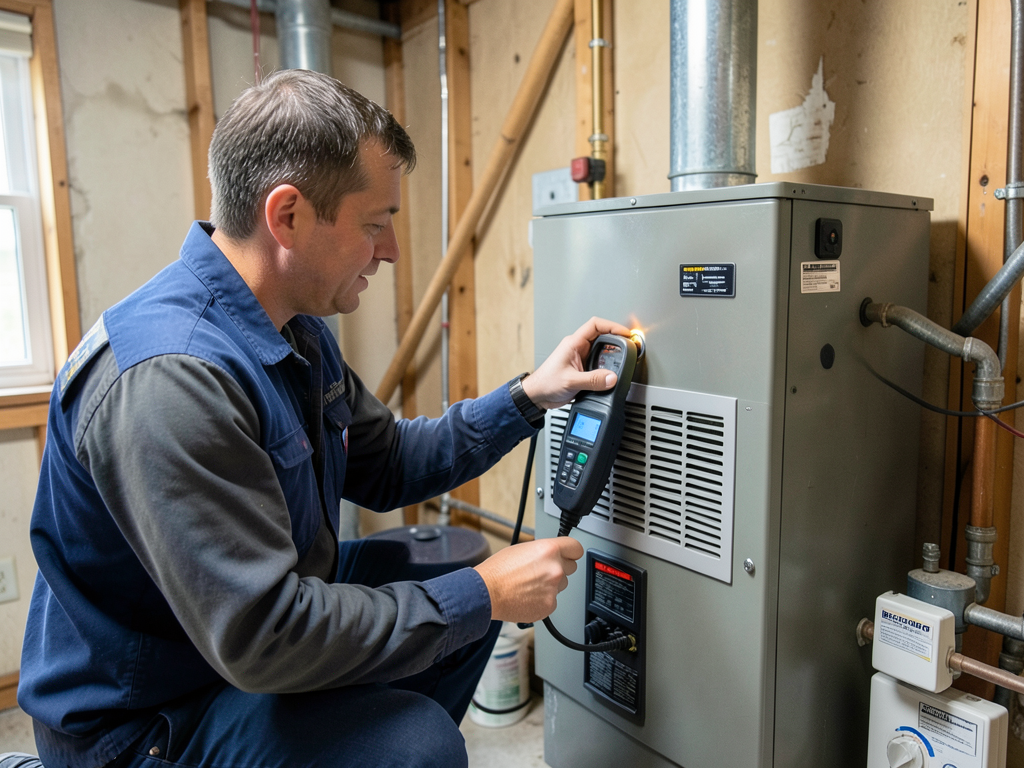
During our safety inspections, we use a combustion analyzer that measures CO levels in parts per million. Anything above 9 ppm in your home is considered unsafe by EPA standards. We’ve found levels exceeding 200 ppm in furnaces that homeowners thought were working fine.
The 20-Point Safety Inspection That Could Save Your Life
A proper furnace safety inspection goes far beyond checking the thermostat. Here’s what our NATE-certified technicians examine during every Beech Grove home visit:
- Carbon Monoxide Detection
We test for CO levels at the furnace, in your living spaces, and near sleeping areas using digital analyzers that provide real-time readings.
- Heat Exchanger Examination
Using a specialized camera, we inspect the entire heat exchanger for cracks, rust, or deterioration that could allow CO leakage.
- Flue Pipe Integrity
We check for blockages, corrosion, or disconnections in your venting system that could trap dangerous gases.
- Gas Pressure Testing
Using a manometer, we verify that gas pressure matches manufacturer specifications for safe, efficient combustion.
- Burner Assembly Cleaning
Dirty burners produce more CO and reduce efficiency. We clean and adjust them to factory specifications.
- Flame Sensor Testing
A faulty flame sensor can cause the furnace to cycle improperly, creating unsafe conditions.
- Limit Switch Operation
We verify that safety switches function correctly to prevent overheating. Reliable Heating and Cooling Experts Serving the Broad Ripple Area.
- Electrical Connection Inspection
Loose connections can create fire hazards and cause system failures.
- Blower Motor Assessment
We check for proper operation and listen for bearing wear that could indicate impending failure.
- Air Filter Evaluation
Restricted airflow forces the furnace to work harder and can create backdraft conditions.
- Thermostat Calibration
Incorrect calibration can cause short cycling and inefficient operation.
- Combustion Air Supply
We verify adequate fresh air intake for proper combustion.
- Vent Pipe Slope Verification
Improper slope can cause condensation buildup and corrosion.
- Gas Valve Operation
We test for proper opening and closing to prevent gas leaks.
- Ignition System Check
Whether you have a pilot light or electronic ignition, we verify reliable operation.. Read more about Finding a reliable HVAC company for same-day service in Indianapolis.
- Safety Control Testing
All safety controls are tested to ensure they’ll shut down the system if problems occur.
- Condensate Drain Inspection
For high-efficiency furnaces, we check for proper drainage to prevent water damage and corrosion.
- Carbon Monoxide Detector Placement Review
We verify you have detectors installed in the correct locations per Indiana code.
- System Age Assessment
We provide honest recommendations about replacement timing based on your unit’s condition and efficiency. Affordable HVAC Replacement Options for Families in Noblesville.
- Maintenance Recommendations
We provide a customized maintenance plan to keep your system safe and efficient year-round.
According to the Indiana Residential Code Section 675 IAC 16-1.1-706, every dwelling unit must have at least one approved carbon monoxide alarm outside each separate sleeping area. However, many Beech Grove homes built before this requirement was enforced lack adequate protection.
During our inspections, we often find that homes need additional CO detectors in strategic locations. The ideal setup includes detectors on every level, near sleeping areas, and within 10 feet of attached garages where vehicle exhaust can seep into living spaces.
Warning Signs Your Furnace May Be Producing Carbon Monoxide
While professional testing is the only way to know for sure, these warning signs indicate your furnace could be producing dangerous levels of carbon monoxide:
- Soot or yellow/brown staining around the furnace or on walls near vents
- Excessive moisture on windows or walls, indicating poor ventilation
- A yellow or flickering burner flame instead of a steady blue flame
- Unusual odors when the furnace runs, especially a burning or chemical smell
- Family members experiencing flu-like symptoms that improve when away from home
- Condensation on cold surfaces near the furnace
- Rusted or corroded flue pipes
If you notice any of these signs, evacuate your home immediately and call (317) 688-8818 for emergency service. Do not re-enter until professionals have cleared the building.
The heavy clay soil in Beech Grove can cause subtle foundation shifts that stress gas lines and furnace components over time. This makes annual inspections particularly important for homes in this area.
Carbon Monoxide Detectors: Your Second Line of Defense
Even with a perfectly maintained furnace, CO detectors are essential. Here’s what you need to know about protecting your Beech Grove home:
| Detector Type | Best Location | Replacement Schedule |
|---|---|---|
| Battery-powered | Every bedroom and hallway | Every 5-7 years |
| Hardwired with battery backup | Every level, near sleeping areas | Every 7-10 years |
| Smart detectors | Key living areas and bedrooms | Every 5-7 years |
According to the Consumer Product Safety Commission, CO detectors should be installed on every level of your home, including the basement. Place them at least 15 feet from fuel-burning appliances to avoid false alarms, and never near windows or doors where drafts could affect readings. Consumer Product Safety Commission CO Information.
Many Beech Grove homes have unique challenges due to their age and construction. Older homes often have less airtight construction, which can actually help dilute CO concentrations. However, this doesn’t make them safe—it just means dangerous levels might take longer to build up.
We recommend testing your CO detectors monthly and replacing batteries twice yearly. A good rule of thumb is to change batteries when you adjust your clocks for daylight saving time.
Why Beech Grove Homes Face Unique Risks
Beech Grove’s housing stock presents specific challenges for furnace safety. Many homes in the area were built between 1950 and 1980, a period when building codes were less stringent about ventilation requirements and gas appliance safety.
The proximity to the former Amtrak Beech Grove Shops means some homes were built during industrial boom times when rapid construction sometimes prioritized speed over long-term safety considerations. Additionally, the area’s soil composition—heavy clay that expands and contracts with moisture changes—can cause subtle shifts in home foundations that stress gas lines and furnace connections.
Older neighborhoods like those near Emerson Avenue often have interconnected utility lines that, while convenient for installation, can create pathways for gas leaks to spread between homes if not properly maintained.
The extreme temperature variations in Central Indiana also accelerate wear on furnace components. Your heat exchanger experiences thousands of thermal cycles each winter, expanding and contracting with temperature changes. Over 15-20 years, this stress can create microscopic cracks that grow larger over time.
Cost of Carbon Monoxide Testing vs. Cost of Emergency
A professional carbon monoxide safety inspection typically costs between $89 and $149 in the Indianapolis area. This investment pales in comparison to the potential costs of CO poisoning:
| Service | Typical Cost | Potential Savings |
|---|---|---|
| Safety Inspection | $89-149 | Peace of mind, early problem detection |
| Emergency CO Response | $500-2,000 | Immediate evacuation and testing |
| Hospital Treatment (per person) | $3,000-15,000 | Oxygen therapy, monitoring |
| Fatal Accident Costs | $Variable | Funeral expenses, lost income, emotional trauma |
Beyond the financial considerations, the emotional cost of a CO incident can be devastating. Many families who experience carbon monoxide poisoning report ongoing anxiety about using their heating systems, even after repairs are completed. The Best AC Repair Services in Carmel for Modern Subdivisions.
Regular safety inspections also help you avoid the inconvenience and expense of emergency service calls during the coldest nights of the year when HVAC companies are busiest and rates are highest.
Professional vs. DIY Testing: Why Experience Matters
While you can purchase CO test kits at hardware stores, they cannot match the accuracy and comprehensiveness of professional testing. Here’s why:
- Professional-grade analyzers detect CO levels as low as 1 ppm, while consumer models typically only alarm at 30-70 ppm
- Technicians can identify the source of CO production, not just its presence
- Professional inspections include examination of components that could fail in the future
- Experienced technicians know the specific failure patterns common to different furnace brands and ages
During a professional inspection, we use a combustion analyzer that measures oxygen levels, stack temperature, and CO production in real-time. This allows us to see exactly how your furnace is performing under different operating conditions.
We also use a borescope to examine the interior of your heat exchanger without disassembling the furnace. This specialized camera can detect cracks as small as 1/64 inch that would be invisible to the naked eye.
Emergency Response: What to Do If You Suspect CO Poisoning
Carbon monoxide acts quickly. At 400 ppm, symptoms can develop within 1-2 hours, and unconsciousness can occur within 3 hours. Here’s what to do if you suspect CO poisoning:
- Get fresh air immediately. Open windows and doors as you exit.
- Call 911 or your local emergency number.
- Evacuate all people and pets from the building.
- Do not re-enter the building until emergency responders have declared it safe.
- Seek medical attention even if you feel better, as CO can cause delayed symptoms.
Symptoms of CO poisoning include headache, dizziness, weakness, nausea, vomiting, chest pain, and confusion. If multiple family members experience these symptoms simultaneously, especially during heating season, CO should be suspected.
After emergency responders clear your home, call (317) 688-8818 for a comprehensive safety inspection. We’ll identify the source of the problem and provide recommendations for repairs or replacement.
Frequently Asked Questions
How often should I have my furnace tested for carbon monoxide?
Annual testing is recommended for all gas furnaces, with additional testing if you notice any warning signs or if your furnace is over 15 years old. Homes in Beech Grove with older HVAC systems should consider bi-annual inspections due to the age of the housing stock.
Is a furnace tune-up the same as a safety inspection?
No. A tune-up focuses on efficiency and performance, while a safety inspection specifically tests for carbon monoxide production and examines safety components. A comprehensive service should include both.
Can I rely on my carbon monoxide detector instead of professional testing?
CO detectors are essential but not a substitute for professional testing. Detectors only alarm at dangerous levels, while professional testing can detect problems before they become emergencies. Think of detectors as your last line of defense, not your only protection.
How long does a carbon monoxide safety inspection take?
A thorough inspection typically takes 60-90 minutes, depending on your furnace’s age and condition. Older systems or those with accessibility issues may require more time.
What’s the difference between a cracked heat exchanger and a blocked flue?
A cracked heat exchanger allows CO to leak directly into your home’s air supply, while a blocked flue prevents proper exhaust ventilation, causing CO to back up into living spaces. Both are dangerous but require different repair approaches.
Take Action Today: Your Family’s Safety Can’t Wait
Carbon monoxide doesn’t wait for convenient times to become a problem. The next cold snap could be the moment a small crack becomes a life-threatening leak. Don’t let your family become another statistic.
Professional carbon monoxide testing is quick, affordable, and could save lives. Our NATE-certified technicians understand the specific challenges facing Beech Grove homes and have the equipment to detect even trace amounts of CO.
Call (317) 688-8818 today to schedule your comprehensive furnace safety inspection. We offer same-day service for urgent situations and provide written reports detailing our findings and recommendations.
Don’t wait until it’s too late. Pick up the phone and call (317) 688-8818 before the next cold snap hits. Your family’s safety is worth every minute of your time.
Remember, carbon monoxide is called the “silent killer” for a reason. You can’t see it, smell it, or taste it. But with professional testing, you can detect it and protect your loved ones. Contact us now to schedule your inspection.
{
“@context”: “https://schema.org”,
“@type”: “BlogPosting”,
“headline”: “Why Carbon Monoxide Testing is Essential for Every Beech Grove Furnace”,
“description”: “Protect your Beech Grove home this winter. Learn why CO testing is critical for older gas furnaces and how to keep your family safe from carbon monoxide poisoning.”,
“wordCount”: 2265,
“datePublished”: “2026-03-23T13:55:00.000Z”,
“dateModified”: “2026-03-23T13:55:00.000Z”,
“inLanguage”: “en-US”,
“mainEntityOfPage”: {
“@type”: “WebPage”,
“@id”: “https://reliancehvacindianapolis.com”
},
“publisher”: {
“@type”: “LocalBusiness”,
“name”: “Reliance HVAC Indianapolis”,
“url”: “https://reliancehvacindianapolis.com”
},
“author”: {
“@type”: “Organization”,
“name”: “Reliance HVAC Indianapolis”,
“url”: “https://reliancehvacindianapolis.com”
},
“image”: {
“@type”: “ImageObject”,
“url”: “https://reliancehvacindianapolis.com/wp-content/uploads/2026/03/why-carbon-monoxide-testing-is-essential-for-every-1.png”
}
}
{
“@context”: “https://schema.org”,
“@type”: “HVACBusiness”,
“name”: “Reliance HVAC Indianapolis”,
“url”: “https://reliancehvacindianapolis.com”,
“address”: {
“@type”: “PostalAddress”,
“addressLocality”: “Indianapolis”
},
“areaServed”: {
“@type”: “City”,
“name”: “Indianapolis”
}
}
{
“@context”: “https://schema.org”,
“@type”: “FAQPage”,
“mainEntity”: [
{
“@type”: “Question”,
“name”: “How often should I have my furnace tested for carbon monoxide?”,
“acceptedAnswer”: {
“@type”: “Answer”,
“text”: “Annual testing is recommended for all gas furnaces, with additional testing if you notice any warning signs or if your furnace is over 15 years old. Homes in Beech Grove with older HVAC systems should consider bi-annual inspections due to the age of the housing stock.”
}
},
{
“@type”: “Question”,
“name”: “Is a furnace tune-up the same as a safety inspection?”,
“acceptedAnswer”: {
“@type”: “Answer”,
“text”: “No. A tune-up focuses on efficiency and performance, while a safety inspection specifically tests for carbon monoxide production and examines safety components. A comprehensive service should include both.”
}
},
{
“@type”: “Question”,
“name”: “Can I rely on my carbon monoxide detector instead of professional testing?”,
“acceptedAnswer”: {
“@type”: “Answer”,
“text”: “CO detectors are essential but not a substitute for professional testing. Detectors only alarm at dangerous levels, while professional testing can detect problems before they become emergencies. Think of detectors as your last line of defense, not your only protection.”
}
},
{
“@type”: “Question”,
“name”: “How long does a carbon monoxide safety inspection take?”,
“acceptedAnswer”: {
“@type”: “Answer”,
“text”: “A thorough inspection typically takes 60-90 minutes, depending on your furnace’s age and condition. Older systems or those with accessibility issues may require more time.”
}
},
{
“@type”: “Question”,
“name”: “What’s the difference between a cracked heat exchanger and a blocked flue?”,
“acceptedAnswer”: {
“@type”: “Answer”,
“text”: “A cracked heat exchanger allows CO to leak directly into your home’s air supply, while a blocked flue prevents proper exhaust ventilation, causing CO to back up into living spaces. Both are dangerous but require different repair approaches.”
}
}
]
}
{
“@context”: “https://schema.org”,
“@type”: “HowTo”,
“name”: “Furnace Safety Inspection Process”,
“step”: [
{
“@type”: “HowToStep”,
“position”: 1,
“name”: “Carbon Monoxide Detection”,
“text”: “We test for CO levels at the furnace, in your living spaces, and near sleeping areas using digital analyzers that provide real-time readings.”
},
{
“@type”: “HowToStep”,
“position”: 2,
“name”: “Heat Exchanger Examination”,
“text”: “Using a specialized camera, we inspect the entire heat exchanger for cracks, rust, or deterioration that could allow CO leakage.”
},
{
“@type”: “HowToStep”,
“position”: 3,
“name”: “Flue Pipe Integrity”,
“text”: “We check for blockages, corrosion, or disconnections in your venting system that could trap dangerous gases.”
},
{
“@type”: “HowToStep”,
“position”: 4,
“name”: “Gas Pressure Testing”,
“text”: “Using a manometer, we verify that gas pressure matches manufacturer specifications for safe, efficient combustion.”
},
{
“@type”: “HowToStep”,
“position”: 5,
“name”: “Burner Assembly Cleaning”,
“text”: “Dirty burners produce more CO and reduce efficiency. We clean and adjust them to factory specifications.”
},
{
“@type”: “HowToStep”,
“position”: 6,
“name”: “Flame Sensor Testing”,
“text”: “A faulty flame sensor can cause the furnace to cycle improperly, creating unsafe conditions.”
},
{
“@type”: “HowToStep”,
“position”: 7,
“name”: “Limit Switch Operation”,
“text”: “We verify that safety switches function correctly to prevent overheating. Reliable Heating and Cooling Experts Serving the Broad Ripple Area.”
},
{
“@type”: “HowToStep”,
“position”: 8,
“name”: “Electrical Connection Inspection”,
“text”: “Loose connections can create fire hazards and cause system failures.”
},
{
“@type”: “HowToStep”,
“position”: 9,
“name”: “Blower Motor Assessment”,
“text”: “We check for proper operation and listen for bearing wear that could indicate impending failure.”
},
{
“@type”: “HowToStep”,
“position”: 10,
“name”: “Air Filter Evaluation”,
“text”: “Restricted airflow forces the furnace to work harder and can create backdraft conditions.”
},
{
“@type”: “HowToStep”,
“position”: 11,
“name”: “Thermostat Calibration”,
“text”: “Incorrect calibration can cause short cycling and inefficient operation.”
},
{
“@type”: “HowToStep”,
“position”: 12,
“name”: “Combustion Air Supply”,
“text”: “We verify adequate fresh air intake for proper combustion.”
},
{
“@type”: “HowToStep”,
“position”: 13,
“name”: “Vent Pipe Slope Verification”,
“text”: “Improper slope can cause condensation buildup and corrosion.”
},
{
“@type”: “HowToStep”,
“position”: 14,
“name”: “Gas Valve Operation”,
“text”: “We test for proper opening and closing to prevent gas leaks.”
},
{
“@type”: “HowToStep”,
“position”: 15,
“name”: “Ignition System Check”,
“text”: “Whether you have a pilot light or electronic ignition, we verify reliable operation.”
},
{
“@type”: “HowToStep”,
“position”: 16,
“name”: “Safety Control Testing”,
“text”: “All safety controls are tested to ensure they’ll shut down the system if problems occur.”
},
{
“@type”: “HowToStep”,
“position”: 17,
“name”: “Condensate Drain Inspection”,
“text”: “For high-efficiency furnaces, we check for proper drainage to prevent water damage and corrosion.”
},
{
“@type”: “HowToStep”,
“position”: 18,
“name”: “Carbon Monoxide Detector Placement Review”,
“text”: “We verify you have detectors installed in the correct locations per Indiana code.”
},
{
“@type”: “HowToStep”,
“position”: 19,
“name”: “System Age Assessment”,
“text”: “We provide honest recommendations about replacement timing based on your unit’s condition and efficiency. Affordable HVAC Replacement Options for Families in Noblesville.”
},
{
“@type”: “HowToStep”,
“position”: 20,
“name”: “Maintenance Recommendations”,
“text”: “We provide a customized maintenance plan to keep your system safe and efficient year-round.”
}
],
“image”: “https://reliancehvacindianapolis.com/wp-content/uploads/2026/03/why-carbon-monoxide-testing-is-essential-for-every-1.png”
}
{
“@context”: “https://schema.org”,
“@type”: “BreadcrumbList”,
“itemListElement”: [
{
“@type”: “ListItem”,
“position”: 1,
“name”: “Home”,
“item”: “https://reliancehvacindianapolis.com”
},
{
“@type”: “ListItem”,
“position”: 2,
“name”: “Blog”,
“item”: “https://reliancehvacindianapolis.com/blog”
},
{
“@type”: “ListItem”,
“position”: 3,
“name”: “Why Carbon Monoxide Testing is Essential for Every Beech Grove Furnace”
}
]
}
{
“@context”: “https://schema.org”,
“@type”: “Service”,
“serviceType”: “HVAC”,
“provider”: {
“@type”: “LocalBusiness”,
“name”: “Reliance HVAC Indianapolis”,
“url”: “https://reliancehvacindianapolis.com”
},
“areaServed”: {
“@type”: “City”,
“name”: “Indianapolis”
},
“description”: “Protect your Beech Grove home this winter. Learn why CO testing is critical for older gas furnaces and how to keep your family safe from carbon monoxide poisoning.”
}