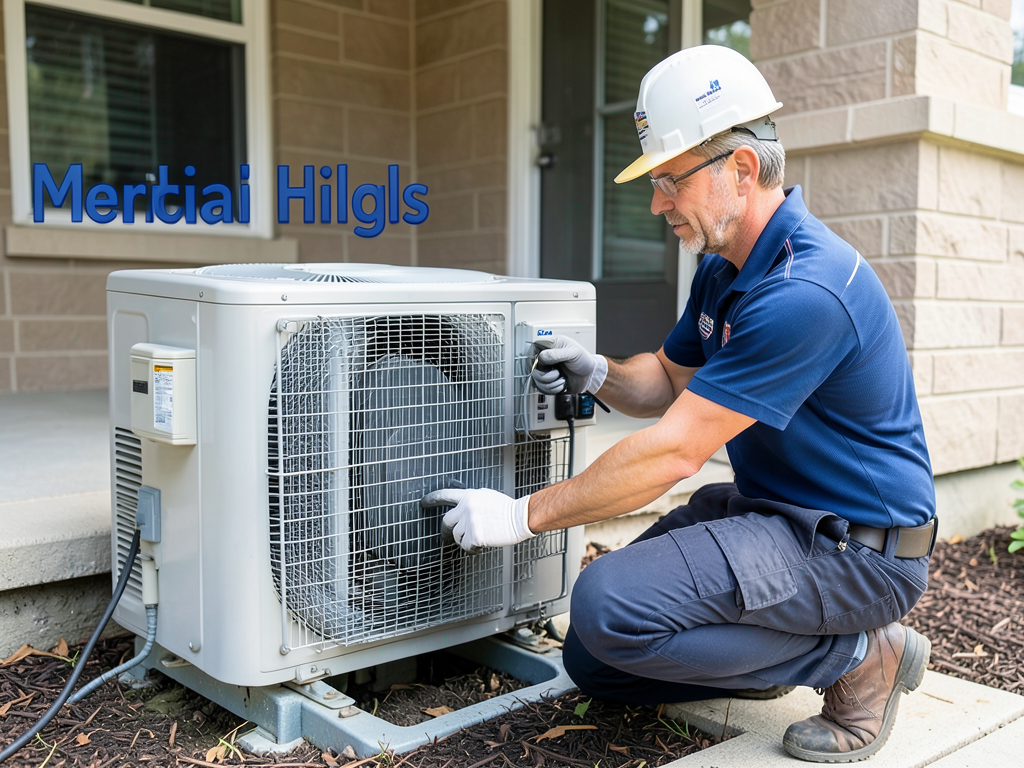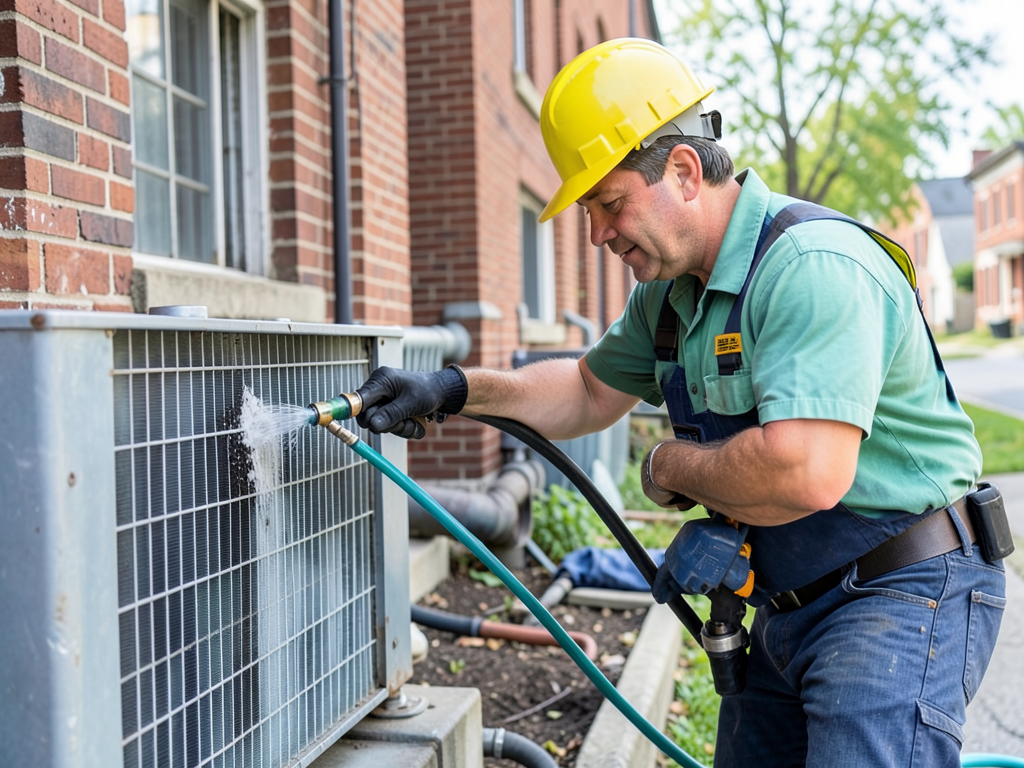



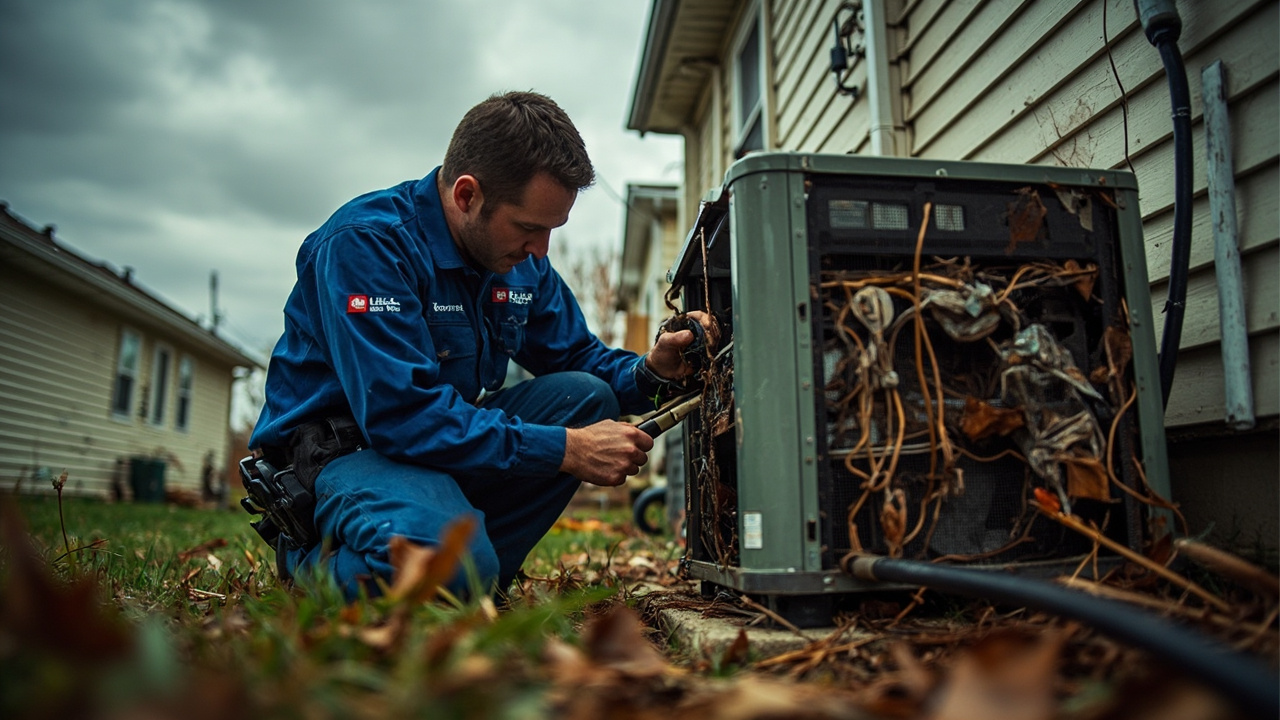
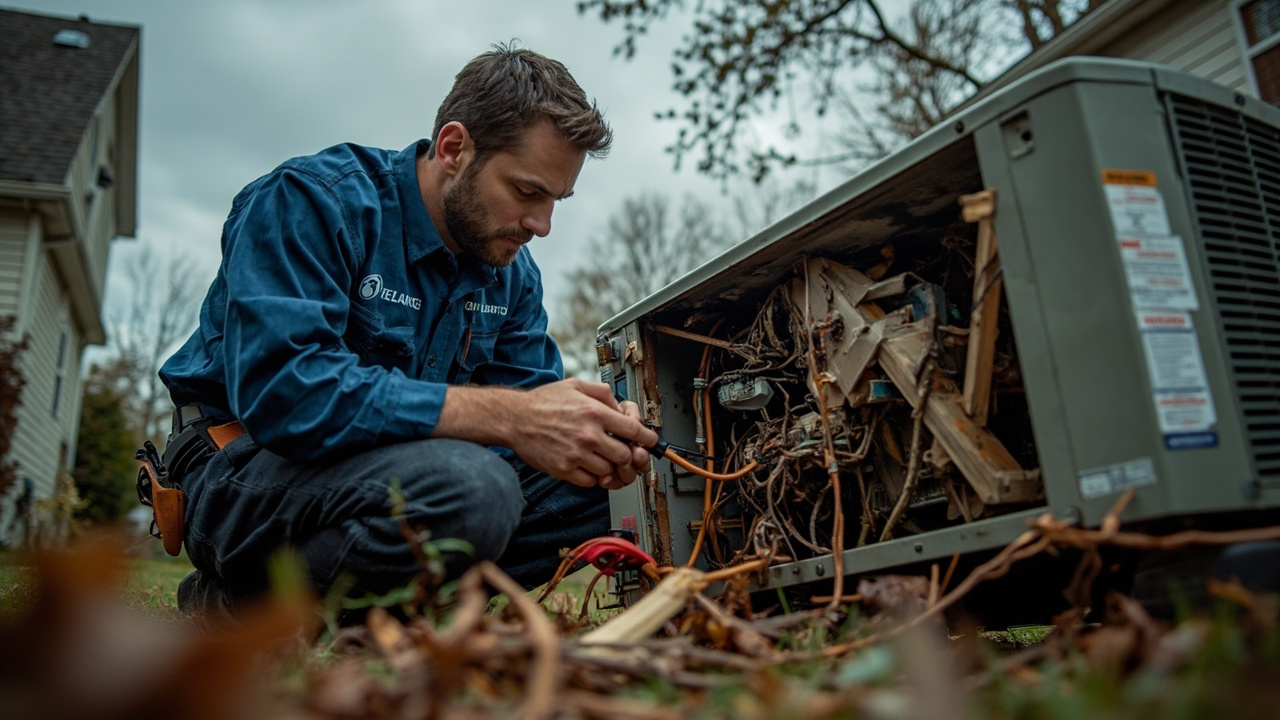
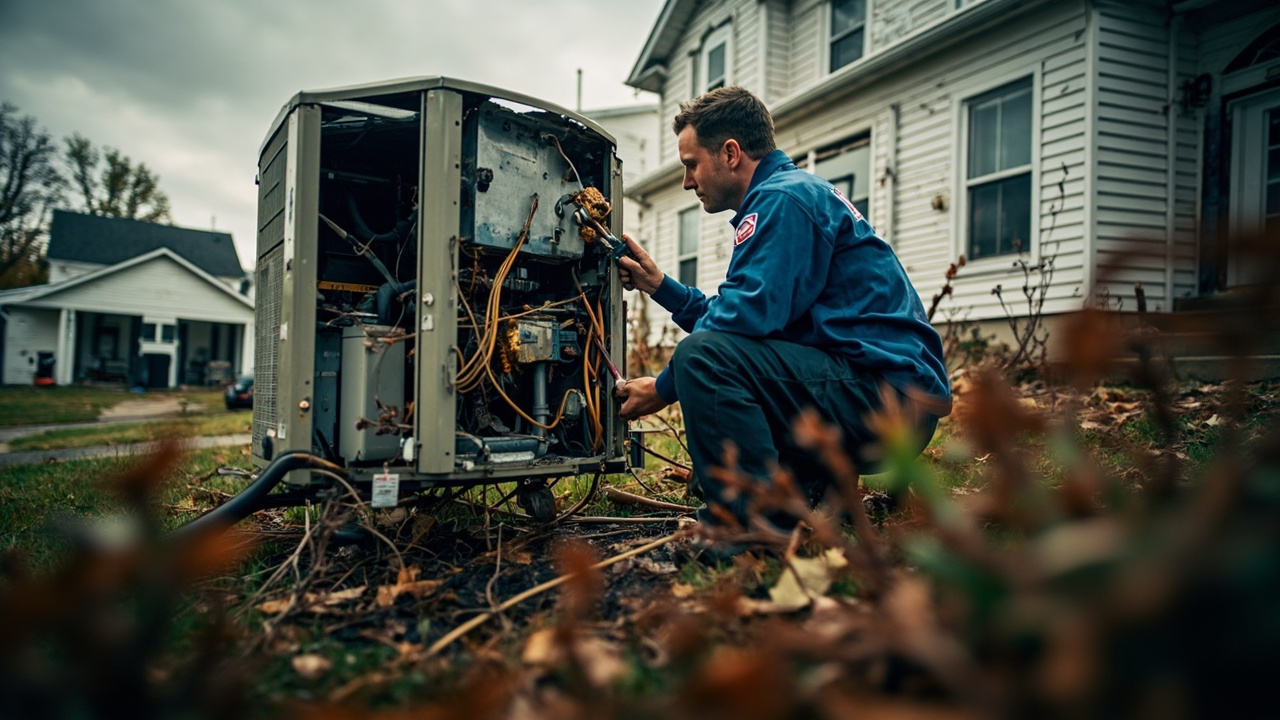
Indianapolis experiences an average of 42 thunderstorm days per year, concentrated between April and August when warm Gulf moisture collides with Canadian air masses over Indiana. These storms produce conditions that damage HVAC equipment faster than normal wear patterns. Straight-line winds exceed 60 mph multiple times each summer, bending condenser fan blades and tearing securing straps from concrete pads. Hail larger than one inch diameter falls during 8 to 12 events annually, puncturing aluminum fins and cracking plastic housings on thermostats and outdoor disconnects. Lightning strikes within a quarter mile send voltage surges through electrical panels, destroying circuit boards and compressor start components. The combination of high wind, hail, and electrical surge makes emergency HVAC storm repair a recurring need for Indianapolis homeowners, not a once-in-a-lifetime event.
Local building codes in Indianapolis require specific equipment protection measures that many contractors ignore during initial installation. Systems installed after 2015 must have surge protection devices at the main panel and the equipment disconnect. Outdoor units in flood-prone areas near Eagle Creek and White River tributaries need elevated mounting pads at least 12 inches above grade. These requirements exist because Marion County experiences flash flooding during heavy rain events that dump three to five inches in under two hours. Choosing a contractor familiar with Indianapolis code requirements and local weather vulnerabilities ensures your heating and cooling storm damage repair meets both immediate comfort needs and long-term resilience standards.