


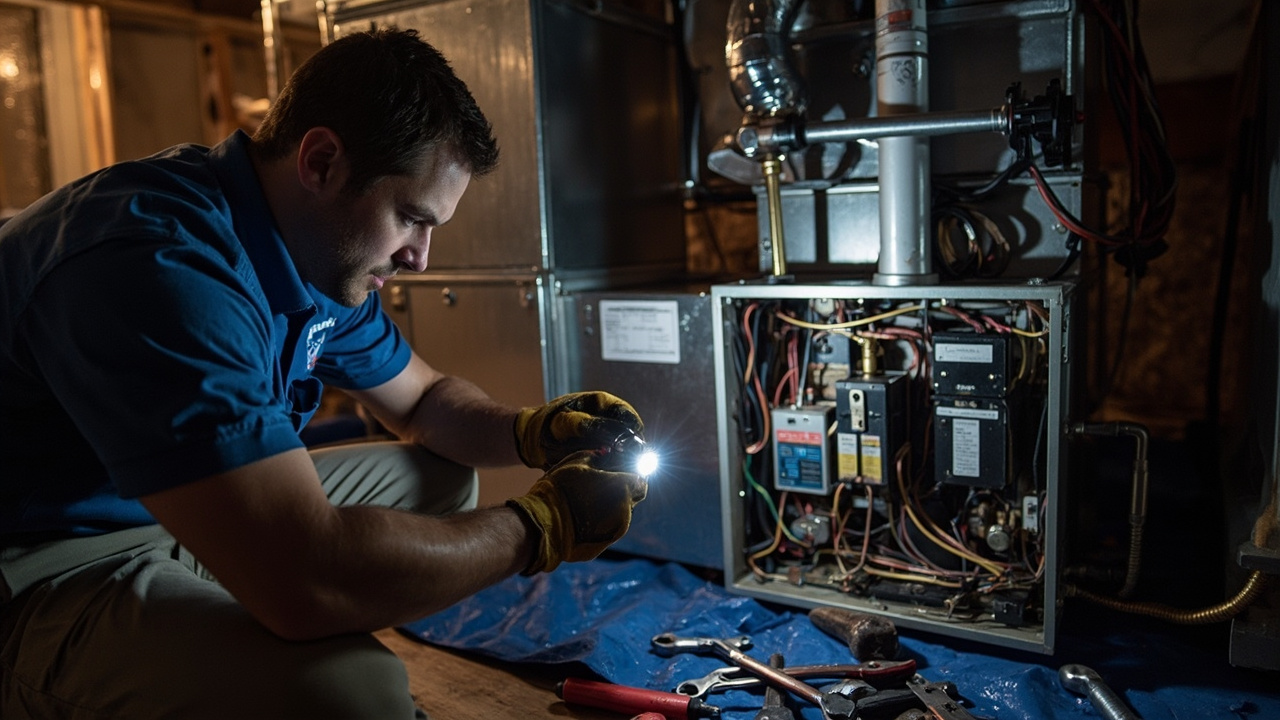
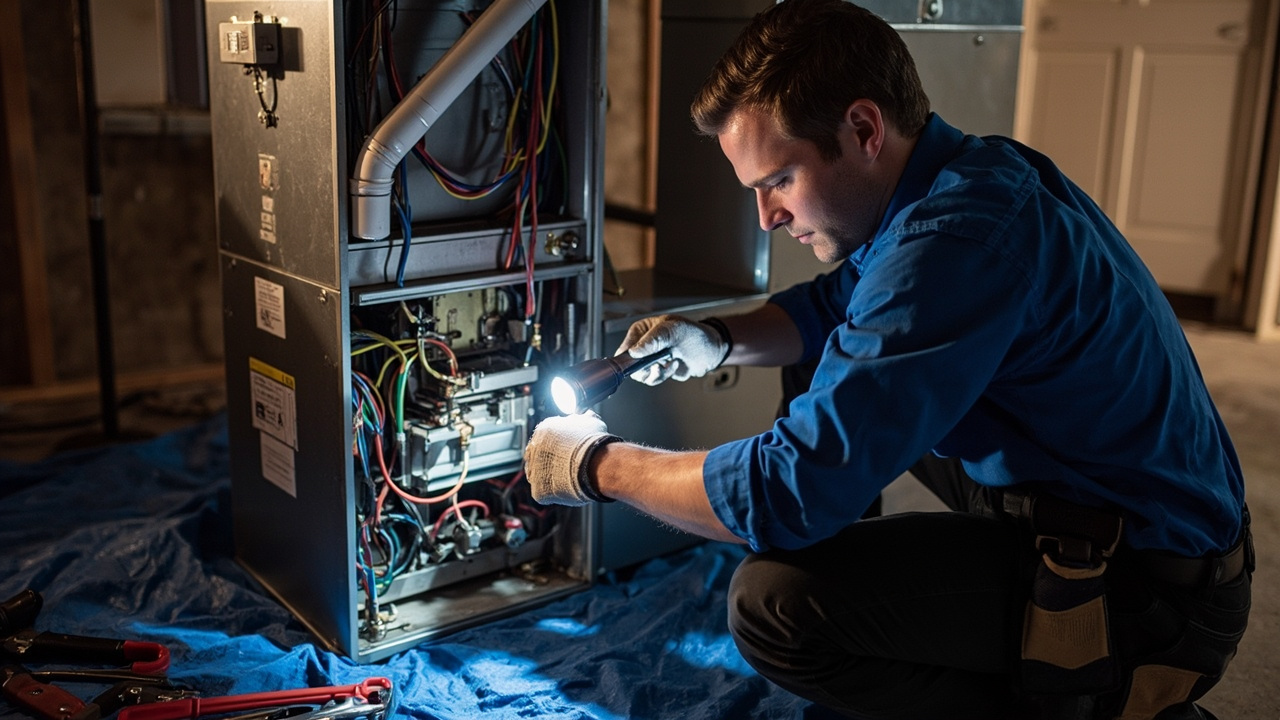
Indianapolis sits in a humid continental climate zone. Summer dew points regularly hit 70 degrees, and basements stay damp from June through September. This moisture accelerates corrosion on gas valves, thermocouples, and pilot assemblies. Homes near the White River, Fall Creek, and Eagle Creek Reservoir experience even higher humidity due to proximity to water. The result is faster component degradation. A thermocouple that might last 15 years in a dry climate fails in 8 to 10 years here. Pilot orifices clog faster. Gas valve diaphragms crack sooner. The environment is harder on furnaces than most homeowners realize.
Indianapolis also experiences dramatic temperature swings. A January week can start at 15 degrees and end at 50 degrees. These freeze-thaw cycles cause gas lines to expand and contract, loosening connections and disrupting pressure. Older homes in Broad Ripple, Irvington, and the Old Northside have gas lines installed in the 1950s and 1960s. These lines were not designed for the thermal stress of modern climate extremes. When fittings loosen, gas pressure drops. When gas pressure drops, pilot flames weaken. When pilot flames weaken, thermocouples fail to stay heated. The cycle compounds. You need a technician who understands how local conditions create failure modes that do not appear in textbook diagnostics.