

Menu

Importance of Air Filter Changes in Indianapolis – Protect Your System and Lower Energy Bills Year-Round

Regular air filter replacement prevents equipment failure, improves indoor air quality, and reduces monthly utility costs by keeping your HVAC system running at peak efficiency in Indianapolis's variable climate conditions.

Slider Image 1
Slider Image 2
Slider Image 3
Slider Image 4
Slider Image 5
Slider Image 7
Slider Image 8
Slider Image 9
Slider Image 10
Slider Image 11

Why Indianapolis Climate Makes Air Filter Replacement Critical

Indianapolis experiences all four seasons with distinct challenges. Summer humidity breeds mold and spore growth. Spring pollen from maple and oak trees blankets neighborhoods from Broad Ripple to Fountain Square. Winter freeze-thaw cycles create dust from road salt and debris that infiltrates homes through every crack and seam.

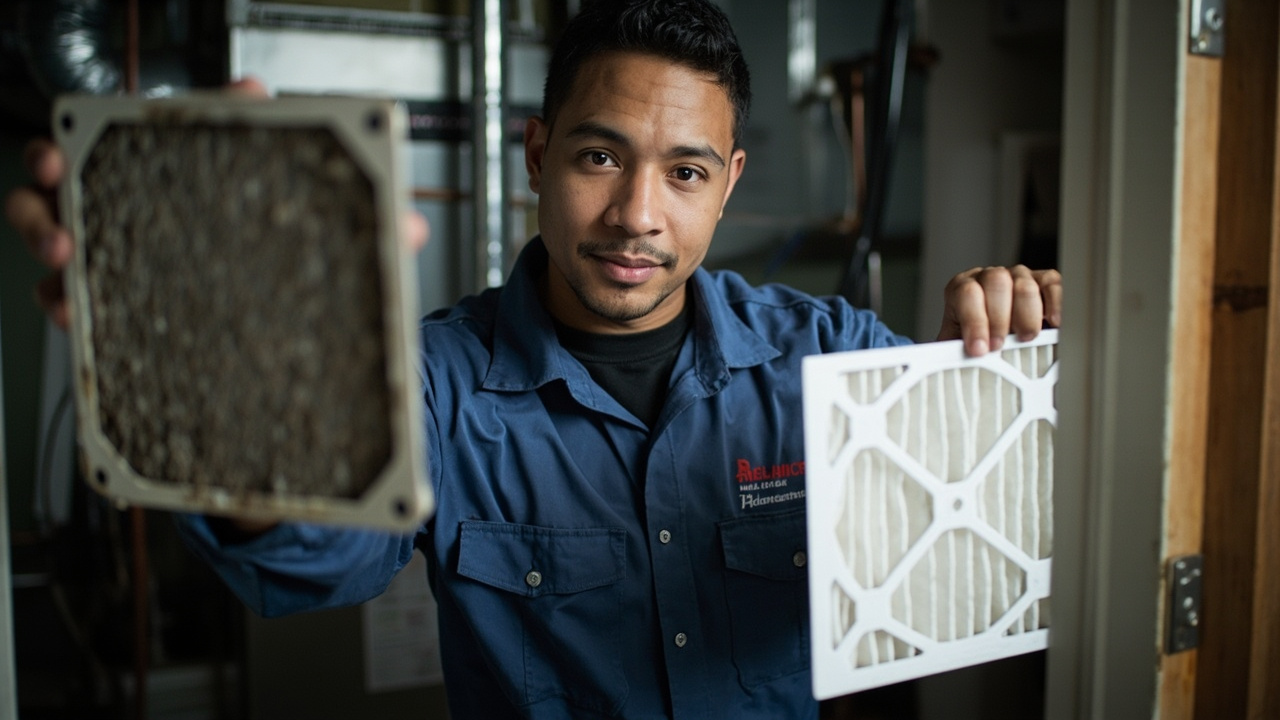
Your HVAC system pulls in this air constantly. The filter stands as the only barrier between outdoor contaminants and your indoor environment. When filters clog with pollen, dust, and particulate matter, your system works harder to move air through the restricted passages. This strain increases energy consumption by 15 to 20 percent and accelerates wear on the blower motor and heat exchanger.

The benefits of changing air filters extend beyond equipment protection. A clean filter traps allergens before they circulate through your ductwork. Residents in older Indianapolis neighborhoods with homes built before 1970 face additional challenges. These structures often lack proper air sealing, which means more outdoor air infiltration and faster filter saturation.

Understanding why replace HVAC filters comes down to simple physics. Air takes the path of least resistance. When your filter becomes clogged, air bypasses the filter media entirely, flowing through gaps around the filter frame. This unfiltered air carries dust directly onto your evaporator coil and blower wheel, creating insulation that reduces heat transfer efficiency. The reasons for changing AC filters tie directly to system longevity and performance. A $30 filter replaced quarterly prevents $800 compressor repairs and $200 monthly energy bills.

The impact of dirty air filters shows up first in uneven temperatures between rooms, then in frozen evaporator coils during cooling season, and finally in complete system failure during the peak demand days of July and January.

Why Indianapolis Climate Makes Air Filter Replacement Critical
How Filter Quality and MERV Ratings Affect System Performance

How Filter Quality and MERV Ratings Affect System Performance

Not all filters provide the same protection. The Minimum Efficiency Reporting Value (MERV) rating determines what size particles a filter captures. Standard fiberglass filters carry MERV 1-4 ratings and catch only the largest particles like dust bunnies and pet hair. These filters cost $3 but provide minimal protection for your equipment or air quality.

Pleated filters with MERV 8-11 ratings trap pollen, mold spores, and fine dust. These filters strike the right balance for most Indianapolis homes. The pleated design increases surface area, which means more particle capture without restricting airflow. Your blower motor pulls the same amperage whether the filter is clean or moderately loaded.

MERV 13-16 filters approach HEPA-level filtration. These filters capture bacteria, smoke particles, and viruses. However, residential HVAC systems rarely have the blower capacity to move air through these dense filter media. Installing a MERV 16 filter in a system designed for MERV 8 creates a pressure drop that triggers limit switch faults and reduces airflow to dangerous levels.

The significance of air filter replacement depends on matching filter resistance to your system's static pressure capacity. A 2-ton air handler moving 800 cubic feet per minute through a standard return grille requires a different filter specification than a 5-ton commercial unit with a 20-inch filter rack.

We measure static pressure across the filter with a manometer during maintenance visits. Readings above 0.5 inches of water column indicate restriction. This measurement tells us whether your current filter type matches your equipment capacity or if we need to resize your filter rack to accommodate higher MERV ratings without choking airflow.

Filter frames matter as much as filter media. A filter with a cardboard frame degrades when exposed to humidity, allowing air to bypass around the edges. Filters with wire-reinforced frames maintain their shape and seal properly against the filter rack throughout their service life.

What Happens During a Professional Filter Assessment

Importance of Air Filter Changes in Indianapolis – Protect Your System and Lower Energy Bills Year-Round
01

System Airflow Measurement

We begin by measuring static pressure at the return plenum and supply plenum using calibrated digital manometers. These readings establish your system's external static pressure, which tells us whether your current filter type restricts airflow. We compare actual airflow against manufacturer specifications using temperature rise calculations across the heat exchanger. This data determines if your filter size and MERV rating match your equipment capacity or if modifications are needed to prevent blower motor strain and premature component failure.
02

Filter Rack Inspection

We inspect the filter rack for bypass gaps, damaged tracks, and improper sizing that allows unfiltered air to flow around the filter media. Many Indianapolis homes have filter racks that accept multiple filter sizes, creating gaps where 16x25 filters sit in 20x25 openings. We check for light leaks around the installed filter and measure the actual filter size against the rack dimensions. If bypass exists, we recommend rack modifications or foam gasket installations to ensure all return air passes through the filter media rather than flowing around the edges.
03

Custom Maintenance Schedule

Based on your home's occupancy, pet count, local pollen levels, and measured system performance, we create a filter replacement schedule specific to your situation. Homes with multiple pets need monthly changes. Houses with minimal occupancy and low outdoor air infiltration can extend to 90-day intervals. We document the correct filter size, optimal MERV rating for your system, and expected pressure drop when clean versus loaded. This eliminates guesswork and prevents the equipment damage that occurs when filters stay in service too long.

Why Indianapolis Homeowners Trust Local HVAC Expertise

Indianapolis homes built in different eras require different approaches to air filtration. Homes in historic districts like Lockerbie Square and Old Northside feature gravity furnaces converted to forced air systems. These conversions often include undersized return air pathways that cannot accommodate high-MERV filters without creating excessive static pressure.

Ranch homes built in the 1960s throughout Lawrence and Warren Park typically have slab-mounted furnaces with bottom return plenums. The filter rack sits 6 inches above the basement floor, making it easy to forget. We see these filters go unchanged for years, creating dust buildup on evaporator coils that reduces cooling capacity by 30 percent.

Newer construction in Carmel and Fishers often includes media cabinets designed for 4-inch or 5-inch thick filters. These deep-pleated filters offer MERV 11-13 ratings with minimal airflow restriction. The extended surface area means these filters capture more particles before requiring replacement. Most homeowners can extend change intervals to 6 to 12 months depending on usage and outdoor air quality.

Understanding local building characteristics matters because filter recommendations must match existing ductwork and equipment capacity. A filter that works perfectly in a 2,400-square-foot home with 3-ton equipment will choke a 1,200-square-foot home with a 1.5-ton unit and undersized return ducts.

We stock filter sizes that match Indianapolis housing stock. The standard 16x25x1, 20x25x1, and 16x20x1 sizes fit 75 percent of local homes. However, we also carry odd sizes like 14x30, 19x23, and 12x24 for older homes with custom sheet metal work.

Our technicians carry filter sizing tools and can fabricate custom frames for unusual openings. This matters because using the wrong size filter creates bypass gaps that allow dust to coat internal components.

Reliance HVAC Indianapolis has tracked seasonal pollen counts and particulate levels across Marion County for years. This data helps us recommend change intervals based on your specific neighborhood. Spring and fall create the highest filter loading due to tree pollen and leaf debris.

What to Expect When You Commit to Regular Filter Maintenance

Immediate Equipment Response

You will notice improved airflow within minutes of installing a clean filter. Rooms that felt stuffy or warm will receive proper conditioned air again. Your thermostat will satisfy faster because the system moves enough air to transfer heat efficiently. Blower motors run quieter without the strain of pulling air through a clogged filter. Energy meters show reduced runtime as your equipment reaches setpoint temperatures without extended cycles. These changes happen immediately, proving that something as simple as a filter affects whole-system performance. Most homeowners report a 10 to 15 percent reduction in monthly utility bills after establishing consistent filter change routines.

Comprehensive System Assessment

During filter service visits, we inspect components upstream and downstream of the filter location. We check the evaporator coil for dust buildup that indicates historical bypass. We examine blower wheels for imbalance caused by accumulated debris. We verify that limit switches and pressure sensors function correctly. We measure amp draw on the blower motor to detect early signs of bearing wear or capacitor degradation. This comprehensive approach catches small problems before they become expensive failures. We document findings with photos and measurements, creating a maintenance history that tracks your system's health over time and predicts when major components will need attention.

Long-Term Equipment Longevity

Consistent filter maintenance extends equipment life by 5 to 7 years on average. Clean filters prevent dust buildup on heat exchangers, which maintains proper combustion efficiency in gas furnaces. They protect evaporator coils from the insulating dust layer that reduces heat transfer and causes frozen coils. They keep blower motors running at design specifications without the amp spikes that degrade motor windings. Over a 15-year equipment lifespan, proper filtration saves thousands in avoided repairs and delayed replacement costs. The equipment performs as the manufacturer intended, delivering rated efficiency and capacity throughout its service life rather than declining steadily due to accumulated contamination.

Ongoing Performance Monitoring

We offer filter delivery subscriptions that ship the correct size and MERV rating to your door on a schedule matched to your home's needs. You never forget or purchase the wrong filter. Our maintenance agreements include filter changes as part of seasonal tune-ups, ensuring trained eyes inspect your system twice yearly. We track static pressure measurements over time to detect ductwork problems or equipment degradation before they cause comfort issues. This proactive monitoring identifies trends that indicate developing problems, allowing scheduled repairs during mild weather rather than emergency calls during temperature extremes. You gain peace of mind knowing professionals track your system's health.

Frequently Asked Questions

You Have Questions,
We Have Answers

How important is it to change your air filter? +

Changing your air filter is critical for system efficiency and indoor air quality. A clean filter prevents dust, pollen, and mold spores from circulating through your home. In Indianapolis, where humidity and seasonal pollen levels fluctuate, a clogged filter forces your HVAC system to work harder, increasing energy bills by up to 15%. It also protects your blower motor and heat exchanger from premature failure. Most homes need a filter change every 30 to 90 days, depending on pets, allergies, and system use. Skipping this simple task leads to expensive repairs and poor airflow.

Will a new air filter improve performance? +

Yes. A new air filter immediately improves airflow, which boosts heating and cooling performance. When your filter is clean, your system moves conditioned air more efficiently, reducing runtime and lowering energy costs. You will notice better temperature consistency throughout your home and quieter operation. In Indianapolis, where HVAC systems work year-round through humid summers and cold winters, a fresh filter prevents strain on the blower motor and compressor. This extends equipment lifespan and reduces the risk of mid-season breakdowns. Replacing your filter is the easiest way to maintain peak performance without a service call.

What happens when the air filter is not changed? +

A neglected air filter clogs with dust, pet dander, and debris, restricting airflow to your HVAC system. This forces the blower motor to work harder, increasing energy consumption and shortening its lifespan. In Indianapolis homes, reduced airflow causes uneven heating or cooling, making some rooms uncomfortable. A dirty filter also allows contaminants to bypass into ductwork, reducing indoor air quality and triggering allergies. Over time, restricted airflow can cause the heat exchanger to overheat or the evaporator coil to freeze, leading to costly repairs. Ignoring filter changes turns a $15 fix into a $500 problem.

Can I just clean my air filter instead of replacing it? +

Most residential air filters are disposable and should be replaced, not cleaned. Disposable fiberglass and pleated filters lose their structural integrity when washed, allowing particles to pass through. Some reusable electrostatic filters can be cleaned with water, but they require complete drying before reinstallation to prevent mold growth. In Indianapolis, where humidity levels can be high, a damp filter creates a breeding ground for bacteria and mildew. Cleaning a disposable filter saves a few dollars short-term but reduces filtration effectiveness and risks damaging your HVAC system. Replace disposable filters every one to three months for optimal performance.

How Indianapolis Pollen Seasons and Industrial Air Quality Affect Filter Life

Indianapolis sits in the Ohio River Valley, which creates a bowl effect that traps pollen and particulate matter during spring and fall. Maple and oak trees produce heavy pollen loads from mid-March through May. Ragweed dominates from August through the first frost. Industrial activity along the I-465 corridor and rail yards near the east side adds fine particulate matter that clogs filters faster than in rural areas. Homes within 2 miles of Interstate 70 or Interstate 65 experience higher filter loading due to diesel exhaust and brake dust. These conditions mean Indianapolis filters need more frequent changes than the generic 90-day recommendations printed on filter packaging. A filter that lasts 3 months in rural Indiana might need replacement every 30 to 45 days in urban Indianapolis neighborhoods.

Indianapolis adopted the 2014 International Mechanical Code, which includes specific requirements for filter accessibility and minimum MERV ratings in new construction. However, thousands of older homes lack proper filter access or use outdated filter rack designs that create bypass gaps. Local HVAC contractors familiar with Indianapolis housing stock understand these challenges and know how to retrofit modern filtration into older systems without creating airflow problems. Working with companies that understand local building characteristics, seasonal air quality patterns, and proper filter specifications for different equipment types ensures you get recommendations based on real-world Indianapolis conditions rather than generic national guidelines that may not apply to your specific situation.
HVAC Services in The Indianapolis Area

We are proud to serve the entire area, providing exceptional HVAC services to both residential and commercial clients. Our team is strategically located to ensure a fast response time, no matter where you are. View our service area on the map to see how we can bring our reliable, expert service right to your doorstep. Don't see your location? Give us a call anyway!

Address:
Reliance HVAC Indianapolis, 1225 N Meridian St, Indianapolis, IN, 46204

Additional Services We Offer

Our news updates

Latest Articles & News from The Blogs

The Pros and Cons of Inverter Driven AC Units for Temperature Stability in Meridian Hills Inverter-driven AC units offer a…

The Pros and Cons of Inverter Driven AC Units for Temperature Stability in Meridian Hills

The Pros and Cons of Inverter Driven AC Units for Temperature Stability in Meridian Hills Inverter-driven AC units offer a…

Cleaning Pine Needle and Sap Buildup from Your Outdoor AC Unit in The Old Northside

Cleaning Pine Needle and Sap Buildup from Your Outdoor AC Unit in The Old Northside Your outdoor AC unit works…

How an Upgraded HVAC System Boosts Your Resale Value in the Competitive Carmel Real Estate Market

How an Upgraded HVAC System Boosts Your Resale Value in the Competitive Carmel Real Estate Market Homeowners in Carmel face…

Contact Us

Stop guessing about filter types and change intervals. Call Reliance HVAC Indianapolis at (317) 688-8818 to schedule a complete system assessment. We will measure your current airflow, inspect your filter rack, and create a custom maintenance plan that protects your equipment and reduces energy waste.