
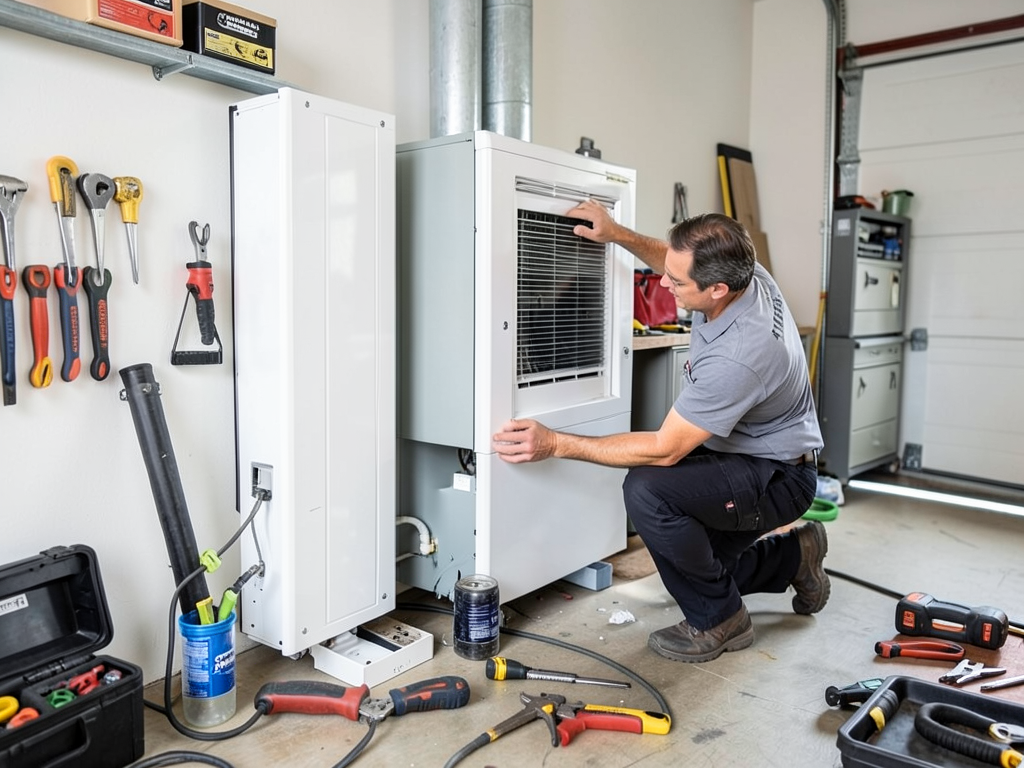
How to Properly Heat and Cool a Detached Garage Workshop in Wanamaker
Heating and cooling a detached garage workshop in Wanamaker requires understanding Central Indiana’s extreme temperature swings. From sub-zero winter polar vortexes to 95-degree humid summers your workshop needs a dedicated HVAC system that handles both the heat load of power tools and the cold air infiltration common in older garage construction. Indiana Mechanical Code.
The first step is calculating your BTU requirements based on your garage size and insulation level. A standard 2-car garage in Wanamaker typically needs 15000-25000 BTUs for heating and 12000-18000 BTUs for cooling but uninsulated spaces can require up to 50% more capacity. Most Wanamaker homes built before 2000 have minimal garage insulation making proper system sizing critical for comfort and efficiency. Heat Pump Systems.
Before installing any system check Marion County mechanical codes for permit requirements. Detached structures often need separate permits and electrical upgrades may be required if your existing panel lacks capacity. Many Wanamaker workshops need 240-volt circuits for high-efficiency equipment especially when running multiple power tools alongside HVAC systems.
Proper insulation makes or breaks your system’s performance. Standard garage doors have R-values of 3-5 but upgrading to insulated doors with R-12 or higher can cut your heating and cooling costs by 30-40%. Wall insulation should be at least R-13 and ceiling insulation R-19 or higher if you have attic space above. How Much Does a New AC Unit Cost for a Standard Zionsville Home?.
Moisture control becomes critical in Indiana’s humid climate. Condensation on cold surfaces can damage tools and create mold problems. A properly sized system should maintain 40-60% relative humidity year-round. Many Wanamaker workshops benefit from dedicated dehumidifiers during summer months when workshop equipment adds to the latent heat load.
Energy efficiency matters in Indiana’s climate. Look for systems with high SEER2 ratings (16+ for cooling 8+ HSPF2 for heating) to handle both extreme summer heat and winter cold snaps. Mini-split systems excel in this climate because they provide both heating and cooling without ductwork losses. Reliable Heating and Cooling Experts Serving the Broad Ripple Area.
Safety considerations include proper ventilation for gas-powered equipment and carbon monoxide detectors if using fuel-burning heaters. Indiana code requires CO alarms within 10 feet of sleeping areas but workshops benefit from additional coverage near work areas where combustion byproducts concentrate.
Installation timing affects your project timeline. Most Wanamaker homeowners schedule installations during spring or fall when HVAC contractors have lighter emergency workloads. Summer installations often face 2-3 week wait times due to air conditioning season demand.
Call (317) 688-8818 today to schedule your inspection and get a custom quote for your Wanamaker workshop HVAC system.
Top Garage Heating and Cooling Options for Central Indiana
Choosing the right system depends on your workshop usage patterns budget and existing infrastructure. Each option has distinct advantages for handling Wanamaker’s climate extremes.. Read more about Choosing the Right HVAC Setup for Your New Home Addition in Camby.
Ductless Mini-Split Systems: The Gold Standard
Mini-split heat pumps provide the most versatile solution for Wanamaker workshops. These systems handle temperatures from -15°F to 115°F making them ideal for Indiana’s climate range. A 18000 BTU mini-split typically costs $3500-4500 installed and can heat or cool a 400-500 square foot workshop effectively.
The key advantage is zoning flexibility. You can install multiple indoor units connected to one outdoor condenser allowing different temperature zones for woodworking areas versus computer workstations. This matters in Wanamaker where workshops often combine dusty power tool areas with clean electronics spaces.. Read more about Protecting Your Outdoor Heat Pump from Deep Snow and Ice in Hamilton County.
Installation requires mounting the indoor unit high on a wall and running refrigerant lines through a 3-inch hole to the outdoor condenser. Most Wanamaker homes can accommodate this with minimal structural modification though older workshops may need electrical panel upgrades for the 240-volt requirement.
Maintenance involves cleaning filters monthly during heavy use and checking refrigerant levels annually. Indiana’s high humidity means condensate drains need regular inspection to prevent algae buildup that can cause water damage to tools and equipment.
Forced Air Unit Heaters (Gas & Electric)
Gas-fired unit heaters provide powerful cost-effective heating for large Wanamaker workshops. A 30000 BTU natural gas unit costs $1200-1800 plus installation making it attractive for workshops over 600 square feet. These units heat spaces quickly but only provide heating requiring separate cooling solutions.. Read more about Heating and Cooling Solutions for New Whiteland Homes with In-Law Suites.
Electric forced air units work well for smaller spaces under 400 square feet. They’re simpler to install since they don’t require gas lines or venting but operating costs run 3-4 times higher than natural gas in Indiana where electricity averages $0.13/kWh versus natural gas at $1.10/therm.
Proper venting is critical for gas units. Indiana mechanical code requires Category III stainless steel venting for most garage applications and units must be mounted at least 18 inches above the floor to prevent dust ignition from power tool debris.
Noise levels vary significantly. Gas units produce combustion noise and vibration that can interfere with precision work while electric units run quieter but may struggle in extreme cold. Consider your primary workshop activities when choosing between these options.
Extending Existing Ductwork: Pros and Cons
Extending your home’s central HVAC to the garage seems convenient but often creates more problems than it solves. Most Wanamaker homes have ductwork sized for living spaces not the additional load of a garage workshop with power tools and equipment.
The main issue is pressure imbalance. Adding garage ducts can reduce airflow to bedrooms and living areas causing comfort complaints elsewhere in the house. Indiana homes typically operate at 0.1-0.2 inches water column pressure adding garage ducts can increase this to 0.3-0.4 straining the blower motor.
Temperature control becomes problematic because garages experience much wider temperature swings than living spaces. During summer your AC might run continuously trying to cool a 95-degree garage while maintaining 75 degrees in the house. This inefficiency can increase cooling costs by 25-40%.
If you must extend ductwork install a separate zone with its own thermostat and consider a ductless return air path to prevent pressure issues. Most Wanamaker homeowners find this approach still underperforms compared to dedicated systems. Ductless Mini-Split Heat Pumps.
Key Factors to Consider Before Installation
Several critical factors determine your system’s success and operating costs. Understanding these elements helps you make informed decisions about your workshop climate control investment.
Insulation Requirements and R-Values
Garage insulation in Indiana should meet minimum R-13 for walls and R-19 for ceilings. However workshops with power tools often need higher R-values due to equipment heat output. Consider R-19 walls and R-30 ceilings if you run multiple tools simultaneously.
Door insulation makes the biggest difference. Standard Wanamaker garage doors typically have R-3 to R-6 insulation. Upgrading to R-12 or higher can reduce your heating load by 25-30%. Look for doors with thermal breaks and weatherstripping that seals when closed.
Floor insulation often gets overlooked but matters significantly. Concrete slabs act as heat sinks drawing warmth from your space. Adding 2-inch rigid foam under new concrete or installing insulated flooring over existing slabs can cut heat loss by 40%.
Air sealing complements insulation. Use expanding foam to seal gaps around electrical penetrations plumbing lines and where walls meet ceilings. Even small gaps can let in significant cold air during polar vortex events common in Central Indiana.
Electrical Panel Capacity and Upgrades
Most Wanamaker workshops need 240-volt circuits for efficient HVAC operation. A typical mini-split requires a 20-30 amp dedicated circuit while electric heaters need 30-50 amps. Older homes built before 1990 often have 100-amp service panels that lack spare capacity.
Panel upgrades cost $1500-3000 but may be necessary if you’re adding multiple high-draw tools alongside HVAC. Signs your panel needs upgrading include frequent breaker trips flickering lights when tools start or warm panel surfaces.
Consider future expansion when planning electrical capacity. If you might add dust collection systems air compressors or welding equipment later install a 200-amp service now rather than paying for multiple upgrades.
Grounding becomes critical in workshops with multiple tools. Indiana code requires proper grounding for all 240-volt circuits and many older Wanamaker homes need grounding upgrades to meet current safety standards.
Moisture Control and Humidity Management
Indiana’s 75-85% average relative humidity creates unique challenges for workshop climate control. Your HVAC system must handle both temperature and moisture loads especially when running equipment that generates additional humidity.
Condensate management requires planning. Mini-splits produce 5-10 gallons of water daily during peak cooling. Without proper drainage this water can damage tools create slip hazards or promote mold growth on work surfaces.
Dehumidification becomes essential during summer months. A 30-pint dehumidifier costs $200-300 but can prevent rust on tools and protect sensitive electronics. Position units away from dust sources to prevent filter clogging.
Winter brings different moisture challenges. When outdoor temperatures drop below 20°F indoor humidity can condense on cold surfaces creating ice buildup on windows and tools. Maintaining 35-45% relative humidity prevents these issues while avoiding static electricity problems with sensitive equipment.
Ventilation requirements vary by workshop use. Woodworking generates fine dust that can clog HVAC filters quickly. Consider installing pre-filters or dedicated dust collection systems to protect your climate control investment.
Local Rebates and Financing for Indy Residents
Indiana offers several incentive programs that can reduce your workshop HVAC installation costs. Understanding these opportunities helps maximize your investment return.
AES Indiana provides rebates for high-efficiency HVAC equipment installed in residential buildings. Mini-splits with SEER2 ratings of 18+ qualify for $300-500 rebates while heat pumps with HSPF2 ratings of 9+ can receive similar incentives. These programs typically require installation by certified contractors.
Duke Energy offers similar rebates in their service territory which includes parts of southern Marion County. Their programs often have different efficiency thresholds so check both utilities if you’re near the service boundary.
Federal tax credits through 2026 provide up to $2000 for qualifying heat pump installations. The equipment must meet specific efficiency standards and you’ll need to keep all purchase documentation for tax filing purposes.
Local HVAC contractors often provide financing options with 0% interest for 12-24 months on qualifying systems. These promotions typically require minimum purchase amounts and may include free maintenance packages.
Some Wanamaker homeowners qualify for energy efficiency loans through local credit unions. These programs offer lower interest rates for improvements that reduce energy consumption including high-efficiency HVAC installations.
Our Garage HVAC Installation Process
Professional installation ensures your system performs as designed and meets all local code requirements. Our process addresses the unique challenges of Wanamaker workshop environments.
Initial Assessment and Load Calculation
We start with a comprehensive site evaluation measuring your workshop dimensions and assessing insulation levels window areas and equipment heat loads. This data feeds into Manual J calculations that determine your exact heating and cooling requirements.
Load calculations consider factors unique to workshops: power tool heat output dust generation rates and typical usage patterns. A woodworking shop with table saws and jointers has different requirements than a computer repair workshop. The Best AC Repair Services in Carmel for Modern Subdivisions.
We evaluate your electrical service capacity and identify any necessary upgrades before equipment selection. This prevents costly change orders during installation and ensures your system can operate safely.
The assessment includes moisture analysis to determine if additional dehumidification is needed. Indiana’s climate means most workshops benefit from integrated humidity control even when heating and cooling loads seem modest.
Equipment Selection and Sizing
Based on our calculations we select equipment that matches your specific needs. Oversizing is a common mistake that leads to short cycling reduced efficiency and poor humidity control. We typically aim for equipment that runs 60-70% of the time during peak loads.
For Wanamaker’s climate we prioritize systems with good low-temperature heating performance. Many heat pumps lose efficiency below 20°F but modern inverter-driven systems maintain output down to 0°F or lower.
We consider noise levels carefully especially for workshops where concentration matters. Indoor units typically operate at 25-35 decibels while outdoor units can reach 50-60 decibels. Proper mounting and vibration isolation minimize noise transmission.
Warranty considerations factor into our recommendations. Most quality systems offer 5-10 year parts warranties but labor warranties vary significantly between contractors. We provide clear warranty terms upfront.
Installation and Commissioning
Our technicians follow Indiana mechanical code requirements for all installations. This includes proper refrigerant line insulation condensate drain routing per code and electrical connections that meet National Electrical Code standards.
We install vibration isolation pads under outdoor units to prevent noise transmission to your home or neighbors. Proper leveling ensures efficient operation and prevents oil migration in the refrigerant system.
Commissioning involves testing the system under various conditions to verify performance. We check refrigerant charge measure airflow and verify that all safety controls function properly. This step catches installation issues before they become problems.
Final calibration adjusts the system for your specific workshop conditions. We program thermostats for optimal humidity control and set up any zoning features you’ve selected.
Frequently Asked Questions About Garage HVAC
What size HVAC system do I need for my garage workshop?
System size depends on your garage dimensions insulation levels and equipment usage. A typical 2-car garage needs 15000-25000 BTUs for heating and 12000-18000 BTUs for cooling. However workshops with power tools often require 20-30% more capacity due to equipment heat output.
We perform detailed load calculations that account for Wanamaker’s climate extremes your specific equipment and your insulation quality. This ensures you get a system that maintains comfort without wasting energy on oversizing.
Can I install HVAC myself to save money?
DIY installation is possible for electric heaters but problematic for most other systems. Mini-splits require refrigerant handling certification proper evacuation procedures and electrical work that must meet code. Mistakes can void warranties and create safety hazards.
Professional installation ensures your system operates efficiently and safely. It also maintains warranty coverage and ensures compliance with Indiana mechanical codes. Most manufacturers require professional installation for warranty validation.
How much does garage HVAC installation cost in Wanamaker?
Costs vary based on system type and workshop size. Mini-splits typically cost $3500-4500 installed for a standard 2-car garage. Gas unit heaters run $1500-2500 installed. Electric systems are cheaper upfront but cost more to operate.
Additional costs may include electrical upgrades ($500-2000) insulation improvements ($500-1500) or permit fees ($50-200). We provide detailed quotes that itemize all costs before work begins.
How long does installation take?
Most installations require 1-2 days for the actual work but scheduling can take 2-4 weeks during peak seasons. Simple electric heater installations might finish in one day while complex mini-split systems with electrical upgrades take longer.
Post-installation testing and calibration add another half day. We schedule these steps to minimize disruption to your workshop activities.
Will HVAC increase my home’s value?
A properly installed workshop HVAC system can increase your home’s appeal to buyers who value climate-controlled workspaces. However the return on investment varies. High-quality installations with proper permits and documentation provide the best value proposition.
Energy-efficient systems with good SEER2 ratings appeal to environmentally conscious buyers and can reduce operating costs making your home more attractive in the competitive Wanamaker real estate market.
What maintenance does garage HVAC require?
Regular maintenance includes monthly filter cleaning or replacement annual refrigerant level checks and condensate drain cleaning. Indiana’s dusty environment means workshops often need more frequent filter changes than living spaces. Affordable HVAC Replacement Options for Families in Noblesville.
Seasonal checks before summer and winter ensure your system operates efficiently during peak demand. We offer maintenance plans that include these services at discounted rates.
Ready to Transform Your Workshop Comfort?
Your Wanamaker workshop deserves year-round comfort that matches your dedication to your projects. Whether you’re building furniture repairing electronics or pursuing automotive restoration proper climate control protects your tools and enhances your productivity.
Don’t let Indiana’s extreme weather limit your workshop activities. A properly sized professionally installed HVAC system provides the comfort and reliability you need to work year-round. From sub-zero winter days to humid summer afternoons your workshop will maintain the ideal temperature and humidity for your specific activities.
Call (317) 688-8818 today to schedule your free workshop assessment. Our experienced technicians will evaluate your space discuss your needs and provide a detailed quote for the perfect heating and cooling solution for your Wanamaker workshop.
Pick up the phone and call (317) 688-8818 before the next temperature extreme hits. Your tools your projects and your comfort deserve professional attention from technicians who understand Wanamaker’s unique climate challenges.
You may also find this helpful. The Best Ways to Keep Your Oaklandon Sunroom Comfortable All Year Round.
{
“@context”: “https://schema.org”,
“@type”: “BlogPosting”,
“headline”: “How to Properly Heat and Cool a Detached Garage Workshop in Wanamaker”,
“description”: “Expert guide to heating and cooling detached garage workshops in Wanamaker, Indiana. Learn about insulation, system sizing, and local climate considerations.”,
“wordCount”: 2707,
“datePublished”: “2026-04-13T13:26:00.000Z”,
“dateModified”: “2026-04-13T13:26:00.000Z”,
“inLanguage”: “en-US”,
“mainEntityOfPage”: {
“@type”: “WebPage”,
“@id”: “https://reliancehvacindianapolis.com”
},
“publisher”: {
“@type”: “LocalBusiness”,
“name”: “Reliance HVAC Indianapolis”,
“url”: “https://reliancehvacindianapolis.com”
},
“author”: {
“@type”: “Organization”,
“name”: “Reliance HVAC Indianapolis”,
“url”: “https://reliancehvacindianapolis.com”
},
“image”: {
“@type”: “ImageObject”,
“url”: “https://reliancehvacindianapolis.com/wp-content/uploads/2026/03/how-to-properly-heat-and-cool-a-detached-garage-wo-1.png”
}
}
{
“@context”: “https://schema.org”,
“@type”: “HVACBusiness”,
“name”: “Reliance HVAC Indianapolis”,
“url”: “https://reliancehvacindianapolis.com”,
“address”: {
“@type”: “PostalAddress”,
“addressLocality”: “Indianapolis”
},
“areaServed”: {
“@type”: “City”,
“name”: “Indianapolis”
}
}
{
“@context”: “https://schema.org”,
“@type”: “FAQPage”,
“mainEntity”: [
{
“@type”: “Question”,
“name”: “What size HVAC system do I need for my garage workshop?”,
“acceptedAnswer”: {
“@type”: “Answer”,
“text”: “System size depends on your garage dimensions insulation levels and equipment usage. A typical 2-car garage needs 15000-25000 BTUs for heating and 12000-18000 BTUs for cooling. However workshops with power tools often require 20-30% more capacity due to equipment heat output.”
}
},
{
“@type”: “Question”,
“name”: “Can I install HVAC myself to save money?”,
“acceptedAnswer”: {
“@type”: “Answer”,
“text”: “DIY installation is possible for electric heaters but problematic for most other systems. Mini-splits require refrigerant handling certification proper evacuation procedures and electrical work that must meet code. Mistakes can void warranties and create safety hazards.”
}
},
{
“@type”: “Question”,
“name”: “How much does garage HVAC installation cost in Wanamaker?”,
“acceptedAnswer”: {
“@type”: “Answer”,
“text”: “Costs vary based on system type and workshop size. Mini-splits typically cost $3500-4500 installed for a standard 2-car garage. Gas unit heaters run $1500-2500 installed. Electric systems are cheaper upfront but cost more to operate.”
}
},
{
“@type”: “Question”,
“name”: “How long does installation take?”,
“acceptedAnswer”: {
“@type”: “Answer”,
“text”: “Most installations require 1-2 days for the actual work but scheduling can take 2-4 weeks during peak seasons. Simple electric heater installations might finish in one day while complex mini-split systems with electrical upgrades take longer.”
}
},
{
“@type”: “Question”,
“name”: “Will HVAC increase my home’s value?”,
“acceptedAnswer”: {
“@type”: “Answer”,
“text”: “A properly installed workshop HVAC system can increase your home’s appeal to buyers who value climate-controlled workspaces. However the return on investment varies. High-quality installations with proper permits and documentation provide the best value proposition.”
}
},
{
“@type”: “Question”,
“name”: “What maintenance does garage HVAC require?”,
“acceptedAnswer”: {
“@type”: “Answer”,
“text”: “Regular maintenance includes monthly filter cleaning or replacement annual refrigerant level checks and condensate drain cleaning. Indiana’s dusty environment means workshops often need more frequent filter changes than living spaces. Affordable HVAC Replacement Options for Families in Noblesville.”
}
},
{
“@type”: “Question”,
“name”: “Ready to Transform Your Workshop Comfort?”,
“acceptedAnswer”: {
“@type”: “Answer”,
“text”: “Your Wanamaker workshop deserves year-round comfort that matches your dedication to your projects. Whether you’re building furniture repairing electronics or pursuing automotive restoration proper climate control protects your tools and enhances your productivity.”
}
}
]
}
{
“@context”: “https://schema.org”,
“@type”: “BreadcrumbList”,
“itemListElement”: [
{
“@type”: “ListItem”,
“position”: 1,
“name”: “Home”,
“item”: “https://reliancehvacindianapolis.com”
},
{
“@type”: “ListItem”,
“position”: 2,
“name”: “Blog”,
“item”: “https://reliancehvacindianapolis.com/blog”
},
{
“@type”: “ListItem”,
“position”: 3,
“name”: “How to Properly Heat and Cool a Detached Garage Workshop in Wanamaker”
}
]
}
{
“@context”: “https://schema.org”,
“@type”: “Service”,
“serviceType”: “HVAC”,
“provider”: {
“@type”: “LocalBusiness”,
“name”: “Reliance HVAC Indianapolis”,
“url”: “https://reliancehvacindianapolis.com”
},
“areaServed”: {
“@type”: “City”,
“name”: “Indianapolis”
},
“description”: “Expert guide to heating and cooling detached garage workshops in Wanamaker, Indiana. Learn about insulation, system sizing, and local climate considerations.”
}